Button
A button is a general term for an accessory used to fasten openings in garments and fashion items, combining functionality and decoration. It comes in many types depending on shape, holes, shank, material, size, and attachment method.
Contents5 sections
Definition and Overview
Buttons are garment accessories used to fasten front openings, cuffs, pockets, and more. In addition to their practical opening and closing function, they are also design components that affect the appearance, intended use, and durability of a garment. “Botan” is the kanji form of button, and “buttons” is used as a general term for buttons of related shapes, materials, and applications.
This term includes not only buttons that are sewn on, but also those that are attached by pressing in place, as well as those used for decoration. On the other hand, hooks, snap buttons, and zippers are accessories used for opening and closing, but because their structure and attachment method differ, they are usually handled separately from buttons.
Main Types and Their Differences
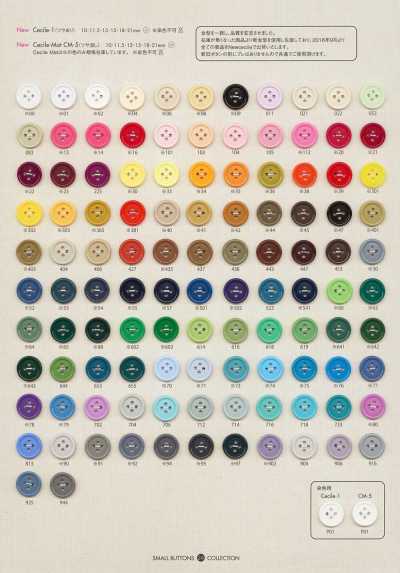
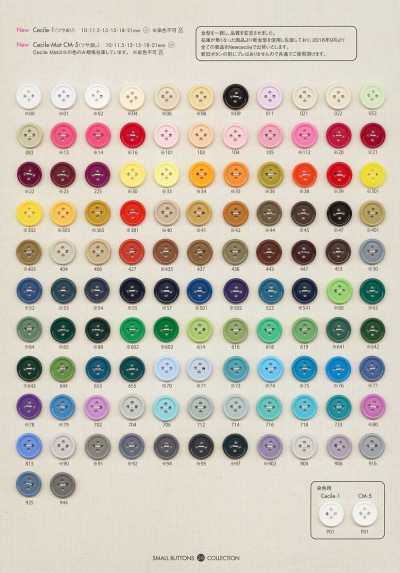
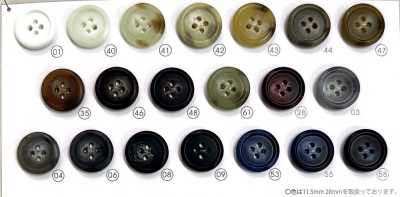
Two-hole buttons, four-hole buttons, cat's-eye buttons, and tanuki holes are types with visible holes on the surface. Two-hole buttons have a clean look, while four-hole buttons let thread be passed in multiple directions, so they are generally stable and easy to attach.
Shank buttons, tunnel shanks, ring shanks, and parachute shanks are types where thread is passed through a shank on the back side. The sewing thread is less visible on the surface, making them suitable for thick fabrics and garments that emphasize decoration. Reinforcement buttons are small buttons sewn on the back side to reinforce the attachment area.
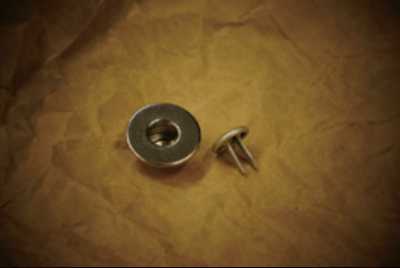
Covered buttons are wrapped in fabric, so the same fabric can be used, while toggle buttons and Chinese buttons are fastened in combination with loops and similar components. Tack buttons, cap and close post buttons, and eyelet buttons are types fixed with dedicated parts or tools, and are mainly used for heavy fabrics and casual wear.
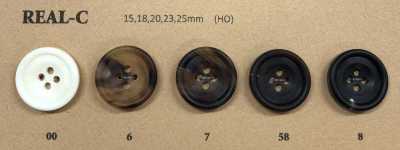
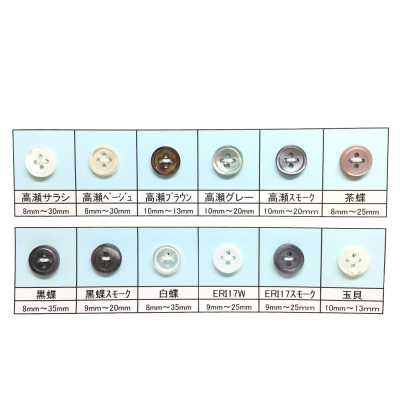
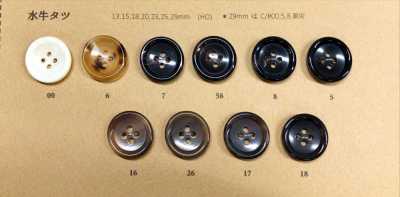
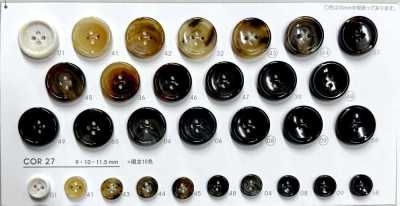
- Real buffalo horn buttons, shell buttons, and nut buttons are made from natural materials, and their pattern, color, and thickness may vary from piece to piece.
- Urea buttons, polyester buttons, and casein buttons are materials that allow a wide range of shaping and pattern expression.
- Metal buttons, glass buttons, leather buttons, and wood buttons are types where the feel of the material can be used as a design accent.
How to Choose and How to Find Them in the Product List
When selecting a button, match the diameter or ligne, thickness, hole size, and shank height to the buttonhole and fabric thickness. For front plackets and cuffs, check ease of fastening and unfastening; for jackets and coats, check visual balance and sewing strength.
Select the material based on the product application, washing or cleaning method, required durability, and surface gloss. Choose ones that blend well with lightweight fabrics for shirts and blouses, ones with presence and stability for jackets, and consider safety-conscious specifications for children's clothing.
In the product list, it is easier to find items by narrowing down by conditions such as type, size, material, and applications. After deciding on the shape, check the color, surface finish, number of holes, and attachment method, then compare them with the fabric sample or product sample to judge the overall appearance.
Handling and Sewing Notes
When sewing on buttons, choose thread that fits through the hole size, and make a thread shank according to the fabric thickness and button shank. A thread shank is a process that creates an appropriate gap between the button and the fabric, making it easier to fasten even on thick front plackets and reducing stress on the thread.
For buttons with holes, the appearance changes depending on how the thread is run, such as cross stitching or parallel stitching. Shank buttons should be attached so the shank does not tilt against the fabric, and in areas where force is applied, use reinforcement buttons together or check the button-sewing strength.
Natural-material buttons and buttons with paint or plating may change appearance due to washing, friction, heat, or chemicals. Before mass production, test them with the actual fabric, interfacing, sewing conditions, and washing or cleaning conditions, and check for cracking, discoloration, thread breakage, or detachment.
Frequently Asked Questions
How do you decide the button size?
Decide the button size by matching it to the width of the front placket or cuff, the length of the buttonhole, the thickness of the fabric, and the visual balance with the entire garment. Not only the diameter but also the thickness and shank height affect fastening, so it is important to check with an actual sample during prototyping.
Which should I choose, a two-hole button or a four-hole button?
Two-hole buttons have a simpler thread appearance and are also used for small buttons and designs with a delicate impression. Four-hole buttons allow you to choose the direction in which the thread is run and are generally easier to attach stably. Choose according to the application, fabric thickness, and design.
What should be checked to keep buttons from coming off easily?
Check the type and thickness of the button-sewing thread, the number of stitches, whether a thread shank is used, and the strength of the fabric. In areas where force concentrates, use reinforcement buttons together and also confirm compatibility with the buttonhole. For mass-produced items, it is important to check the button-sewing strength according to the usage conditions.
- Search products for "button"
- Products with material "Shell"
- Products with material "Real Buffalo Horn"
- Products with material "Nut"
- Products with material "Wood"
- Products with material "Leather"
- Products with material "Metal"
- Products with material "ABS Resin"
- Products with material "Imitation Pearl"
- Products with material "Polyester Resin"
- Products with material "Urea Resin"
- Products for style "For Shirts/blouses"
- Products for style "For Outerwear/blousons/coats"
- Products for style "For Jackets/Suits"
- Products for style "For Formal Wear"
- Products for style "For Costumes/dresses"
- Products for style "For Denim"
- Products for style "For Kids"
- Products for style "For Uniforms/Workwear"
- Browse Button products