


Ceramic Button
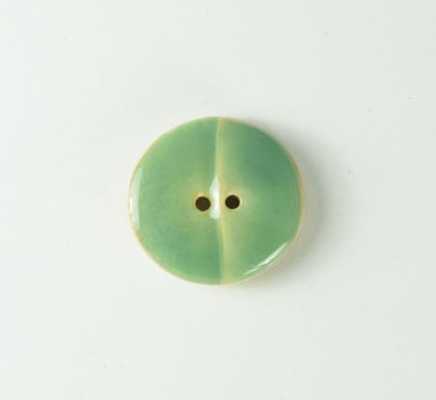
A ceramic button is a button made by shaping clay or similar materials and firing them, and is used mainly for decorative purposes, taking advantage of glaze-based color and luster, as well as painted designs.
Contents6 sections
Definition and Overview
Ceramic buttons are buttons made by shaping clay or similar raw materials and firing them. They include glossy glazed types, matte-finish types, and types with patterns or painted designs, and they have the distinctive look of ceramics.
Compared with buttons made from natural materials or resin, they are harder and more decorative, but they may chip or break if subjected to a strong impact. For this reason, they are selected with consideration for how often the button will be opened and closed and the product’s usage environment.
Materials and Structure
The surface of a ceramic button may vary in color, gloss, and fine appearance depending on whether glaze is applied and on changes during firing. This variation is sometimes treated as a characteristic unique to ceramics, unlike uniform industrial products.
In terms of structure, there are front-hole types with two or four holes on the front side, as well as shank types with a sewing shank on the back. Because a shank lifts the button slightly away from the fabric, it is also used for thick fabrics and designs that need more dimensionality.
- For hole types, the thread runs against the edge of the hole, so a sewing method that prevents thread breakage is necessary.
- For shank types, check the button thickness and fabric thickness so that excessive force is not applied to the base of the shank.
- Since the shape and dimensions of the holes or shank may vary from piece to piece, check sewability with an actual sample.
How Size Is Expressed
Button size is generally expressed by diameter in mm. In the button industry, ligne may also be used. Ligne is a customary unit for button diameter, and in purchase orders and specifications, it is easier to confirm if the same notation, either ligne or mm, is used consistently.
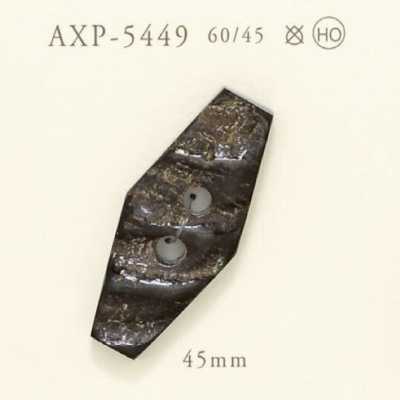
In addition to round shapes, ceramic buttons may have irregular shapes or thick forms, so diameter alone does not determine usability. In addition to the outer diameter, check the thickness, hole diameter or shank height, and whether it passes through the buttonhole.
Main Applications
Making use of the presence of ceramics, they are used for front openings on blouses, shirts, cardigans, and dresses, as well as for pocket and cuff decoration. In addition to clothing, they are also sometimes used as decoration on pouches and accessories.
Because of their weight and tendency to break, careful consideration is needed for areas that are subject to continuous heavy load or for applications that are likely to receive impact. For mass-produced items, the acceptable range for color tone and shape within the same lot is shared in advance.
Attachment and Handling Precautions
When sewing on the button, choose button sewing thread of a thickness that matches the button hole or shank, and make a thread shank if necessary. Thread shanking is a method of wrapping thread between the button and the fabric to reinforce the thread shank, and is useful when the fabric is thick or when you want to reduce button wobble.
Resistance to washing, dry cleaning, and ironing depends not only on the ceramic itself, but also on the glaze, painted design, and how the shank is attached. Before production, carry out washing and dry-cleaning tests including secondary materials to confirm whether it can be adopted.
If an iron is applied directly, the button may be damaged by sudden temperature changes or pressure. When ironing, avoid the button or use a pressing cloth to reduce pressure. During storage and transport, also take care to prevent chipping or breakage from collision with hard objects or from dropping.
Frequently Asked Questions
Can ceramic buttons be machine washed at home?
Whether they can be washed cannot be determined by the ceramic body alone. Resistance varies depending on the glaze or painted finish, how the shank is secured, and the combination with the sewn fabric. When selecting them, use an actual sample, conduct a preliminary test under the intended washing conditions, and reflect the result in the product care label.
What is the difference between ceramic buttons and glass buttons?
Ceramic buttons are made by shaping clay or similar materials and firing them, and their key feature is that color and texture can be expressed through glaze. Glass buttons make use of the transparency and brilliance created by refraction in glass. Both are hard and may break, so it is necessary to confirm the intended application and handling conditions.
How do you specify the size of a ceramic button?
In general, the outer diameter is specified in mm or ligne. However, for ceramic buttons, sewability and how easily they pass through the buttonhole change depending on thickness, shape, hole diameter, and shank height. In specifications, it is practically useful to include not only the size but also the structure and the acceptable variation between pieces.





