Color Discharge Printing
Color discharge printing is a process that expresses patterns by removing color from pre-dyed fabric with a chemical and developing a different color in that area.
Contents6 sections
Definition and Overview
Color discharge printing is a process in which a color paste containing a discharge agent is printed onto fabric dyed in a dark shade, decolorizing the ground color while developing a different color at the same time. Unlike discharge printing, which only removes the ground color, its distinctive feature is that the discharged area is also colored.
It is a type of pattern expression by printing, but rather than simply layering color on the surface, it removes the ground color and develops color. Depending on the combination of material, ground color, dye, and processing conditions, the final color tone and outline will change.
Features and Appearance
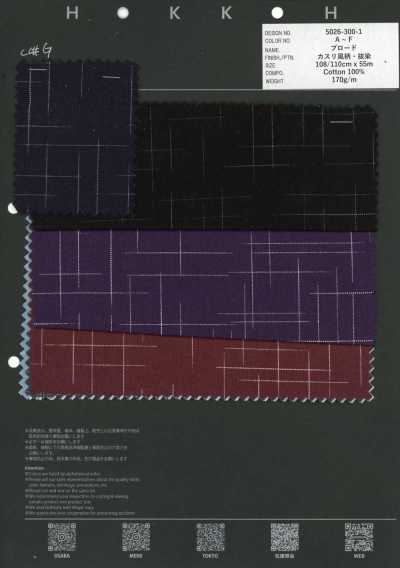
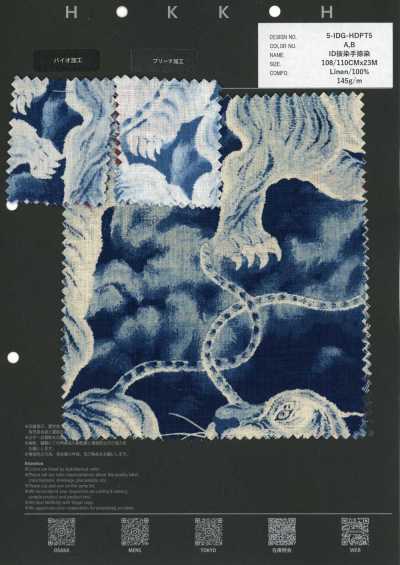
Color discharge printing is a process that easily creates a color that blends with the fabric and a slightly faded, natural look. On fabric with dobby textures or slub yarns, it may overlap with the texture and yarn appearance, creating a faded look.
Compared with printing that applies a thick layer of pigment, it may reduce the stiffness and film-like feel of the printed area. However, the hand feel depends on the base fabric and post-processing, so color discharge printing is not always soft.
- A slight bleeding or unevenness may appear at the boundary between the ground color and the pattern color.
- Depending on the dyeing of the ground color and the unevenness of the fabric, the pattern depth may not be uniform.
- It is a process that makes it easy to create a pattern in a different color that blends into a dark ground.
Main Applications
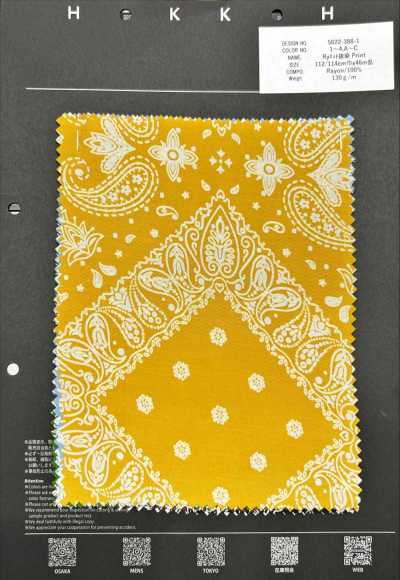
It is used for fabrics that call for a subdued look, such as floral patterns, small motifs, and delicate patterns close to solid. In addition to shirts, blouses, dresses, and skirts, it may also be used for casual lightweight apparel items.
There are base fabric options ranging from lightweight to medium-weight woven fabrics and knits, but suitability depends on the compatibility between the dye and the fiber. It is used not only for spring and summer items, but also for year-round collections that make use of calm color tones and a vintage feel.
Selection and Handling Notes
At the planning stage, check samples made with the same ground color and processing conditions as mass production. In color discharge printing, the degree to which the ground color is removed and the development of the pattern color are important, and color differences, tonal differences, and hand feel differences may occur when the roll or production lot changes. It is important to secure the required quantity from the same lot.
The degree of shrinkage, color fading, and color transfer due to washing varies depending on the base fabric and dye formula. Follow the care label instructions, and it is reassuring to perform a preliminary test such as washing separately for the first time. Also be careful of friction in the wet state and prolonged contact with light-colored items.
In sewing, carry out cloth straightening before cutting and confirm the appearance and direction of the pattern. Since the appearance of the ground color and pattern color may change at seams and pressed areas, check for puckering and fading with a sample that includes sewing thread, interfacing, and press conditions.
Differences from Similar Terms
Discharge printing is a process that removes the ground color from already dyed fabric to create white or pale-colored patterns. In contrast, color discharge printing develops a different color in the discharged area, allowing patterns in colors different from the ground color to be expressed.
Pigment printing is a process that fixes colorants onto the surface of the fabric, and does not fundamentally remove the ground color chemically. In color discharge printing, the way the dye is removed and the texture of the base fabric tend to affect the finished result, so the same pattern may look different.
Frequently Asked Questions
Are color discharge printing and discharge printing the same?
Color discharge printing is treated as one application of discharge printing, and the difference is that it not only removes the ground color but also develops a different color in that area. Discharge printing often refers to white or pale patterns, while color discharge printing is used when expressing colored patterns. Since the terms sometimes overlap in practice, the finished result is confirmed with samples and processing instructions.
Does color discharge fabric shrink in home laundering?
Whether it shrinks and how much depends not on the color discharge process itself, but on the fiber composition, structure, finishing process, and washing conditions of the base fabric. Perform a washing test before mass production and confirm dimensional change and color fading. For fabrics containing natural fibers, whether water washing or relaxation before cutting and sewing is needed should be judged for each fabric.
What should be noted when sewing color discharge fabric?
Since variations in color and hand feel may be visible, cut within the same lot and manage the transition points between rolls. When ironing, use a pressing cloth and test whether temperature and steam change the color tone, fading, or sheen. For patterned fabrics, also confirm the pattern direction and matching before cutting.