Gold Lip Mother-of-pearl
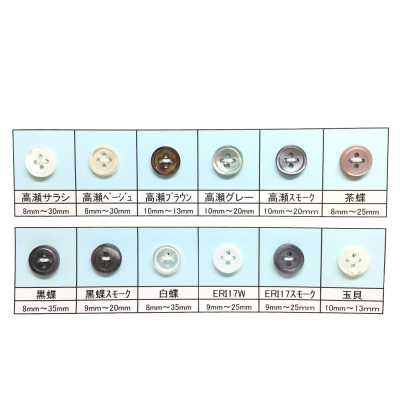
Gold Lip mother-of-pearl is a natural shell button material made by processing shells with a yellow to golden luster in the nacre, and it is characterized by individual variations in appearance.
Contents6 sections
Definition and Material Characteristics
Gold Lip Mother-of-pearl is a natural material made from shell material also known as Gold Lip. It is characterized by a deep luster derived from the nacre layer and a tone that feels more yellowish than White Mother-of-pearl, and even within the same specification there are individual differences in color and pattern.
For buttons, the shell is cut into plates, then shaped, drilled, polished, and so on. Because it is a natural shell, variations in layer depth, stripes, spots, and small surface texture are treated as material characteristics, and for mass production it is important to share the acceptable range against the sample in advance.
Hole and Shank Structure
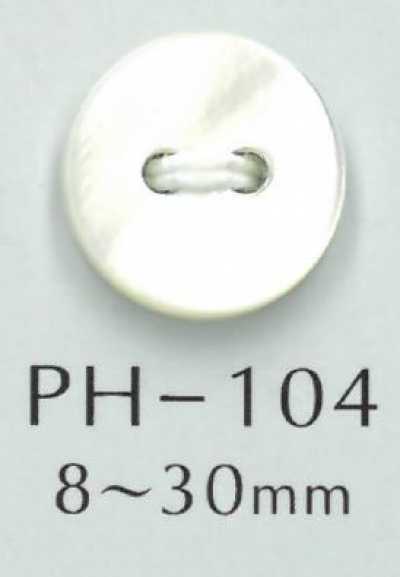
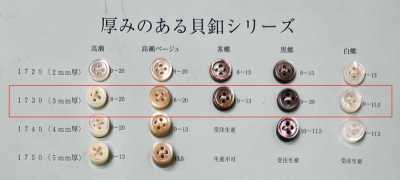
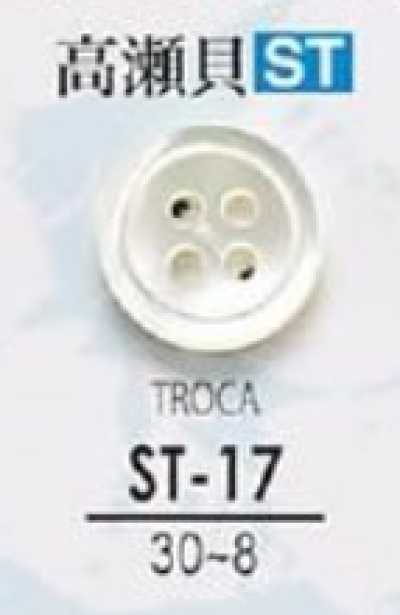
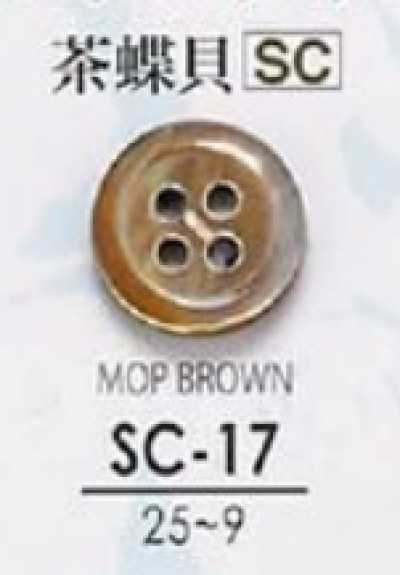
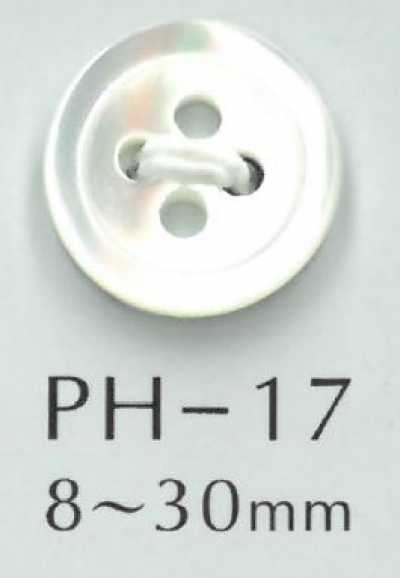
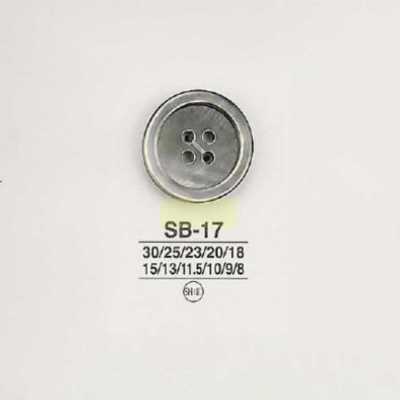
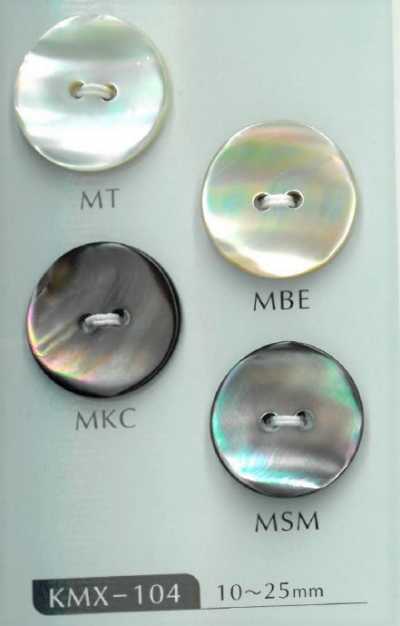
Gold Lip Mother-of-pearl buttons are generally made with two holes or four holes on the surface. Two-hole buttons make it easier to create a thread shank, while four-hole buttons provide greater stability when sewn on, so they are selected according to the application and design, such as front plackets and cuffs.
Shell buttons also include cat's-eye shapes with a groove on the back for threading the yarn, and shank shapes with a shank attached to the back. However, the number of holes and whether or not there is a shank are not determined by the material name Gold Lip Mother-of-pearl; they must be confirmed as part of each button specification.
- Do not tighten the sewing thread too much on thin shell buttons.
- For thick fabrics or areas under stress, consider using a reinforcing button together.
- Decide the buttonhole size not only by the button diameter but also by thickness and shape.
Size Notation
Button size is shown by diameter in mm, and also by ligne. Ligne is a unit used for buttons, and 1 ligne is approx. 0.635 mm. If only the ligne value is shown, convert it to mm and compare it with the pattern and buttonhole dimensions.
Even with the same stated diameter, the appearance and ease of passing through vary depending on the raised edge, thickness, roundness, and shank shape. Before mass production, check compatibility with the buttonhole using actual samples, and adjust the hole size if necessary.
Main Applications
Taking advantage of the elegant luster, these buttons are used for shirt front plackets, cuffs, dresses, skirts, and more. They also suit jackets, light clothing, and resort-style items where you want to use a natural material texture as an accent.
When selecting applications, check not only the design but also the impact received during wear, washing frequency, and button size and thickness. For areas that receive repeated strong stress, it is necessary to consider thickness and attachment specifications as well.
How to Attach and Handling Precautions
When sewing on, leaving an appropriate thread shank between the button and the fabric makes it easier to fasten and unfasten even on thick plackets and facings. Although shell is hard, it can crack or chip from impact, so do not apply strong pressure to one point during sewing or pressing.
For washing, dry cleaning, and ironing, follow the care label for the entire product and the button specification first. Long exposure to water, bleach or strong chemicals, high heat from ironing, and the effects of solvents may cause changes in luster, discoloration, or cracking. Before mass production, it is reassuring to test under the intended washing or cleaning conditions.
- Avoid ironing the button, or use a pressing cloth to avoid direct heat.
- During washing, turn the garment inside out or place it in a laundry net to reduce collisions with other hard trims.
- If a button is chipped or cracked, replace it instead of continuing to use it.
Frequently Asked Questions
What is the difference between Gold Lip Mother-of-pearl and White Mother-of-pearl?
Both are shell buttons made from shells with a nacre layer, but Gold Lip Mother-of-pearl is characterized by a luster that tends to feel yellow to golden. White Mother-of-pearl is often treated as having a bright white luster, and the actual color tone and pattern vary from piece to piece.
Can Gold Lip Mother-of-pearl buttons be machine washed at home?
Whether they can be washed at home is determined not by the button alone, but by the product's care label and accessory specifications. Because shell may be affected by impact, chemicals, or excessive heat, reduce contact by using a laundry net or turning the garment inside out, and also pay attention to bleaching conditions.
How do you specify the size of Gold Lip Mother-of-pearl buttons?
Specify the diameter in mm or ligne, and also check the thickness, number of holes, hole shape, and surface finish. In ligne notation, 1 ligne is approx. 0.635 mm. Since the actual thickness and shape affect how it passes through the buttonhole, confirm with a prototype.