Decorative Cuff Buttons
Decorative cuff buttons are a construction in which buttons and buttonhole-like detailing are added to the cuffs of jackets and similar garments, while the cuff itself cannot actually open and close.
Contents6 sections
Definition and Overview
Decorative cuff buttons are a decorative button specification used mainly on the cuffs of tailored jackets. Even when buttons are lined up, the cuff has no opening, and it does not have the function of opening and closing the cuff by undoing the buttons. Cuff buttoning originally refers to the cuff opening and its finishing.
In terms of design, this specification adds a neat impression and an accent to the cuff while making the sewing process simpler than with a functional cuff. Depending on the number of buttons, spacing, overlap, and the material and color of the buttons, the look can be adjusted from dressy to casual.
Materials and Construction
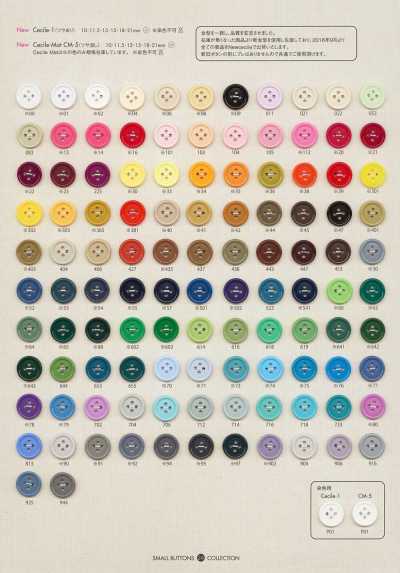
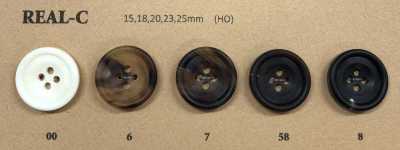
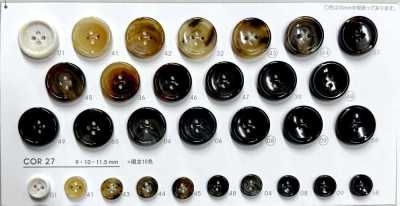
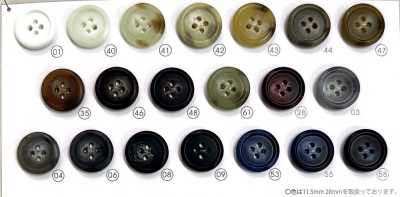
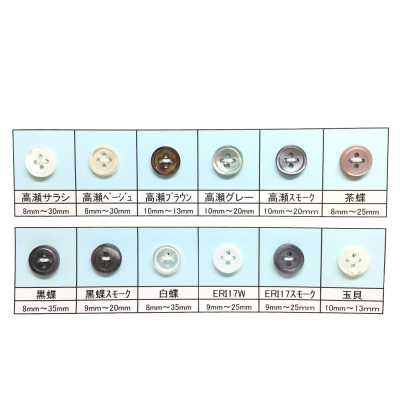
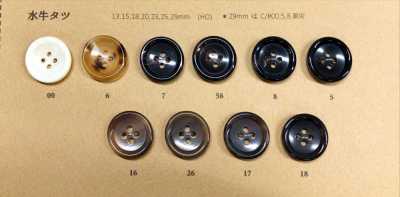
The buttons used for decorative cuff buttons are selected from polyester resin, urea resin, shell, real buffalo horn, nut, metal, and other materials to match the intended use of the body and the feel of the outer fabric. With lightweight outer fabrics, check whether the weight and thickness of the buttons will cause sagging or puckering at the cuff.
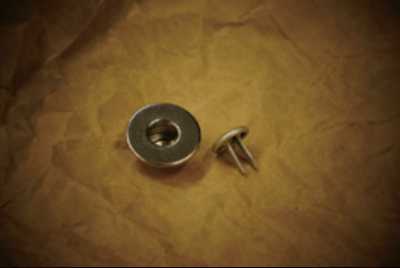
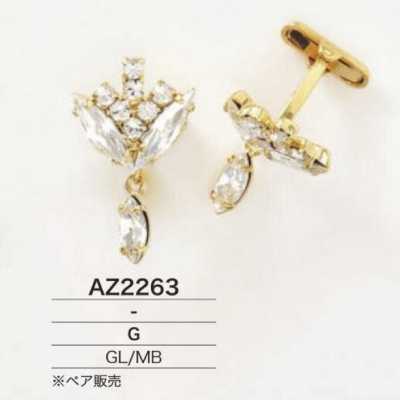
Button shapes include two-hole, four-hole, cat-eye, and other exposed-hole types, as well as shank buttons. Exposed-hole types change the impression depending on whether the sewing thread is shown or kept discreet, while shank buttons tend to appear to float, making them suitable for thick fabrics or designs that need more dimensionality.
Under the buttons, decorative eyelets that do not actually penetrate the fabric may be added. However, some specifications use only buttons without eyelets, so the spec sheet should clearly state the number of buttons, whether eyelets are included, thread color, and spacing.
- Two-hole and four-hole: shapes that make it easy to highlight the appearance of sewing thread.
- Cat-eye buttons: the thread passes through the central groove, so the thread sits neatly in place.
- Shank buttons: shapes in which the thread passes through the shank on the back, so sewing thread does not show on the front.
Size Indication and Applications
Button diameter is generally indicated in millimeters or lignes. Lignes are a size unit for buttons, and when placing orders or confirming specifications, checking either the ligne notation, the millimeter notation, or both helps prevent mistakes.
Decorative cuff buttons are used on the cuffs of suits, tailored jackets, blazers, uniform jackets, coats, and similar garments. Matching the material, color, sheen, and size with the front buttons and the buttons around the pockets creates a sense of unity. Sometimes only the cuff is intentionally made smaller in diameter.
- Button diameter: confirm the finished outer diameter in millimeters or lignes.
- Number of buttons: set according to cuff depth and design.
- Attachment position: specify the distance from the cuff edge, button spacing, and overlap.
How to Attach and Handling Notes
In sewing, after the cuff is finished, mark the button positions accurately and attach the buttons without taking too much of the outer fabric. If the outer fabric is thick or the buttons are heavy, using a backing button or reinforcing fabric should also be considered. After sewing, inspect the button direction, spacing, thread slack, and any difference in position between the left and right sleeves.
Resistance to washing, dry cleaning, and ironing differs depending on the button material, dyeing, and surface finish. Check the care label and the accessory handling conditions, and perform advance testing to ensure that materials weak against heat or solvents do not deform, crack, turn white, discolor, or suffer plating deterioration.
If an iron presses directly against the button, it may deform the resin, change the sheen, or damage the surface of shell or metal buttons. When pressing the cuff, avoid the buttons or use a pressing cloth, and set steam volume and temperature with both the outer fabric and the buttons in mind.
Difference from Functional Cuff Buttons
Functional cuff buttons are a specification in which the cuff has a real opening and buttonholes, allowing the cuff to be opened and closed by undoing the buttons. Decorative cuff buttons, by contrast, refer to a specification in which the cuff does not open even if buttons and eyelets are present. Because the appearance is similar, it is important to clearly distinguish whether the function is present during planning and production.
Functional cuff buttons involve the finishing of the cuff opening and buttonhole processing, so the pattern and sewing steps differ from those of decorative cuff buttons. In sample checks, it is important to confirm not only whether the buttons can be undone, but also whether the eyelets are real holes or decorative ones, and whether the cuff has an opening structure.
Frequently Asked Questions
Can decorative cuff buttons and functional cuff buttons be distinguished by appearance alone?
It can be difficult to tell by appearance alone. With functional cuff buttons, when the buttons are undone, the cuff opens and the buttonholes function as practical holes. With decorative cuff buttons, the buttons are sewn on or the eyelets are only decorative, so the cuff cannot be opened. Check both the specification sheet and the actual item.
Should the buttons on decorative cuff buttons be the same size as the front buttons?
They do not necessarily need to be the same size. In general, while matching the material, color, and sheen of the front buttons, a smaller button may be chosen to suit the cuff area. Decide after checking the balance with cuff depth, number of buttons, and button spacing.
What causes the buttons on decorative cuff buttons to crack or discolor?
The causes differ by material, but detergents and chemicals used in washing or dry cleaning, ironing heat, impact, friction, and humidity can all have an effect. Resin may deform from heat, shell may chip from impact, and metal may suffer surface damage or discoloration. Conduct testing in line with product conditions before mass production.