TERECO Rib Fabric
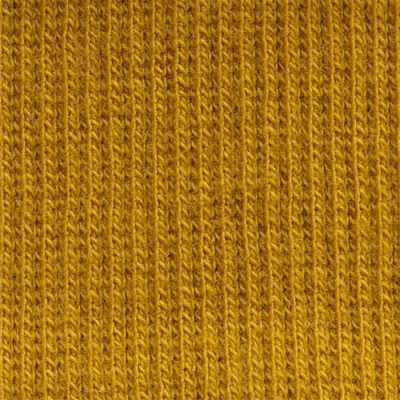
TERECO Rib Fabric is a weft-knit rib structure with alternating face and reverse stitches in a fixed combination, and it is a textile used for cuffs, hems, and collars by taking advantage of its stretch and the appearance of its ribs.

Contents6 sections
Definition and Overview
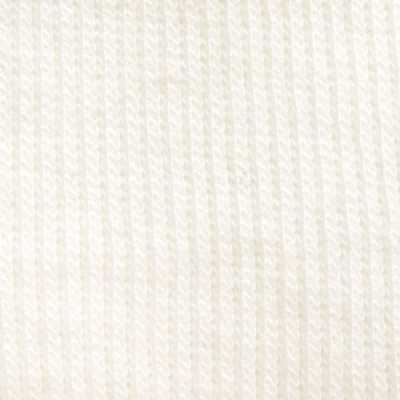
TERECO Rib Fabric generally refers to a "2x1" rib knit in which two face stitches and one reverse stitch are arranged alternately. Vertical ribs made by face stitches appear on the face side, and its features are that it stretches well horizontally and rebounds easily. It is used as circular-knit rib textile or as a knitted accessory fabric in flat knitting.
The name "TERECO" is said to come from the alternating arrangement of face and reverse stitches. However, depending on the factory or trading partner, the term may also be used for rib textile in general or to include structures other than 2x1, so it is important to confirm the structure when placing an order.
Knitting Method and Structure
In 2x1 rib, the face-stitch columns outnumber the reverse-stitch columns, so the face-side ribs are easier to see than in 1x1 rib, and the appearance has a stronger directionality. When not stretched, the reverse-stitch columns are easily hidden between the ribs, and when pulled, they open up and become visible.
Stretchability changes not only with the knit structure, but also with the yarn used, gauge, knitting density, and finishing. Those blended with elastic yarn such as polyurethane generally make it easier to increase rebound, that is, the property of returning after being stretched, and may be called "Spandex TERECO Rib Fabric."
How Specifications Are Expressed
TERECO specifications are expressed by combining the material blend ratio, yarn thickness, knitting machine gauge, textile width, fabric weight, and finishing method. Gauge is an indicator of knitting-needle fineness; the larger the number, the finer the needle spacing generally is, and the more delicate the appearance tends to be.
"Number of elastic bands" is a conventional expression referring to the combination of face and reverse stitch counts that make up the ribs. For example, 2x1 is a structure with two face stitches and one reverse stitch. However, because rib thickness and appearance also change depending on the yarn and knitting conditions, do not judge the finish based on stitch counts alone.
- In the specification sheet, clearly state the structure as "2x1 rib," etc.
- Confirm gauge, width, and fabric weight using actual measured values or standard values for the textile or knitted accessory fabric used.
- Also specify whether it is tubular fabric or open-width fabric, and whether the listed width is the finished width or the knitted width.
Main Applications and How to Choose
TERECO is often used for cuffs, hems, and necklines of T-shirts and sweatshirts. Taking advantage of its body-hugging stretch, it is also used for body panels of innerwear, cut-and-sew items, leggings, and more. When used as an accessory fabric, it is important to match the thickness, texture, and post-wash dimensional change with the main fabric.
When selecting it, check not only the required stretch but also the tightness, rebound, rib thickness, sheerness, and color difference from the main fabric. For cuffs and hems, consider the relaxed measurement of the rib and the stretch during wear, and specify it so that it is easy to put on and take off without being too loose.
Sewing Precautions and Differences from Similar Terms
Because TERECO stretches easily in the horizontal direction, pulling the fabric during sewing can cause the seam to ripple or the attachment dimensions to be off. Test the differential feed, presser-foot pressure, and thread tension, and when sewing it to the main fabric, control the amount of stretch applied evenly. Before cutting, it is also necessary to straighten the grain and check the shrinkage rate and skew after washing or steaming.
Fraises generally refers to 1x1 rib, a structure with equal numbers of face and reverse stitches, so the front and back tend to look similar. TERECO is often treated as 2x1 rib, and differs in that the face-side ribs are more likely to stand out than in fraises. Note that "rib knit" is the general term for knitting structures that combine face and reverse stitches, including these.
Frequently Asked Questions
How is TERECO different from fraises?
TERECO generally refers to 2x1 rib with two face stitches and one reverse stitch, and is a structure in which the front-side ribs are more noticeable. Fraises is generally 1x1 rib, and because the numbers of face and reverse stitches are equal, the front and back look relatively similar. However, usage of the terms varies depending on the trading partner and region.
What does the "number of elastic bands" in TERECO mean?
The number of elastic bands is a conventional way of expressing the stitch-count structure of the ribs. The 2x1 used for TERECO indicates a structure in which two face stitches and one reverse stitch are repeated. The actual rib width and stretchability also vary depending on yarn thickness, gauge, knitting density, and finishing.
What should be checked when selecting TERECO for cuffs?
In addition to thickness, color, and texture relative to the main fabric, confirm the required stretch and rebound. It needs to stretch enough for the arm to pass through while not becoming too loose around the opening after wearing. In prototypes, also evaluate the amount of stretch during sewing, shrinkage and twisting after washing, and seam rippling.