


Deer Antler Button
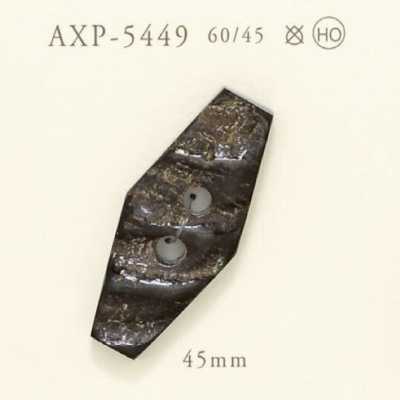
A deer antler button is a button made by cutting and shaping deer antler, an accessory that makes use of the natural material’s characteristic color variations, ring-like patterns, and substantial appearance.
Contents6 sections
Definition and Overview
A deer antler button is a button made from deer antler. Deer antler is a hard, bone-like natural material, and its tones vary from white to brown to dark brown, with individual differences in the patterns that appear on the cross-section. As a result, even items of the same specification have different appearances.
There are decorative types that make use of the branched shape of the antler, and types cut from antler material or machined into a shape suitable for apparel use. The former tends to have an irregular shape, while the latter is made into round, oval, and similar shapes for use through a buttonhole.
Material and Structure
Deer antler buttons for apparel are basically shaped with two holes or four holes on the surface, but the number and arrangement of the holes vary by product. Because it is a thick natural material, the finish around the holes and edges, as well as the smoothness of the back side, are also checked for each individual item.
In addition to standard buttons with holes, there are also shank styles with a foot on the back side. Shank styles are suitable when you want the button to float above the surface on thick fabrics or brushed materials, but the strength of the shank and ease of passing through the buttonhole should be checked in advance.
- Because it is a natural material, there are variations in color, pattern, thickness, and outer shape.
- Small holes, grain lines, and surface irregularities may be treated as natural characteristics of the material.
- Natural deer antler buttons and resin buttons formed to resemble deer antler differ in material and handling.
Size Indication
The size of deer antler buttons is generally shown in mm by diameter or maximum width. For round shapes, confirm the diameter; for branched or irregular shapes, confirm the maximum dimensions in length and width, and match them to the buttonhole length and appearance.
Line notation is also used for buttons. One line is 2.54 mm, and can be converted from lines to mm. However, because some deer antler buttons do not have a uniform outer edge, it is important to check not only the numerical value but also the actual shape and thickness.
Main Applications
With a natural, rustic feel and substantial appearance, they are used on wool coats, jackets, cardigans, and vests. They are often combined with fabrics that have thickness or a brushed feel, such as tweed, melton, and flannel.
They are also used in country-style, outdoor-style, and ethnic-style designs, as well as on bags and accessories that use natural-material findings as an accent. Irregular shapes may be used as decorative buttons rather than practical front-opening buttons.
Attachment and Handling Notes
For pierced styles, use a thicker, stronger sewing thread for attaching the button, and if necessary, make a thread shank so the sewing thread does not cut into the fabric. Because the button itself has thickness and weight, consider methods to reduce stress on the outer fabric, such as using a backing button together with thin fabrics.
Strong impact or forcing the button open and closed can cause cracking or chipping. Resistance to washing, dry cleaning, and ironing varies depending on the material condition, finish, and sewing specification, so test and confirm both the accessory alone and the finished product before deciding on the care label.
Avoid direct contact with a hot iron and leaving it wet for long periods or in high-humidity environments. Heat, moisture, detergent, chemicals, and ultraviolet light may cause discoloration, drying-related cracking, or surface changes, so during pressing it is best to use a pressing cloth and avoid the button.
Frequently Asked Questions
How is a deer antler button different from a real buffalo horn button?
Both are animal-derived natural materials, but deer antler buttons use the bone-like material of deer antler and are characterized by ring-like cross-sectional patterns and an irregular appearance. Real buffalo horn buttons use buffalo horn, so the material composition, color tone, appearance when cut, and finish differ. They both share the fact that they are natural materials.
Can deer antler buttons be machine washed at home or dry cleaned?
Whether this is possible cannot be decided uniformly, as it depends on the button finish and product specifications. Washing or dry cleaning may cause discoloration, drying, cracking, or chipping, so before use, test the accessory alone and the finished product under the intended care conditions and determine the care label accordingly.
How should the size of a deer antler button be selected?
Select it by matching the diameter or maximum width in mm with the buttonhole length and the button thickness. For line notation, one line is 2.54 mm. For irregular shapes, do not judge by the largest part alone; confirm whether it actually passes through the buttonhole and whether it places no stress on the fabric during fastening.





