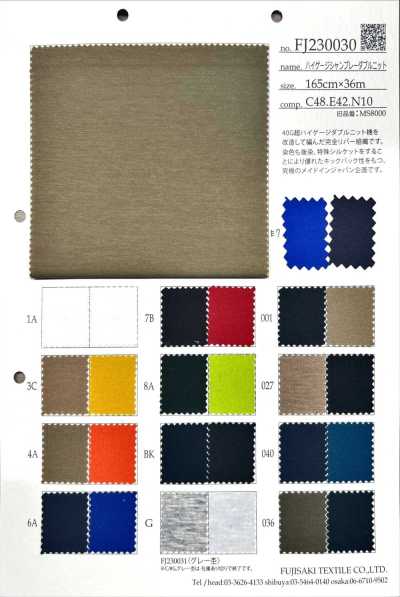
Double-face Knit
Double-face knit is a knit structure in which the front and back fabrics are joined at intervals to form a two-layer construction, making it a material that easily achieves a soft, airy hand and moderate warmth retention.
Contents6 sections
Definition and Overview
Double-face knit is a method or structure in which two layers of knitted fabric are joined at points or at regular intervals with binding yarn and knitted as a single textile. Different knitting methods, gauges, yarns, and colors can be combined on the front and back.
In general, double-face jersey and double-face jersey knit refer to knits that have a thin knitted layer on the front and back and are easy to create an air layer between them. However, double-face knit is not a material name; it is a term for a knitted structure that joins two layers together.
Features
Because it traps air between two layers, it can feel fuller and softer than a single-layer knit of similar thickness. Depending on the material, knitting density, and the spacing of the binding points, warmth retention, lightness, stretch, and thickness vary.
Another feature is that it can create different looks on the front and back. For example, in a construction with a coarse gauge on the front and a fine gauge on the back, the appearance can be varied. On the other hand, the binding points and differences in shrinkage between the front and back knitted layers affect surface unevenness and the appearance of wrinkles.
- It is easy to design a soft, voluminous thickness and a gentle hand.
- Because of the two-layer structure, different yarns and knits can be used on the front and back.
- Depending on the binding specification, breathability, warmth, and stretch behavior change.
Main Applications
With its softness and moderate thickness, it is used for cut-and-sew items, tops as an alternative to sweatshirts, cardigans, dresses, and loungewear. Because the texture against the skin is easy to control, it is also used for innerwear and children's clothing.
Thin double-face knits are suited to layering in spring and autumn and to indoor wear, while thicker types are suited to tops for autumn and winter. However, seasonal suitability depends on the composition, fabric weight, whether it is brushed, and knitting density, so it should be checked with the actual material rather than judged by structure name alone.
Selection and Handling Notes
When selecting, check the front and back materials and gauge, thickness, fabric weight, stretch direction, and how the binding points appear. If shrinkage differs between the front and back, twisting or waviness may appear after washing, so it is important to carry out wash tests during the prototyping stage and confirm shrinkage and skew.
Before cutting, let the fabric relax in a roll and align the grain and front/back sides. For fabrics that stretch easily, adjust the differential feed, sewing thread, needles, and sewing conditions to suit the textile in order to avoid seam puckering and waviness. When ironing, pay attention to the pressing cloth and temperature conditions to prevent flattening and fading.
Differences from Similar Terms
Double knit is a broad term for knitted fabrics with a double or two-layer structure. Double-face knit is a term that focuses specifically on a structure in which the front and back knitted layers are joined with binding yarn. In practice, the two terms may be used with nearly the same meaning, so check with a structure diagram or fabric swatch.
Spacer knit is often used for knitted fabrics in which the front and back layers are connected by intermediate yarns to create space, and it tends to produce firmness and a three-dimensional feel. Double-face knit also includes combinations such as jersey, and it can be designed for a softer hand. Lamination and bonding are processes that join textiles with adhesive or film, and they differ from double-face knit, which joins layers during the knitting process.
Frequently Asked Questions
Are double-face knit and double knit the same?
They are not exactly the same. Double knit broadly refers to two-layer knits, while double-face knit is a term that focuses on a structure in which the front and back knitted layers are connected with binding yarn. Because the name used in distribution alone does not make the structure clear, check the structure, thickness, stretch, and front/back appearance with a fabric sample.
Does double-face fabric shrink when washed?
How much it shrinks depends on the type of fiber, knitting density, finishing process, and the combination of front and back layers. In particular, if the front and back shrink differently, waviness or twisting may appear after washing. Before mass production, confirm shrinkage, skew, and appearance changes under actual washing conditions and reflect them in the pattern.
What should be noted when sewing double-face fabric?
To prevent the two layers from shifting or the seams from wavering, let the fabric relax before cutting and align the grain. Choose needles, thread, and sewing methods that suit the stretch of the textile, and adjust feed amount and thread tension with a test seam. For thicker types, pay attention to seam shifting at steps and pressure marks from the presser foot.
![NT-1044 Craft Fur [Double Face Sheep]](/img/item/thumb/OKURA/1089757_t2.jpg)