Boiled Wool
Boiled wool is a fabric made by knitting or weaving wool and then fulling it with heat and moisture to tighten the structure and increase thickness and warmth.

Contents6 sections
Definition and Overview
Boiled wool is a fabric made by treating wool fabric with hot water or steam and then fulling it to entangle the fibers and tighten the structure. Despite the name, it does not simply mean boiled wool; its defining feature is the change in texture created by fulling.
Many types are fulled knit fabrics, resulting in a compact surface with little visible stitch structure. However, fulled woven fabrics are also sometimes called boiled wool, so whether it is knit or woven, as well as the blend ratio and finishing conditions, should be checked for each fabric.
Texture and Function
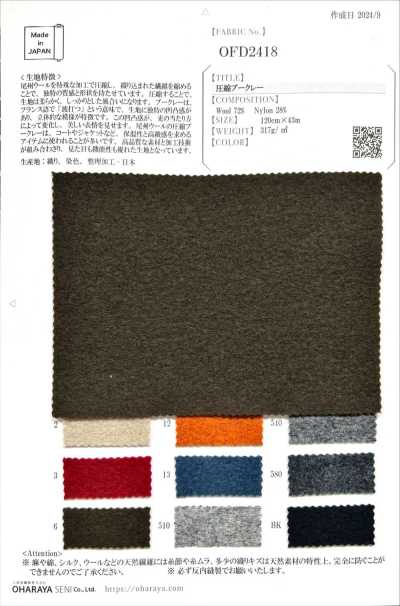
Fulling creates thickness that traps air, making the fabric easy to achieve loft, softness, and warmth retention. The surface has a slightly brushed, matte appearance, creating a rustic and warm impression with some fuzz.
Some items retain the stretch of the knit structure, but the more heavily fulling is applied, the less stretch there tends to remain. In addition, as the structure becomes denser, it may be less permeable to wind, but wind resistance and water resistance vary depending on the blend ratio, thickness, structure, and finish.
- It has thickness and loft, making it easy to express an autumn-winter-like three-dimensional look.
- Some fabrics are less likely to fray at the cut edges, but not all are suitable for raw-edge construction.
- Surface friction may cause fuzzing and pilling.
Main Uses and Seasons
It is used for autumn and winter items such as coats, jackets, cardigans, vests, skirts, and dresses that require warmth and a light, well-shaped finish. It is also used for unlined single-layer construction and designs that make use of raw edges.
Fabric thickness, stretch, and body vary widely by type. Select it according to the intended use, such as thicker fabrics that hold their shape for outerwear, or relatively light, stretchy types for cut-and-sew-style layers.
Selection and Handling Notes
During planning, check the blend ratio, fabric weight, thickness, stretch, shrinkage, and fuzz condition with the actual material. Since some fabrics change dimensions after sewing, open the fabric before cutting, conduct testing or prewashing if necessary, and confirm post-wash dimensions and appearance before mass production.
During sewing, be careful of shifting seams and seam waviness caused by stretch or thickness. Use stable feed and choose thread tension and needles that prevent seam puckering. In areas that tend to stretch, such as the shoulders and neckline, use anti-stretch reinforcement as needed according to the specification.
Follow the care tag for washing instructions. Wool may shrink further or felt due to water washing, friction, heat, or tumble drying, so confirm whether home washing is allowed, and set the washing and care labels appropriately for the product.
Differences from Similar Terms
Felt is a material made by entangling fibers into a sheet and generally does not have a structure formed by knitting or weaving yarn. Boiled wool is made by fulling knit or woven fabric, and the main difference from felt is that the original structure remains.
Melton is also a wool woven fabric that has been fulled to make the surface dense, but it is generally characterized by a firm woven density and a smooth surface. Boiled wool is often knit-based and may be softer and more stretchable.
Frequently Asked Questions
Is boiled wool the same as felt?
Can boiled wool be washed at home?
It cannot be judged uniformly because it depends on the fabric, the product's processing conditions, and the blend ratio. Wool may shrink or change texture due to moisture, heat, and friction. Always check the care tag, and for mass production, confirm dimensional changes through a washing test.