Concealed Placket Construction
Concealed placket construction is a placket finishing method that hides the buttons or zipper of a front opening with a matching fabric flap, making the fastening less visible from the outside.
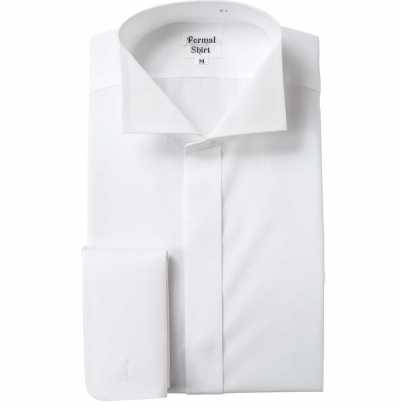
Contents6 sections
Definition and Overview
Concealed placket construction is a specification for front openings such as shirts, blouses, jackets, and coats, in which the buttons or buttonholes are placed inside a covering flap. When closed, the center front looks neat and gives a clean impression with less decoration.
Concealed placket refers to a placket specification and is not a specific material or item name. In addition to types in which the buttons are completely hidden from the outside, there are also specifications that show only part of the upper section, as well as specifications that cover a zipper.
Position in the Process
Concealed placket construction is reflected in the pattern and specification sheet by deciding the appearance of the front opening, the opening and closing method, and whether interfacing is used during the planning and design stage. After cutting, it is finished through marking the front edge, applying interfacing, folding and sewing the placket, making the buttonholes and attaching the buttons, and pressing.
In sewing, it is important to align the width of the outer placket and concealed placket fabric, the turn line, and the button positions. For projects that involve product washing or garment dyeing, check in advance whether the front edge ripples or the concealed placket twists after processing.
- In the specification sheet, state the finished width of the concealed placket, the type and number of fasteners, the button spacing, and whether any buttons are visible on the outside.
- When interfacing is used, specify the firmness of the concealed placket area and front edge, as well as the bonding conditions.
- For patterned fabrics, check the pattern continuity between the center front and concealed placket, as well as the pattern placement on the left and right sides.
Practical Points for Design and Sewing
The width of the concealed placket and the choice of interfacing should match the thickness, body, stretch, and applications of the outer fabric. On thin fabrics, seam allowances and the outline of the buttons are more likely to show through, while on thick fabrics the overlapping area is more likely to become bulky, so confirm the appearance and ease of opening and closing with a prototype.
With a specification that hides the buttons, the wearer may find it difficult to check the fastening position. Especially with shirts, consider the direction of the buttonholes, how easily the concealed placket opens, and how securely the neck and hem close, and if necessary place a visible button where it can be seen.
Points to Note for Ordering and Quality
When placing an order, do not simply instruct "concealed placket"; clarify in the specification sheet and instruction sample whether it is an outer placket or inner placket, whether all buttons are hidden, or whether only the first button is visible. Even when the same term concealed placket is used, the pattern structure and sewing order may differ.
During inspection, check for left-right asymmetry at the center front, variation in concealed placket width, button position misalignment, puckering around buttonholes, and front-edge puckering. Also repeatedly open and close the garment to check for issues such as the concealed placket flipping open, difficulty fastening the buttons, or the front edge being pulled tight when fastened.
Differences from Similar Terms
Placket refers generally to the section that finishes the edge of a front opening and provides buttons or buttonholes. Concealed placket construction is a type of placket that focuses on covering the fastener structure. An outer placket is a common specification in which the placket is visible on the outside, and it differs in appearance from a concealed placket.
A concealed zipper is a type of zipper whose teeth are not easily visible from the outside. By contrast, concealed placket construction is the idea of covering fasteners such as buttons or zippers with fabric. A zipper can also be used inside a concealed placket.
Frequently Asked Questions
Is concealed placket construction used only for formal shirts?
It is often used for formal shirts, but its applications are not limited to them. It is used for shirts, blouses, jackets, coats, uniforms, and similar items when a clean appearance is desired without making the front-opening fastener stand out.
What sewing defects are common with concealed placket construction?
Common issues include left-right differences in concealed placket width, waviness at the front edge, misaligned button positions, puckering around the buttonholes, and the concealed placket flipping open. Before mass production, confirm ease of opening and closing and appearance with a prototype, and adjust the interfacing, seam allowances, and pressing conditions.