GI Buckle
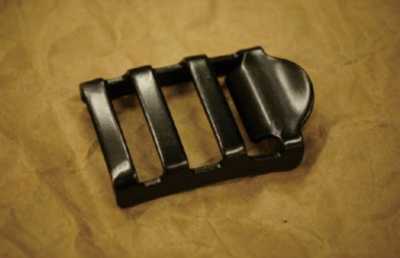
A GI buckle is a belt buckle that holds a tape by threading it through and folding it back, then securing it with internal teeth or a clamping section through friction, allowing continuous length adjustment.
Contents7 sections
Definition and Overview
A GI buckle is a metal fitting used for belts made mainly from flat woven tape. The tape is threaded through the buckle opening, folded back, and secured by the teeth or friction of the movable clamp section. Unlike a perforated belt, it does not need to be adjusted at hole positions, allowing fine length adjustment.
“Gacha belt” and “gacha buckle” are terms used to refer either to a belt using a GI buckle or to the buckle itself. However, the scope of these terms varies in usage, so it is important to confirm the shape, compatible tape width, and material when placing an order.
Materials and Structure
The body is often made of metal, and may be formed by bending sheet metal or by casting. The surface may be finished with paint or plating, which affects not only appearance but also corrosion resistance, susceptibility to discoloration, and abrasion against the tape.
A typical structure consists of a frame that receives the tape, a movable plate that holds the tape in place, and teeth or ridges that assist fixation. The tooth shape and clamping strength affect holding performance depending on the tape thickness, weave density, and surface slipperiness.
- Metal types make it easier to ensure strength, but weight and needle detector compatibility must be considered.
- Painted or plated products may be scratched, rusted, or discolored depending on sweat, moisture, friction, and washing conditions.
- They differ in fixing method and appearance from plastic side-release buckles.
How Sizes Are Expressed
The size of a GI buckle is mainly expressed by the inside dimension of the part through which the tape passes, that is, the compatible tape width. If the inside dimension is not appropriate for the finished width of the tape used, it can lead to difficulty threading, looseness, or reduced holding force.
Not only the tape width but also the tape thickness must be checked. A tape that is too thick may not fit into the opening or movable plate, while a thin, slippery tape may be difficult to hold. Conduct an actual threading test using the thickness including the folded-back section.
- Check the inside dimension and outside dimension of the opening, the thickness, and the height of the tape passage.
- Because the measuring point of the stated dimensions differs by product, confirm it using the drawing or the actual item.
- For specifications that sew in the tape end, allow for seam allowance and post-sewing thickness.
Main Applications
In addition to casual belts, it is used for waist adjustment on pants and skirts, bag straps, and accessories for uniforms and workwear. Because the tape can be fastened at any position, it is used as a component that combines size-adjustment functionality with a metallic design element.
For applications that support the body, confirm according to product specifications whether looseness develops during wear. A GI buckle is a general-purpose fitting for apparel and miscellaneous goods, and for uses such as fall-prevention equipment or cargo-handling belts where human life or heavy-object safety must be ensured, use a dedicated product suitable for the application.
Selection and Precautions
When selecting, in addition to the compatible tape width and thickness, confirm the holding performance under tension, the weight of the buckle, and the finish of the edges. Especially with synthetic fiber tapes that are slippery or tapes with large thickness variations, the fixing force changes depending on the combination, so testing should be done under the same conditions as mass production.
For products subject to metal detection, verify in advance how the buckle affects the detector process. If needle detector compatibility is required, the position of the hardware, the settings of the detector, and foreign-object contamination control must be aligned in the production process.
For washed products, outdoor-use products, and applications that are frequently exposed to sweat or moisture, confirm the durability of the surface finish. Since rust may progress from scratches in plating or paint, evaluation should be performed according to the washing instructions and expected usage environment.
- Check holding performance with the tape combination by changing the pull direction.
- Where it sits close to the skin, consider edge contact and metal allergy concerns.
- Leave sufficient seam allowance at sewn-on sections and reinforce with bar tacks or similar methods if necessary.
Differences from Similar Terms
A side-release buckle is a plastic or metal buckle that fastens by inserting the male and female sides together. Unlike a GI buckle, which pinches the tape with teeth and secures it at any position, it differs in opening/closing method and length-adjustment mechanism.
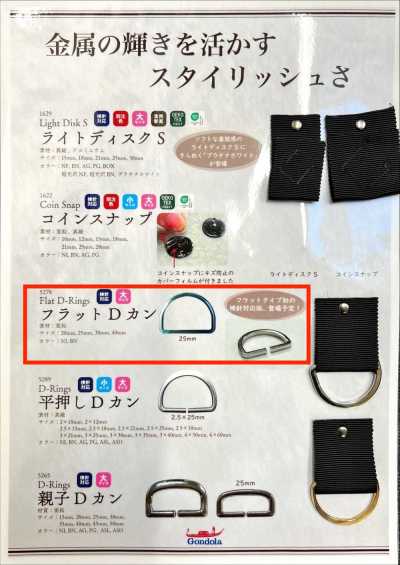
D rings and rectangle rings are ring-shaped fittings through which tape is passed. Since they do not have a clamping mechanism like a GI buckle on their own, adjustment method and fixing performance depend on how the tape is threaded and on the combination with other fittings.
Frequently Asked Questions
What tape width in millimeters can a GI buckle be used with?
The compatible tape width is determined by the inside dimension of the buckle opening. However, even with the same width, ease of threading and holding force vary depending on the tape thickness, stiffness, and surface slipperiness. Before adoption, it is necessary to thread the actual tape to be used and confirm holding performance.
Can a GI buckle be washed?
Whether it can be washed depends on the buckle material, surface finish, and the tape or product specifications it is combined with. Metal parts may discolor or rust due to moisture, detergents, and friction. If the product will be washed, washing tests and appearance checks should be carried out before mass production.
Do GI buckle and gacha belt mean the same thing?
Gacha belt often refers to the entire belt that uses a GI buckle to secure the tape, but it may also refer to the buckle alone. GI buckle, on the other hand, mainly refers to the shape and mechanism of the fitting. In specifications, state not only the name but also the dimensions, material, and compatible tape.