Hand-tacked Hole
A Hand-tacked Hole is a specification in which a hole or thread shank formed by tacking sewing thread on the back side of a button is used so that it can be attached with the stitching less visible from the front.
Contents6 sections
Definition and Overview
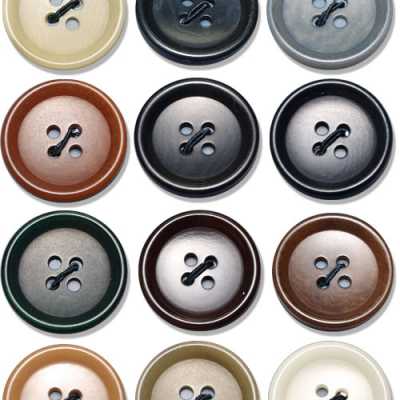
A Hand-tacked Hole is a specification in which sewing thread is passed through a hole provided on the back side of a button to form a thread shank by tacking, or to reinforce the edge of the hole with thread. Sewing thread is less visible on the front side, making it easier to showcase the button design itself.
Although the name includes “hole,” it does not refer to the buttonhole on the garment side. It is used as a term for the button attachment structure and the finishing of the hole on the back side.
Hole and Shank Structure
Buttons with a Hand-tacked Hole differ from standard two-hole or four-hole buttons, which are attached by passing thread directly through holes from the front side. Because the sewing thread is passed through the thread shank on the back side for attachment, the front side can be finished neatly.
The thread shank easily creates a small gap between the button and the fabric, making it suitable even for thick plackets or overlapping sections. On the other hand, the length of the thread shank and the firmness of the tacking affect both button stability and appearance.
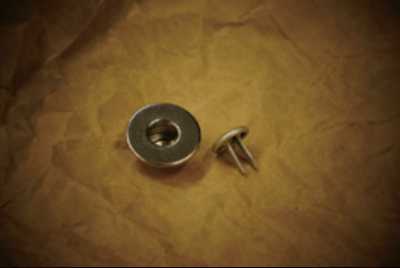
- This differs from a shank button with a molded shank.
- A front hole is a hole specification sewn from the front side, and it is distinct from a Hand-tacked Hole.
- The “hole” in Hand-tacked Hole is not the garment buttonhole.
How Size Is Expressed and Selected
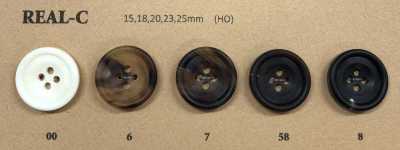
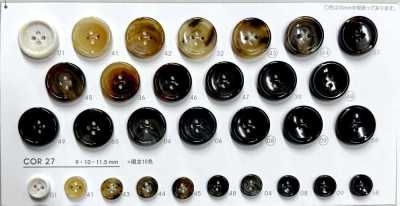
The size of a button may be indicated by diameter in mm, or written in lignes. Ligne is a customary unit used for button diameter, and in specifications it is easier to check if the method of management, either ligne or mm, is standardized in advance.
When selecting a button, check not only the diameter but also the thickness of the button, the size of the hole or thread shank on the back side, and the thickness of the sewing thread to be used. The length of the buttonhole is set separately according to the button’s maximum diameter, thickness, and the intended location of use.
Main Uses and Attachment
It is used for buttons where the holes should not show on the front side, or for buttons that emphasize design. It is suitable for jackets, suits, coats, dresses, formalwear, and similar garments when the front side needs a neat appearance.
During attachment, adjust the height of the thread shank according to the thickness of the fabric and the overlap at the front edge. Wrapping the base with thread to stabilize the thread shank is also an option. Where tensile load is applied, use a backing button on the reverse side as needed to distribute stress on the fabric.
Handling Precautions
Suitability for washing or dry cleaning depends not on the Hand-tacked Hole itself, but on the button material, thread type, and attachment method. Follow the product care label, and before washing, check for looseness in the button or damage to the thread shank.
When pressing, using a pressing cloth is recommended so that the button is not exposed directly to high heat. Strong impact or pressure may cause plastic, shell, or glass buttons to crack, damage the surface finish, or discolor metal parts.
Frequently Asked Questions
What is the difference between a Hand-tacked Hole and a shank button?
A shank button is attached by passing thread through a shank formed integrally with the button body or as a separate part. A Hand-tacked Hole is a specification in which a thread shank is formed by tacking at the hole on the back side. Both make it difficult for stitches to show on the front side, but the shank structure and construction method are different.
Does a button with a Hand-tacked Hole need base wrapping?
It is not always necessary, but base wrapping is effective when the fabric is thick or when you want to stabilize the button. If the thread shank is too short, the front edge may pull tight; if it is too long, the button may tilt more easily. Decide after checking the fabric thickness, button thickness, and overlap condition.
Can buttons with a Hand-tacked Hole be machine washed at home?
Whether this is possible depends on the button material, the tacking thread, the sewing strength, and the product specifications. Water washing may loosen the thread shank, and depending on the material, cracking or discoloration may occur. Follow the product care label first, and check the attachment area before and after washing.