Injection Molding
Injection molding is a molding method in which heated and melted resin is injected into a mold and then cooled to solidify into the desired shape, and in zippers it is mainly used to manufacture plastic teeth.
Contents6 sections
Definition and Overview
Injection molding is a processing method in which molten resin is forced into the cavity of a mold, then removed after cooling and solidification. Because it can repeatedly produce resin parts with uniform shapes, it is used for zipper parts and buckles in apparel accessories.
In zippers, injection molding does not refer to the type of zipper itself, but mainly to the process used to make the teeth. Zippers with injection-molded teeth are generally treated as a type of plastic zipper.
Structure and Components
A zipper is made up of left and right teeth, the zipper tape that holds the teeth, the slider that opens and closes the zipper, and the top stop and bottom stop at the ends. In open-end specifications, an insertion pin and retainer box for separating the left and right sides are added at the bottom end.
In injection molding, resin is fed into a mold to form the shape of the teeth and then attached to the tape. Materials such as polyacetal may be used for the teeth, and the material and shape vary by product.
- Teeth: Continuous parts that interlock left and right to form the opening and closing section.
- Slider: A movable part that brings the teeth together or separates them.
- Top stop and bottom stop: Parts that prevent the slider from coming off the ends.
- Zipper tape: The tape section that supports the teeth and is sewn in place.
Types and Specifications
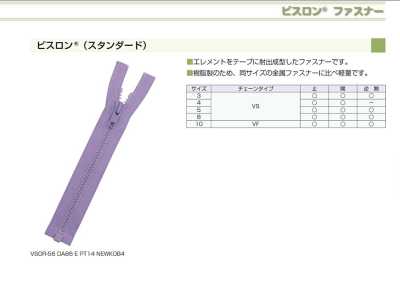
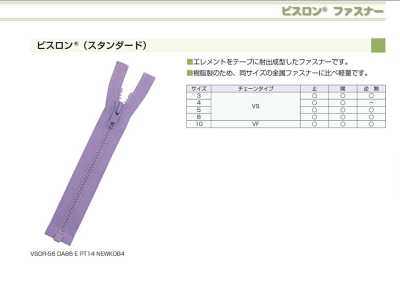
Zippers made with injection-molded teeth are selected by combining tooth size, tape color, length, slider type, and stop specifications. As tooth size increases, the appearance, feel, and suitable applications also change, so it is necessary to check the full specification, not just the product number.
Bottom-end specifications include a closed-end type that only opens partway and an open-end type that allows the left and right sides to separate. There are also two-way separator styles and double-slider styles with two sliders, which are used according to the opening position and ease of use when worn.
In many cases, zipper length refers to the continuous toothed section from the top stop to the bottom stop, or from the top stop to the insertion pin. Since this does not always match the total tape length, confirm the specified measuring standard when ordering.
Main Applications and Selection
Plastic-tooth zippers made by injection molding are used for outerwear, sports and outdoor apparel, bags, and other items where light weight and corrosion resistance are required. For each application, select them by organizing design conditions such as frequency of opening and closing, fabric thickness, required strength, and whether the zipper will be visible or concealed.
In sewing, confirm that the amount of stitching at the tape end is appropriate and that the stitch line does not come too close to the teeth. If the stitch line or fabric edge is caught by the slider, it can cause opening and closing problems. For stretchy fabrics or lightweight fabrics, stabilize the opening with interlining or stay tape as needed.
If washing, dry cleaning, garment washing, or heat-related processing is planned, confirm in advance the suitability of the zipper body, tape, and slider. It is important to check tape twisting on both sides, tooth engagement, and slider operation during the prototyping stage.
Differences from Similar Terms
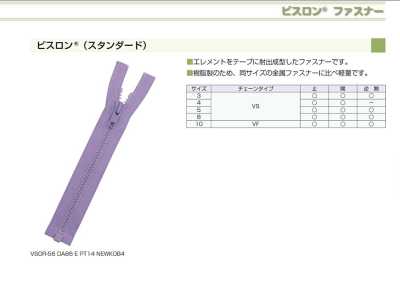
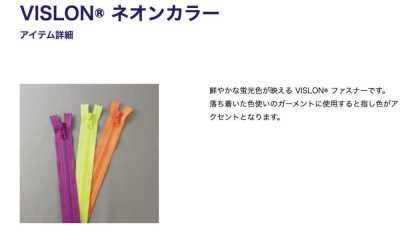
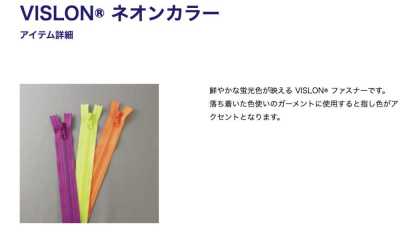
Vislon Zipper is a term used in the market to refer to zippers that use injection-molded plastic teeth. Injection molding, on the other hand, is the processing method used to make those teeth. Distinguish between the manufacturing method and the product name when writing specifications.
A coil zipper uses a continuous helical plastic element attached to tape. A metal zipper uses metal teeth. Both are classifications based on zipper structure and material, and the basis for classification is different from injection molding.
Frequently Asked Questions
Are injection-molded zippers and Vislon Zippers the same?
Injection molding is a method of shaping resin with a mold, and is not itself the product name or structural name of the zipper. Vislon Zipper is used as the name for zippers that use injection-molded plastic teeth. When ordering, specify the tooth size, length, opening style, and slider as well.
Where do you measure the length of an injection-molded zipper?
In many cases, zipper length is based on the effective toothed section. For closed-end types, it is handled as the distance from the top stop to the bottom stop; for open-end types, from the top stop to the insertion-pin side at the bottom end. However, since this differs from the total tape length, confirm the supplier's specifications.
What should you be careful about when sewing injection-molded plastic-tooth zippers?
If the stitch line gets too close to the teeth, the slider is more likely to catch the sewing thread or the fabric edge. It is also important to sew the left and right tapes at the same position and to prevent stretching or waviness at the opening. Before mass production, perform opening and closing tests and washing tests, including fabric conditions.