Ion Plating
Ion plating is a surface treatment used for metal buckles, rings, and similar items, in which metal is ionized in a vacuum to form a coating on the product surface.
Contents7 sections
Definition and Overview
Ion plating is a surface treatment that ionizes metal particles in a vacuum environment and deposits them on the surface of the item being treated to form a thin coating. It is sometimes abbreviated as IP processing or IP plating.
Materials and Structure
Ion plating is not the material of the product itself, but a surface finish. On buckles, D rings, and slide adjusters, it may be applied to base materials such as brass, zinc alloy die-cast, and stainless steel.
Tone, abrasion resistance, and corrosion resistance vary depending on the base material, pretreatment, coating type and thickness, and the usage environment. Even products labeled with the same IP processing may not all have the same performance.
How to Check Size
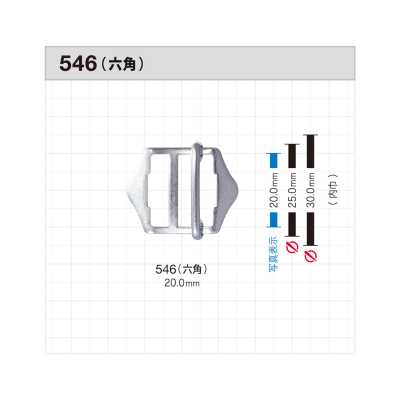
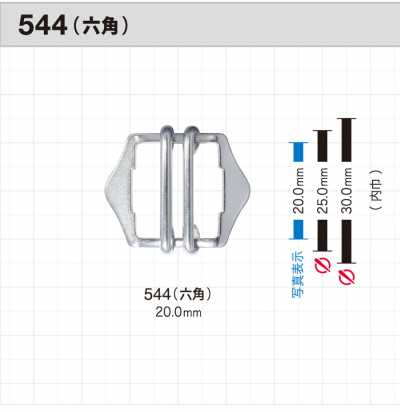
For buckles and rings, choose dimensions that match the width of the tape or belt to be threaded, separate from the type of surface treatment. The key measurement is the inside dimension, and you should check the width of the opening where the tape passes through.
Even when the tape width and inside dimension are almost the same, it may become difficult to thread due to tape thickness, folded edges, or fullness after sewing. During prototyping, thread the actual tape and check the operability of feeding and fastening as well.
- Inside dimension: the size of the opening through which the tape or belt passes.
- Wire diameter: the thickness of the wire material that makes up rings and similar parts, which affects strength and appearance.
- Outside dimension: the size the accessory occupies on the product, used to check interference with specifications and patterns.
Main Applications
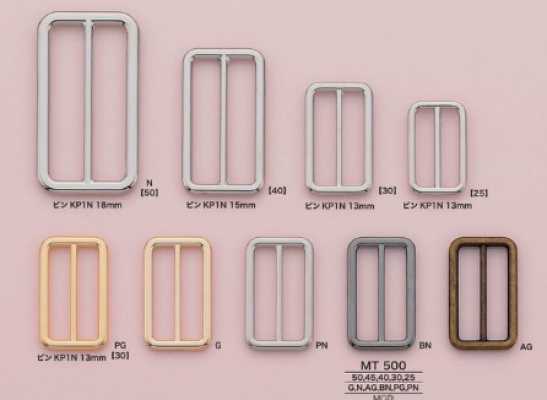
Used for apparel, bags, belts, accessory findings, and similar items where a metallic appearance is desired. It is adopted to give a black or gold appearance and enhance the decorative quality of buckles and rings.
How to Choose and Precautions
For load-bearing applications, check not only whether IP processing is applied, but also the hardware shape, base material, wire diameter, manufacturing method, and load-bearing capacity. Surface treatment does not supplement the structural strength of the hardware itself, so practical testing is necessary for each application.
Because it is metal, its weight may affect the wearing comfort of the product more than resin accessories. In addition, discoloration, wear, or corrosion may occur due to sweat, moisture, salt, cosmetics, detergents, or friction.
For products that undergo needle detection, check in advance according to the production process how they react to metal detectors and how damaged items should be managed. The indication of needle detector compatible should be verified with the actual product before mass production, because confirmation conditions vary depending on the detector settings and the size of the hardware.
Differences from Similar Terms
Plating is a general term for processes that create another metal layer on a metal surface. Ion plating is treated as one type of such surface treatment, but in practice, the term IP plating may also be used to refer to surface finishing in general.
Chrome plating refers to a surface finish using chrome. Ion plating, on the other hand, indicates the formation method, and the process or performance cannot be determined from appearance alone.
Frequently Asked Questions
Are ion-plated hardware items resistant to rust?
In general, improved surface corrosion resistance may be expected, but rust resistance depends on the base material, coating specifications, presence of scratches, and the usage environment. Do not leave moisture or sweat on the item; check corrosion resistance test results and evaluate the actual product as appropriate for the application.
How do you choose the tape width for an IP-plated buckle?
Based on the inside dimension of the hardware, match the finished width and thickness of the tape or belt to be used. Not only the width, but also the thickness from folded sections and seam allowances affects threading. Before mass production, thread the actual tape and check ease of feeding and resistance to slipping out.
Can IP-plated hardware be detected by a needle detector?
Metal hardware will often react to a needle detector. However, whether there is a reaction and the stability of detection vary depending on the hardware material, size, position, and detector settings. For products that require needle detector compatibility, conduct advance testing under the machine and conditions to be used.