


Kemp
Kemp is a short, coarse, hard wool fiber with a medulla that is mixed in with animal hair such as wool. Because it is difficult to dye and tends to stand out as white specks, it can affect the appearance of the raw material and fabric.
Contents6 sections
Definition and Overview
Kemp is a coarse, thick hair contained in wool and similar fibers, and it has different properties from ordinary wool fibers. It has an internal cavity called a medulla, and because the tip does not taper and remains hard, it is treated as an odd fiber in spinning raw materials.
In evaluating and inspecting wool raw materials, the amount of kemp mixed in and how noticeable it is affect the appearance quality. However, the way it appears in a product varies depending on the type of animal hair, the state of raw material sorting, and the finishing of the yarn or fabric.
Effect on Hand and Appearance
Kemp tends to be thicker, harder, and less flexible than ordinary wool. For that reason, when it protrudes from the fabric surface, it can create a prickly feel and a rough impression.
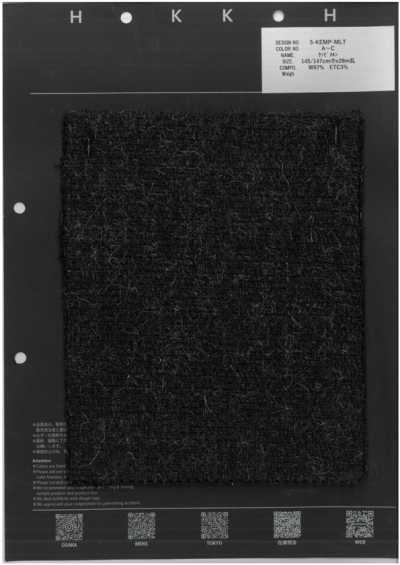
Because it is difficult for dye to penetrate, it may remain as white or light-colored fibers in dotted form even in dyed fabric. It is especially noticeable in dark-colored or smooth-surfaced fabrics.
- It may look as if white or pale fibers are scattered across the surface.
- In fabrics with a fuzzy surface, kemp visible on the surface affects the appearance.
- In applications that require a uniform, smooth surface, contamination is especially likely to be a problem.
Main Uses and Quality Positioning
Kemp is managed less as a deliberately used main material and more as a fiber that may be mixed into wool or animal hair raw materials. In materials that emphasize a uniform surface feel, such as worsted yarn, raw-material sorting and removal during processing are emphasized.
On the other hand, in fabrics that make use of a rustic look, such as woolen-style, home spun-style, or tweed-style fabrics, it may be accepted as part of the material's character together with other irregularities such as neps. Do not judge its suitability for an application by kemp alone; confirm the intended design and the actual material.
Selection and Handling Notes
When selecting fabric, check the surface not only on a swatch but, when necessary, also on a bolt and a sewn sample. Especially with dark-colored products, checking whether there are white fibers that stand out under both natural light and artificial light makes it easier to share mass-production appearance standards.
Kemp does not dissolve in washing, nor can it be completely removed by post-processing alone. Because its appearance may change through product washing, brushing, or brushing treatments, trial evaluation including the processing to be used is necessary.
In sewing, hard fibers protruding from the surface may stand out around the seams. Establish inspection standards for fabric inspection before cutting, as well as appearance inspection after sewing and after finishing, and confirm the acceptable range in advance with all related parties.
Differences from Similar Terms
Neps refers to small knots or clumps formed when fibers become entangled, and they can also add an intentional texture to yarn or fabric. Kemp, by contrast, refers to the hard fiber itself that is mixed into the raw material and has different properties.
Fuzz is a general term for fine fibers on the fabric surface. Kemp may look like part of the fuzz when it appears on the surface, but its distinguishing features are its thickness, hardness, and resistance to dyeing.
Frequently Asked Questions
Is kemp a defect?
The presence of kemp alone does not immediately mean a defect. It is judged according to the fabric's use, color, weave, intended hand, and the appearance standards agreed upon with the customer. It is more likely to be a problem in products that require a uniform surface, so it is important to confirm the acceptable range at the sample stage.
Can kemp be removed by dyeing?
Because kemp dyes differently from ordinary wool, it may remain as white or light-colored fibers even after dyeing. The appearance may change depending on the dye and dyeing conditions, but it cannot necessarily be made completely inconspicuous. When using it in dark colors, check the dyed sample.





