Latex-free
Latex-free is a specification indicating that elastic bands, tapes, and similar stretch materials do not use latex derived from natural rubber.

Contents6 sections
Definition and Overview
Latex-free is a specification indicating that it does not contain latex derived from natural rubber. It is used for stretch materials such as elastic webbing, round elastic, and strap elastic, and is an option for products where consideration for natural rubber is required.
However, latex-free is not a term that indicates all of the material composition, stretch performance, and safety. Even if natural rubber is not used, it is necessary to check the entire product, including adhesives, dyes, and finishing agents.
Materials and Structure
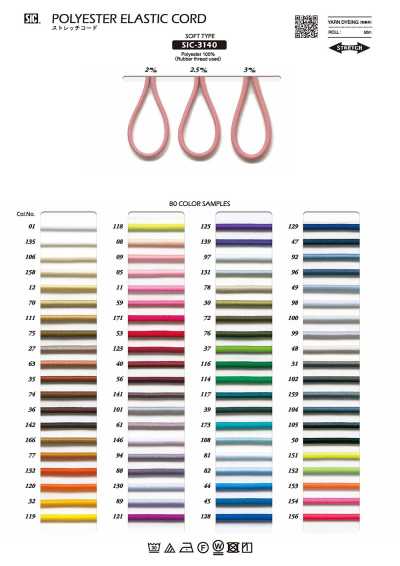
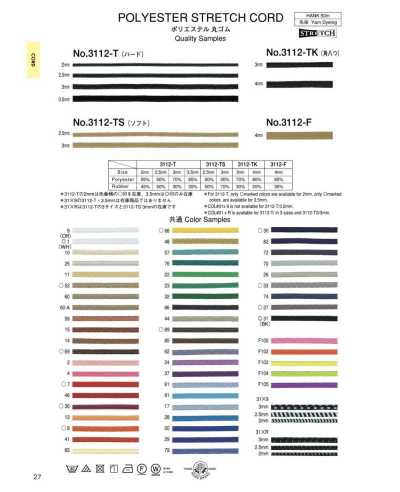
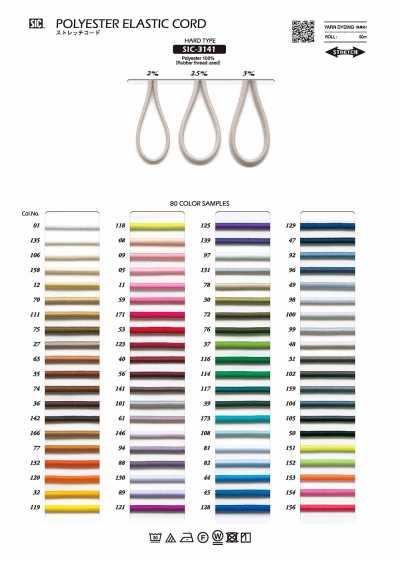
Latex-free stretch materials generally use an elastic material such as polyurethane as the core, with yarn such as polyester or nylon covering the outside. By covering the surface, skin feel, dyeability, and durability are adjusted.
Production methods include woven elastic, knitted elastic, and braided elastic. Woven elastic tends to keep a relatively firm shape, while knitted elastic tends to be softer and easier to conform. Braided elastic is used for round or cord-like applications.
- Woven elastic: a flat stretch tape made of warp and weft yarns.
- Knitted elastic: a soft stretch tape made with a knitted structure.
- Braided elastic: a round or square stretch material made in a braid-like structure.
How Width and Stretch Are Expressed
When selecting, check not only the finished width but also the elongation rate, elongation force, and recovery rate. The elongation rate is how far it can stretch relative to its original length, the elongation force is the force required to stretch it by a certain amount, and the recovery rate is the degree to which it returns after being stretched.
Even with the same width, the tightening feel and return behavior vary depending on the structure, yarn usage, and amount of elastic material. In specifications, stating the width, used length, amount of stretch during sewing, and allowable finished dimensions together helps reduce misunderstandings in actual operations.
Main Applications
It is used in areas that need fit, such as the waist, cuffs, hems, innerwear, lingerie, masks, kids' clothing, and sportswear. For applications that touch the skin, softness, resistance to digging into the edges, and the feel after sewing are also important.
The required holding power varies by application. For keeping garments in place, focus on the return force; for innerwear or mask ear loops, focus on elongation force that avoids excessive pressure, and confirm with prototypes made at the actual length.
Selection and Handling Notes
Even if labeled latex-free, the composition, materials used, and scope of application differ by product. If you require the entire product to be free of natural rubber, confirm not only the elastic body but also information on the covering yarn, sewing thread, adhesive, and printing with the supplier.
Elastic materials may lose stretch and recovery due to long-term stretching, high temperatures, humidity, ultraviolet light, and chlorine bleach. Follow the handling instructions for the material regarding washing methods and storage conditions, and before mass production, check the width, stretch, and appearance after washing.
Frequently Asked Questions
Can latex-free be considered allergy-friendly?
Latex-free is a specification indicating that latex derived from natural rubber is not used, and does not mean that all allergy factors are absent. For products that touch the skin, it is important to check not only the elastic body but also the yarn, dyes, adhesives, and finishing agents.
What is used instead of natural rubber in latex-free elastic?
In many cases, an elastic material such as polyurethane is used to provide stretch. However, the structure, including the covering yarn and production method, differs by product. Check not only the composition label but also the required elongation rate, elongation force, and recovery rate to match the application.
Does latex-free elastic wear out and lose stretch when washed?
It does not necessarily lose stretch just from washing, but heat, chlorine bleach, long periods of stretching, and storage conditions can lead to reduced elasticity. Conduct washing tests close to actual use, and check the stretch and recovery after washing, as well as changes in width.