Natural Rubber
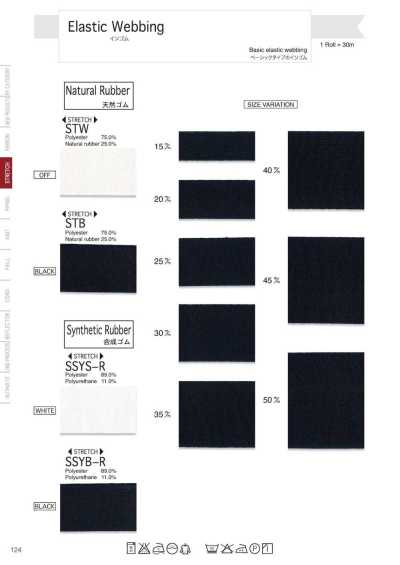
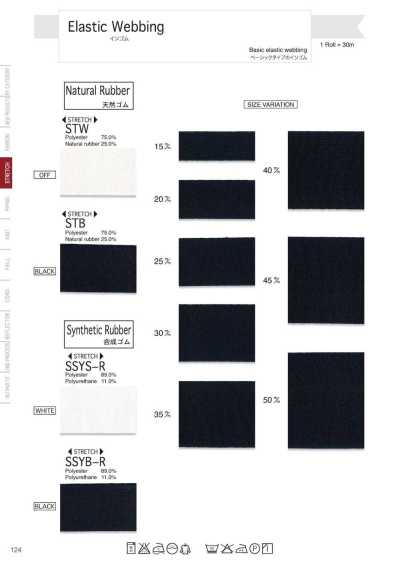
Natural rubber is an elastic material whose main raw material is the latex from rubber trees, and it is used as a stretchable core material in apparel flat elastic webbing and round elastic bands.
Contents7 sections
Definition and Overview
Natural rubber is rubber made from the latex obtained from rubber trees. Because it stretches greatly and tries to return to its original length when the force is removed, it is used in apparel materials to create fit and a snug feel.
For apparel use, it is common to use natural rubber not as an exposed surface material, but as the core of thin elastic yarn or elastic tape. The surface is covered with polyester, cotton, and other yarns to improve skin feel, sewing suitability, and appearance.
Materials and Structure
Stretch materials that use natural rubber consist of a rubber core and the fiber portion that covers it. Depending on the construction of the fiber portion, they are divided into flat woven elastic, knitted elastic, braided cord-type elastic, round elastic, and so on.
Woven elastic tends to hold its shape well because of its woven structure, while knitted elastic tends to be relatively soft and easy to stretch. Braided elastic is used for round string or cord applications. Even when natural rubber is used, thickness, texture, and stretching behavior differ depending on the structure and covering yarn.
- Flat elastic: A flat shape used at the waist, cuffs, and similar areas.
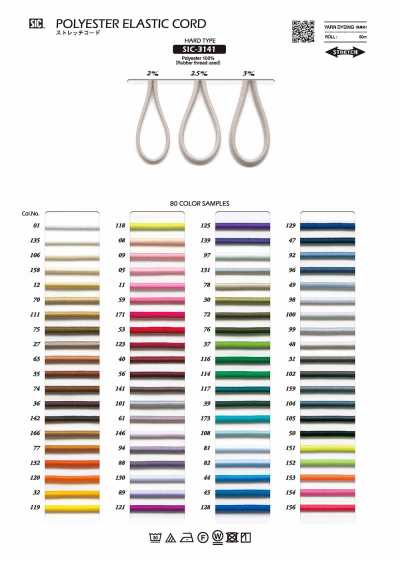
- Round elastic: A round shape used in cord channels and gathered sections.
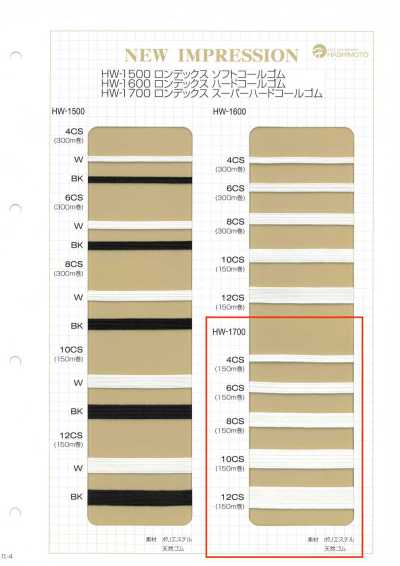
- Corded elastic: Narrow-width flat elastic that may be used with multiple strands in parallel.
How Width and Stretch Are Expressed
Elastic tape is selected according to width, thickness, standard length, and color, as well as stretch ratio and stretching force. Width affects the finished appearance and ease of sewing, and a thicker item is not necessarily stronger, so the actual pulling feel should also be checked.
Stretch ratio is a value showing how far it can stretch relative to its base length. In contrast, wearing comfort is also affected by the force needed to stretch it and the force that returns it after stretching. In specifications, it is important to standardize the measurement conditions and confirm the dimensions in actual use through prototyping.
Main Applications
Elastic materials containing natural rubber are used at the waist, cuffs, hems, underbands in underwear, and fitted sections of masks and hats. They are suitable for applications that conform garment openings to the body or gather fabric.
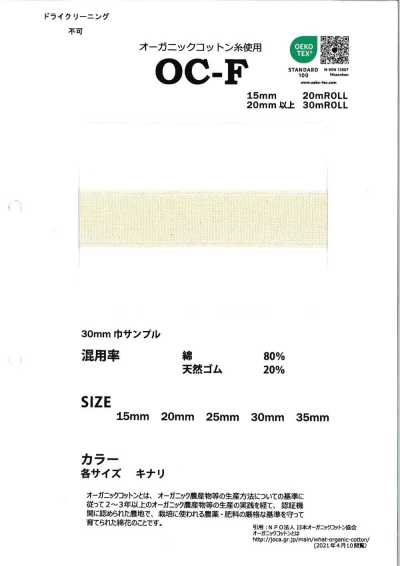
When the covering yarn is cotton, the appearance is softer; when it is polyester, the design may be based on comparatively faster drying and durability. However, performance is not determined by the blend ratio alone, and should be judged together with structure and processing.
Selection and Handling Notes
When selecting, confirm the required width, tightness when stretched, sewing method, number of washes, and whether it will touch the skin. If it is sewn in while stretched strongly, the load on the seams and the garment's snugness will increase, so the stretched dimension should be determined through prototyping.
Natural rubber can deteriorate due to heat, ultraviolet light, ozone, oils, and similar factors, causing hardening, stickiness, cracking, and reduced elasticity. Avoid high-temperature drying and prolonged direct sunlight, and follow the care label for each product and the handling conditions for the material.
For products that are washed repeatedly, check the stretch recovery rate and the appearance after washing. Natural rubber is suitable depending on the application, but it should be selected by comparing it with elastic materials such as polyurethane according to the required durability and heat resistance.
Differences from Similar Terms
Polyurethane is a synthetic resin-based elastic material and is also widely used to add stretch by blending it into yarn and textile. Natural rubber is often used as the core material of elastic materials, so even though both are stretch materials, their raw materials and uses differ.
Silicone rubber is a synthetic rubber used for applications that require heat resistance and weather resistance. Natural rubber, polyurethane, and silicone rubber all relate to stretch, but they are used differently depending on the required physical properties, processing method, and usage environment.
Frequently Asked Questions
Can elastic containing natural rubber be washed?
It may be used in products that can be washed, but the durability of natural rubber depends on the structure, covering yarn, detergent, drying method, and other factors. Avoid high-temperature drying and excessive heat, and check the product care label and the material handling conditions.
Which should I choose, natural rubber or polyurethane?
If you want stable fit as the core material of elastic tape or elastic cords, natural rubber is one option. If blending into textile or emphasizing light stretch is more important, polyurethane is often used. Prototype verification is necessary for each application.
How do you decide the required length for flat elastic containing natural rubber?
It is decided not only by the finished measurement, but also by the force when the elastic is stretched, the garment ease, and the amount of stretch used when sewing it on. Because stretching behavior differs by structure even when the width is the same, make prototypes and check the snugness and recovery when worn.