Cut From Solid
Cut From Solid is a method of making buttons by cutting a solid block of metal, resin, or other material and machining the holes, shank, and surface shape.

Contents6 sections
Definition and Overview
Cut from solid is a manufacturing method that cuts a block of material or sheet stock to form the outer shape of a button. Unlike a method in which material is poured into a molding die, holes, shanks, grooves, edges, and the like are machined as needed. There are examples where brass and other metals are cut, polished, and finished.
It makes it easier to take advantage of the material’s own texture and the machined surface, and it is also used for designs with thickness and a sense of dimension. However, cut from solid is not a term indicating the material name or button shape; it mainly indicates the manufacturing method.
Materials and Structure
The target of cut from solid is not limited to metal; it also extends to machinable resin and natural materials. Because hardness, specific gravity, gloss, aging, and brittleness differ depending on the material, you should confirm not only the appearance but also the material suitable for the garment’s applications and washing conditions.
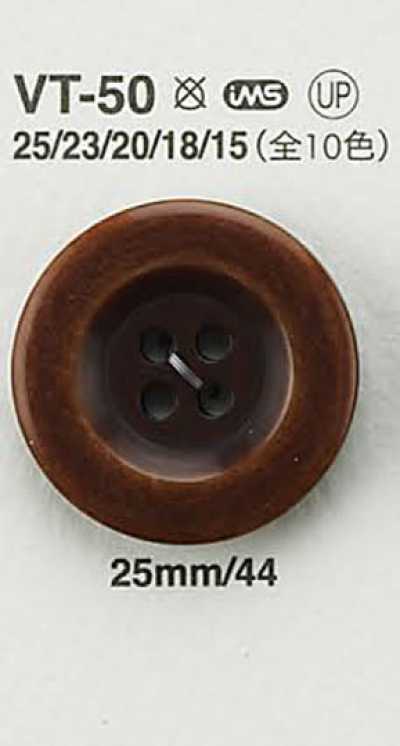
The structure includes front-hole types such as two-hole and four-hole styles, as well as shank styles with a shank on the back. Front-hole styles are easy to attach along the fabric, while shank styles create a space between the button and the fabric, making them suitable for thick fabrics and garments with a thick placket.
- The area around the holes may be chamfered to reduce wear from sewing thread.
- For shank styles, check the thickness and strength at the base of the shank, and whether it passes through the buttonhole.
- For metal versions, finishing such as polishing, plating, or painting may be added after cutting.
Size Representation
Button size is generally indicated by diameter in millimeters, and in garment materials it is also expressed in lignes. Lignes are a conventional unit for buttons, and when looking for the same size, checking both lignes and millimeters helps prevent ordering mistakes.
The feel of a cut from solid button also changes depending on thickness, shank height, hole diameter, and the shape of the back side. Rather than choosing by diameter alone, it is important to confirm in the specification sheet the combination with the buttonhole opening size, fabric thickness, placket overlap, and sewing thread thickness.
Main Applications and Selection
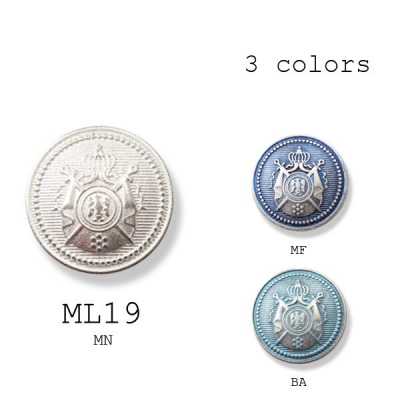
It is used for jackets, coats, blousons, pants, skirts, dresses, and more. In particular, those cut from metal may be used for outerwear, jackets, uniforms, bags, and the like where a sense of weight and material texture is desired.
When selecting, consider the weight on the garment, ease of handling when opening and closing, surface finish, and harmony of color and gloss with the fabric. On thin fabrics or highly stretchable fabrics, the weight of the button may cause the front edge to sag or put stress on the fabric, so using a support button together may also be considered.
Attachment and Handling Precautions
Front-hole styles are sewn on with a cross or parallel stitch, and shank styles are attached by passing thread through the shank. If it is pressed too tightly against the fabric, opening and closing become difficult, so if necessary a thread shank is formed to provide proper clearance between the button and the fabric. Using a support button for heavy buttons can distribute the load on the outer fabric.
Resistance to washing, dry cleaning, and ironing varies depending on the material and surface finish. Metal may discolor due to moisture or chemicals, while resin and natural materials may crack or deform due to heat, impact, or dryness. As a product, suitability is confirmed through washing tests and dry-cleaning tests including the attached buttons.
- Do not apply the iron directly to the button; use a pressing cloth or avoid ironing over it.
- To reduce impact during washing, methods such as turning the garment inside out or using a laundry net can be used.
- Before mass production, check for peeling of the finish, discoloration, and any chipping of the holes or shank.
Frequently Asked Questions
What is the difference between a cut from solid button and a cast button?
A cut from solid button is made by cutting away unnecessary parts from a block or sheet of material. A cast button is made by pouring molten metal or the like into a mold to form the shape. The difference is in the manufacturing method, and it can be difficult to tell them apart by appearance alone, so check the specification sheet or accessory specifications.
How do you specify the size of a cut from solid button?
Basically, specify the diameter in millimeters or lignes. In addition, determine the thickness, number of holes, hole diameter, whether there is a shank and its height, and the surface finish. It is necessary to confirm the actual buttonhole opening size and fabric thickness to ensure a combination that does not interfere with opening and closing.
Can a cut from solid metal button be washed?
Whether it can be washed depends on the type of metal, the surface finish such as plating or painting, and the garment’s care label. Because discoloration or damage may occur due to moisture, detergent, or friction, confirm the suitability for washing and dry cleaning in the finished product state before mass production.