


Magnetic Buckle
A magnetic buckle is a fastening buckle that uses the attractive force of built-in magnets to connect both ends of a tape or belt simply by bringing them close together.
Contents6 sections
Definition and Overview
A magnetic buckle is a buckle that guides alignment with magnets built into the left and right parts and fastens when the parts are brought close together. To release it, the lock is disengaged by pressing a button, moving a lever, or operating the parts in the manner specified for each product. It is characterized by easy one-handed operation.
A typical insertion buckle is fastened by pushing the convex side tab into the concave receiving side. In contrast, a magnetic buckle is centered on a structure that uses magnetic attraction to guide the parts into the joining position, so the operating feel and locking mechanism differ.
Materials and Structure
The main body may be metal, resin, or a combination of both, with magnets and locking parts inside. Metal types are easier to achieve with a refined feel and rigidity, but weight tends to increase. Resin types are easier to make lightweight, but durability for the intended application must be confirmed.
The tape is threaded through the buckle's passage section, folded back and sewn, or fixed with screws or similar parts. The required components and sewing process differ between specifications in which the tape is sewn on to fix the length and those in which slide adjusters or similar parts are used together to adjust the length.
How to Read the Size
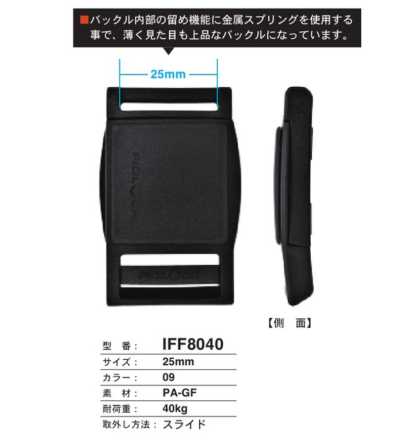
Buckle size is generally checked by the inside dimension of the section through which the tape passes, rather than by the overall external dimensions. This inside dimension is a guideline for the corresponding tape width. Selection should take into account the actual width of the tape used, its thickness, and the thickness added by the folded end.
Even with the same stated width, the ease of threading the tape changes depending on the shape of the passage section, the roundness of the corners, and the thickness of the coating or plating. Before mass production, it is important to confirm threading workability, holding condition, and whether adjustment is possible through a prototype using the specified tape.
- The inside dimension is the width of the opening through which the tape passes.
- The external dimension is used to consider the visual design and mounting position.
- Confirm not only the tape width, but also the tape thickness and the thickness of overlapping sections.
Main Applications
It is used for bag straps, belts, and opening and closing sections of outerwear and outdoor clothing. It is suitable for locations that require quick attachment and removal, or for products where operability is intended as part of the design. There are multiple types of external shapes, such as rectangular forms, and methods for securing the tape.
However, magnetic attraction itself and resistance to coming apart under load are different performance characteristics. For straps that support luggage, applications that hold the body, and locations subject to strong impact or repeated loads, confirm whether the specification has locking performance suitable for the application.
Selection and Precautions
When selecting, confirm the compatible tape width, mounting method, opening and closing direction, required holding force, and balance with the overall product weight. Especially for load-bearing applications, evaluate not only static holding but also force in the pulling direction, diagonal forces, and resistance to coming apart during repeated use with prototypes.
Metal parts may rust or discolor due to sweat, moisture, detergent, seawater, and similar factors. Confirm the material and surface treatment according to the usage environment, and consider wash testing for laundered products. Because magnets are included, the response of needle detectors and any impact on operations must be confirmed for each specification.
Also consider the possibility of bringing items affected by magnetism nearby, as well as consideration for people using medical devices, according to the product's usage scenario. Do not judge safety based on magnetic attraction alone; confirm ease of opening and closing and whether unintended release occurs in the finished product condition.
Frequently Asked Questions
Where should I measure the size of a magnetic buckle?
Basically, check the inside dimension of the opening through which the tape passes. See whether the inside dimension matches the width of the tape used, but the actual tape width, thickness, and the overlap at the folded section are also important. Do not decide based only on the stated dimensions; thread the actual tape and confirm workability and holding condition.
Can a magnetic buckle be used on a strap that is subjected to strong force?
Whether it can be used depends on the structure and performance of each buckle. The magnet is a component that assists joining, and it must be checked separately from the locking performance that bears the load. Consider the expected load, direction of force, and repeated use, and judge by performing tensile tests and similar evaluations on the finished product.
Can a magnetic buckle be used with needle detection?
Because it contains magnets and metal parts, it may react to a needle detector. Whether it is needle detector compatible depends on the settings of the needle detector used, the material and shape of the buckle, and the mounting position within the product. Before adoption, perform a needle detection test using the actual product and confirm the inspection standards.





