Male And Female Hooks
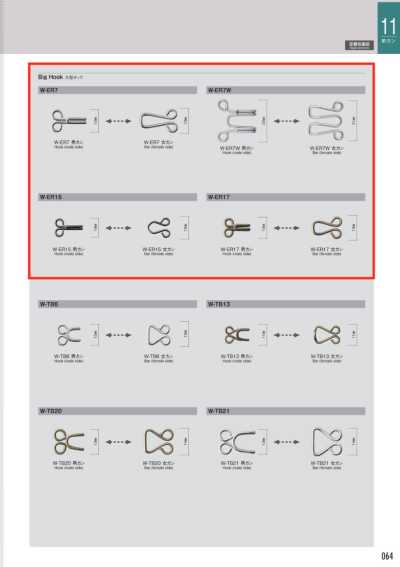
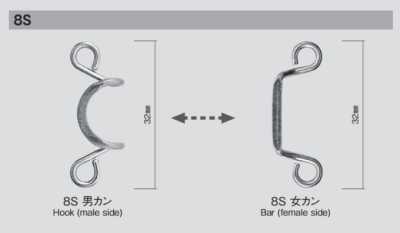
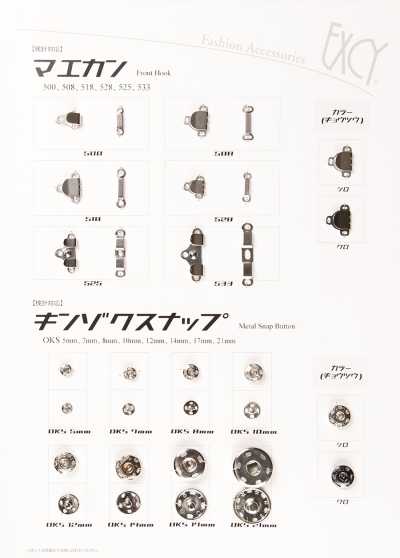
Male and female hooks are paired hook components that fasten an opening in a garment by hooking the protruding male hook into the receiving female hook.
Contents6 sections
Definition and Overview
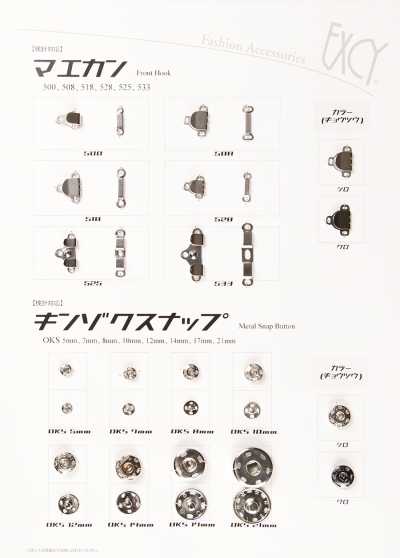
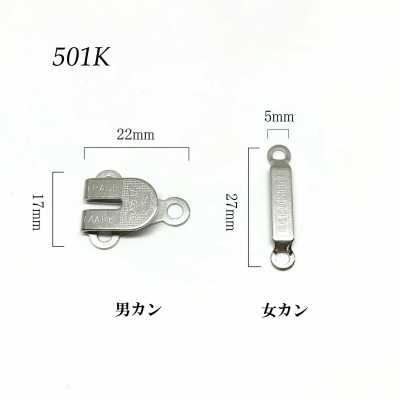
Male and female hooks are hook fasteners used as a pair of components. In general, the male hook refers to the protruding part or hook on the fastening side, and the female hook refers to the receiving ring or metal fitting. They secure the left and right front openings or overlaps, and are characterized by a relatively slim finish.
These are the names of the individual components; neither the male hook nor the female hook functions as a fastener on its own. Even when the name is the same, the shape, dimensions, fastening direction, and whether it is sewn on or pressed in may differ, so when ordering, confirm the matching specifications.
Materials and Structure
Most are made of metal, and the hook or protruding part of the male hook fits into the receiving part of the female hook and withstands pulling force. The surface may have a plated finish, and appearance, corrosion resistance, and consideration for metal allergies should be checked together with the material and surface treatment.
Some types have a locking mechanism on the male hook side to make them less likely to come undone after fastening. On the other hand, ease of opening and closing and holding power often work against each other, so choose the hook depth, receiving part shape, and component thickness according to the application.
- Sew-on types are fixed to the textile with thread through holes or a base with legs.
- Press-in types are crimped and fixed to the textile with a dedicated setting tool and press machine.
- Use products in which the male and female hooks are paired as the same specification.
How to Attach and Align
For sew-on types, sew the base down several times while considering the direction of the force applied. On thin textiles, highly stretchable textiles, or textiles with a coarse weave, reinforcing the attachment area with a pressing cloth or interlining helps reduce textile tearing, stretching, and metal fitting tilt.
For press-in types, select the leg length and matching setting tool appropriate for the textile thickness. If the hole position, pressing pressure, or component orientation is incorrect, it may cause insufficient crimping, deformation, or the part coming off. Before mass production, test on the actual textile and check opening and closing, as well as the holding condition.
The position of the male and female hooks is determined based on the overlap amount at the front opening and the finished line. It is important to temporarily secure one side first, then align the corresponding position, and check that there is no step, twist, or lifting on either side when closed.
Main Uses and Differences from Similar Terms
They are mainly used for front openings, waist areas, and necklines of skirts, pants, dresses, and jackets. They may also be used as a fastening aid alongside zippers or buttons, and are suitable for areas where you want the opening to remain stable without being visible from the outside.
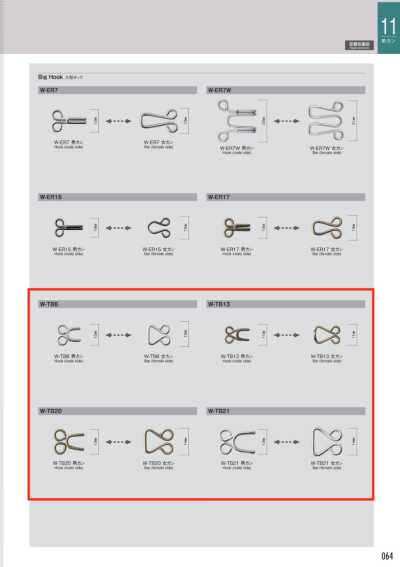
Hook and eye closure often refers to hook fittings used for the front opening or waist area of pants and skirts, while male and female hooks may refer to the constituent parts of that set. A spring hook is a different structure that holds with spring force, and even for the same application, compatibility must be confirmed by shape.
Strength and Needle-Detection Notes
In areas that are opened and closed repeatedly or are subjected to strong sideways force, evaluate not only the strength of the parts themselves but also the textile, reinforcement material, and the strength of sewing or crimping as one system. For shapes that are likely to catch, also confirm whether they will damage the lining or other garments.
When metal parts are used, quality control should include a needle-detection process so that broken parts during production can be distinguished from broken needles. For products requiring needle detector compatibility, check in advance whether the parts used meet the conditions of the needle detector.
Frequently Asked Questions
Can male and female hooks be selected separately and still be used?
They can be used, but it is standard to choose a male and female hook designed as a matching set to the same specification. If the shape or dimensions do not match, problems such as not fastening, coming undone easily, or excessive force on the parts may occur. Check opening, closing, and pull performance with the actual product.
How do you choose between sew-on and press-in types?
Sew-on types are attached by sewing and are easier to repair or make slight position adjustments. Press-in types are fixed by crimping the metal fitting, so it is necessary to confirm the compatible textile thickness, dedicated setting tool, and press conditions. Choose based on textile thickness, mass-production equipment, and the required appearance and strength.
What should be checked if male and female hooks come off easily?
First, check the combination of the male and female hooks, the attachment direction, and any shift in the attachment position. For sew-on types, check for broken sewing thread or tearing of the base fabric; for press-in types, check for insufficient crimping or deformation of the parts. If the design places excessive sideways force during use, also consider reinforcement or a design change.