


Mikado
Mikado is a woven fabric used for formal applications, made from silk and also polyester, with moderate thickness and firmness and a subdued, elegant luster.
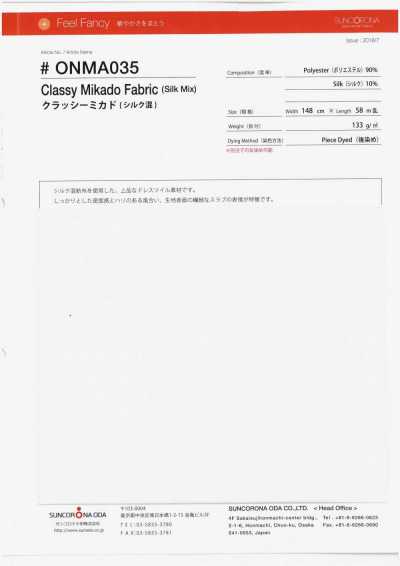
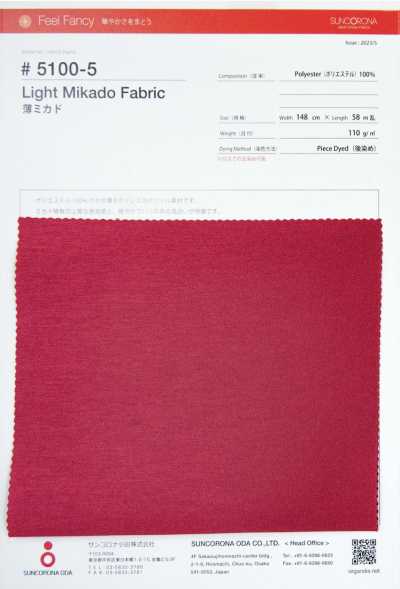
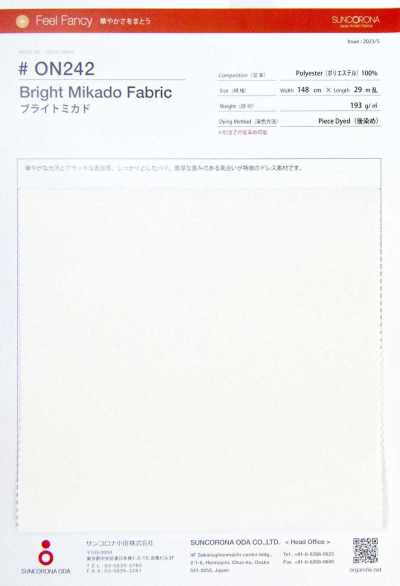
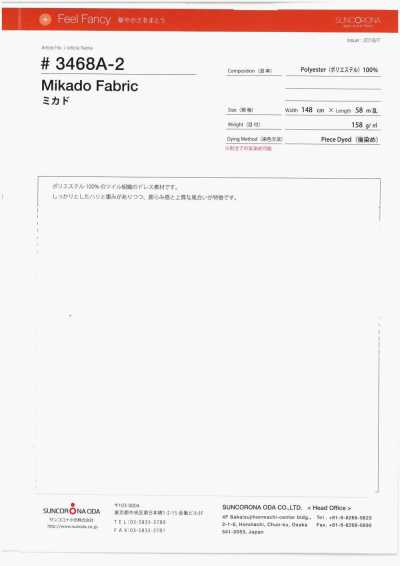
Contents6 sections
Definition and Overview
Mikado was originally used as a name for silk fabric, but today polyester and silk-polyester union fabrics are also sold. For this reason, it is often treated not as a material name or a single weave name, but as a fabric name that describes the appearance and texture.
In general, it is woven at a high density, and many types have a delicate woven texture on the surface. However, thickness, weave structure, and the degree of luster vary by product. When ordering, it is important not to judge by the name Mikado alone, but to check the blend ratio, fabric weight, weave structure, and finish.
Texture and Appearance
Mikado is a fabric with firmness and resilience that helps it hold its shape, making it easy to create a raised silhouette. Compared with thin fabrics that drape softly, it more easily expresses the volume of tucks, gathers, and flares, creating a neat and structured impression.
The luster ranges from a strong, mirror-like shine to a more subdued look with visible weave shadows. Because the color depth and surface appearance change depending on how the light hits it, the actual fabric should be checked over a sufficiently large area when deciding color or confirming the design.
- Silk-based types tend to have natural luster and suppleness.
- Polyester-based types are relatively easy to handle, and some are lightweight.
- Union fabrics are used to balance the texture and function of each material.
Main Applications
It is used for items that take advantage of the fabric’s firmness and luster, such as dresses, one-piece dresses, skirts, and jackets. It is especially well suited to formal applications such as bridal wear, party wear, and stage costumes, where a glamorous yet refined appearance is required.
Types with thickness and presence can be used for fall and winter wear or all-season formal wear, while thinner, lighter types can be used for spring and summer dresses and blouses. Since seasonality is not determined by the name alone, consider the fabric weight, sheerness, and whether a lining is needed.
Selection and Handling Notes
When choosing, check the silhouette created by the firmness, the way the luster appears, the woven texture on the surface, and the sheerness using a sample. In particular, when using tucks or gathers, it is reassuring to make a prototype to confirm the thickness caused by overlapping seams and whether the finished garment has the expected volume.
Shrinkage, wrinkling, and changes in luster after washing differ depending on the blend ratio and finishing. Fabrics containing silk may be affected by moisture and friction, so follow the care tag. Before mass production, carry out a water test or trial wash to check dimensional change and color transfer.
Fabrics with surface luster may show fading or shine marks due to iron pressure or high heat. Use a pressing cloth and test the temperature and steam volume on offcuts. During sewing, choose a fine needle and suitable sewing thread, and check for needle holes, puckering, and other issues.
Differences from Similar Terms
Satin broadly refers to smooth, lustrous woven fabrics made with a satin weave. Mikado can also have luster, but it is generally distinguished by being firmer than satin and by the woven texture often showing on the surface. However, some products combine the characteristics of both.
Taffeta is a thin to medium-weight woven fabric characterized by a crosswise ribbed feel and firmness. Mikado also has firmness, but it tends to be used with a more substantial look and a more formal feel in mind. Duchess satin is a thick, lustrous type of satin, and its weave structure and luster differ from Mikado.
Frequently Asked Questions
Is Mikado made only from silk?
No. Mikado includes not only silk types, but also polyester types and union fabrics such as silk-polyester blends. The material cannot be identified from the name alone, so check the care tag and specification sheet for the blend ratio. The material changes the luster, weight, washability, and ease of handling during sewing.
Can Mikado be washed at home?
Whether it can be washed at home depends on the material and finishing. In particular, fabrics containing silk may shrink or change texture when washed with water. Always check the care tag, and if you are making the product, perform a trial wash in advance to confirm shrinkage, color loss, and changes in luster.
What should be noted when sewing Mikado?
Because it is a firm fabric, areas where tucks or seam allowances overlap tend to become thick, so seam finishing and pressing appropriate to the specification are necessary. Also, the shiny surface may show needle holes or fading, so check the needle, thread, stitching tension, and ironing conditions on offcuts before sewing.





