Tombac (Red Brass)
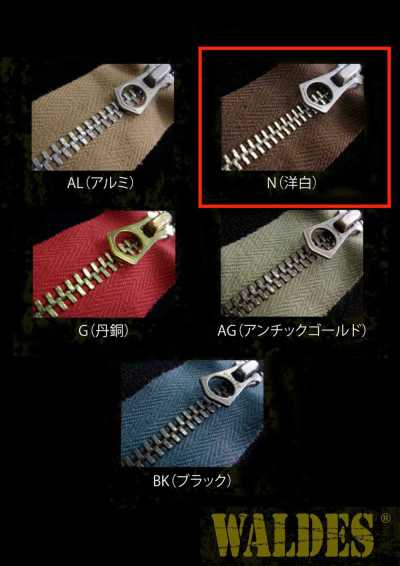
Tombac (red brass) is a reddish type of brass with copper as its main component, and it is a metal material used for zipper teeth, buttons, and similar items.
Contents6 sections
Definition and Overview
Tombac is a type of brass whose main components are copper and zinc. Compared with ordinary brass, it has a higher copper ratio and is characterized by a reddish gold to copper-colored appearance. In English, it is called red brass or gilding metal.
In apparel materials, it is used for the elements of metal zippers and also for metal buttons. Tombac as a zipper material name may refer not to the entire zipper, but mainly to the metal in the elements.
Zipper Structure and Parts
A metal zipper has a structure in which the elements attached to the left and right zipper tapes interlock, and the slider is moved to open and close it. At the end of the elements there is an upper stop or lower stop, and on an open zipper the insertion pin handles opening and closing at the lower end.
Even on zippers labeled as tombac, the slider, pull, upper stop, lower stop, and insertion pin are not necessarily made of the same material. When checking appearance, corrosion resistance, or consideration for metal allergies, confirm the material and surface treatment of each part separately.
- Elements: Tooth-shaped parts that interlock on the left and right to form the opening and closing section.
- Slider: A movable part that brings the elements together or separates them.
- Upper stop / lower stop: Parts that stop the slider's range of movement.
- Insertion pin: A part that connects and disconnects the left and right sides at the lower end of an open zipper.
Types and Specifications
Tombac is a term for the material of the elements, not a zipper type itself. It is selected in combination with specifications such as closed zipper, open zipper, two way separator, and double slider.
Element size is often classified based on the width of the elements when interlocked, and the numerical designation or name should be confirmed with each manufacturer. Choose the element size and tape width according to the application, textile thickness, opening and closing frequency, and desired appearance.
Main Applications and Selection
Using its reddish metal color to good effect, it is used for visible openings and closings on denim, workwear, leather goods, bags, outerwear, and similar items. If you want to match the color tone with the textile or other metal accessories, check not only the elements but also the finish of the slider and pull.
Under conditions such as washing, moisture, sweat, friction, and product washing, the metal surface may discolor or affect the textile. Before mass production, it is important to make prototypes with the actual textile, sewing specifications, and washing method to confirm smooth operation and changes in appearance.
Stitching and Length Verification
When sewing on a zipper, keep the sewing machine needle from hitting the elements and sew the left and right tapes evenly. If the textile is thin or stretchable, reinforce the opening with facings or stay tape to prevent rippling and snagging.
Zipper length is generally measured from the upper stop to the lower stop in the closed state. Since the measurement standard may differ for open zippers or special stop specifications, confirm the product length and measurement method indicated by the supplier rather than the total tape length.
Frequently Asked Questions
What is the difference between a tombac zipper and a brass zipper?
Both are alloys whose main components are copper and zinc, but tombac generally has a higher copper ratio and tends to have a reddish tone. Brass is often treated as having a yellowish tone. However, the appearance can also change depending on the finish and over time, so actual samples should be checked.
Can a tombac zipper be washed?
Whether it can be washed cannot be determined from the tombac elements alone. Confirm the tape, slider, surface treatment, textile, detergent, and whether product washing is involved. Since moisture, chemicals, and friction may change the appearance, perform a washing test suited to the product conditions.
Where should the zipper length be measured?
For a standard closed zipper, measure the opening and closing length from the upper stop where the elements begin to the lower stop. The extra tape is usually not included in this length. For open zippers and two way separators, the standard may differ depending on the specification, so compare the specification sheet with the product label.