With Rim / Without Rim
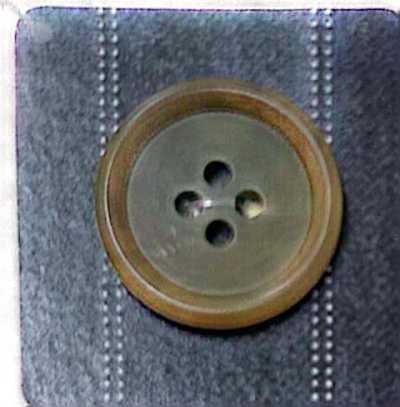
With rim / without rim is a term used to distinguish between a button shape with a raised edge or step around the outer circumference of the surface, and a shape finished with a flat or continuous surface all the way to the outer edge.
![COR27 [Buffalo Horn Style] 4-Hole Button, Glossy, With Rim](/img/item/thumb/OKURA/1014134_t2.jpg)
![UNICORN778 [Buffalo Horn Style] Four-Hole Button With Rim](/img/item/thumb/OKURA/1088999_t2.jpg)
![COR127 [Buffalo Horn Style] 4-Hole Button With Rim, Semi-Gloss Finish](/img/item/thumb/OKURA/1014131_t2.jpg)
![COR8 [Buffalo Horn Style] 4-Hole Button With Rim](/img/item/thumb/OKURA/1014143_t2.jpg)
Contents6 sections
Definition and Overview
With rim refers to a button shape with a rim-like edge around the outer circumference or a raised step higher than the center. Without rim refers to a shape finished with no clear edge on the outer circumference, with a flat or gently rounded surface.
This classification mainly describes the appearance of the surface design and does not directly indicate the material, number of holes, button thickness, or the presence of a shank. Even with the same material and size, the presence or absence of a rim changes the impression and the way light falls on it.
Materials and Structure
Both with rim and without rim include holed buttons such as two-hole, four-hole, and cat's eye, as well as shank buttons that are attached by passing thread around a back shank. In holed buttons, the rim may appear to surround the holes; in shank buttons, it appears as the outline of the surface.
They are made from a variety of materials, including resin, shell, natural materials, metal, and glass. Some have a thin rim rise or only a small step from the center, so it is important to check the thickness and outline using front and side samples, not just the shape name.
- With rim: The outer contour stands out easily, giving the button a stronger presence.
- Without rim: The surface looks clean and understated, making it easier to blend with the textile and garment design.
- Holed / shank: These are structural categories separate from whether there is a rim.
How Size Is Shown
Button diameter is generally shown in millimeters or lignes. Lignes are a unit used for button diameter and may appear alongside millimeter notation in specifications, accessory lists, and purchase orders.
For with-rim buttons, confirm the largest outer diameter; for without-rim buttons, confirm based on the outer diameter. However, because the apparent size varies depending on surface curvature and rim projection, the buttonhole length should be determined with the actual thickness and ease of insertion in mind.
Main Applications
With rim is used for shirts, blouses, jackets, cardigans, coats, and similar items where you want to emphasize the outline. Because the rim creates shading, it is selected when you want the button to be seen as part of the design even in relatively basic garments.
Without rim is used for shirts, blouses, dresses, knitwear, formalwear, and similar items, taking advantage of its smooth and subtle impression. A flat, rimless shape is also chosen when you want to show the texture of shell or resin naturally.
Attachment and Handling Precautions
Holed buttons are attached by passing thread through the holes, and a thread shank is made if needed to create appropriate space between the button and the textile. Shank buttons are attached by passing thread around the shank. On thick fabrics or overlapping placket areas, fastening becomes difficult if the button thickness and shank height are insufficient.
Resistance to washing, dry cleaning, and ironing depends on the material and surface finish, not on whether there is a rim. Natural materials may crack or chip, metal may discolor, and resin may deform or discolor due to heat, so pretesting is carried out when product washing or pressing is performed.
- Do not press the iron directly and strongly onto the button; consider using a pressing cloth or avoiding direct pressing.
- For products that will be washed or dry-cleaned, check the suitability of each button material.
- With rim buttons may concentrate impact on the edge, so check for chipping during transport and processing.
Frequently Asked Questions
Are with rim and cat's eye buttons the same?
No. With rim and without rim are mainly categories based on the appearance of the outer edge. A cat's eye button refers to a holed button shape with a groove in the center that makes it easy to create a thread shank. Cat's eye buttons may also have designs that look with rim or without rim.
Does the size of the buttonhole change with with rim or without rim?
Even if the outer diameter is the same, ease of insertion changes depending on rim projection, button thickness, and shank height. Do not determine the buttonhole only by the indicated size; check with the actual button and set it while considering the fabric thickness and stretch after sewing.
Are without-rim buttons weak in washing?
Being without rim does not itself determine washing resistance. Resistance depends on the material, such as shell, resin, or metal, the surface treatment such as dyeing or plating, and the sewing conditions. It is important to perform washing tests with the actual product in line with the garment care label and processing conditions.
![COR30 [Buffalo Horn Style] 4-Hole Button, Glossy, With Rim](/img/item/thumb/OKURA/1014136_t2.jpg)