Roll Line
A roll line is the position where the front edge of a jacket or similar garment turns back to form the lapel break line, or the stay tape used at that position to stabilize the shape.

Contents6 sections
Definition and Overview
A roll line refers to the line on the front panel of a tailored jacket or coat where the lapel naturally folds back toward the upper collar side. It is an important visible position that affects how the lapel stands and rolls when worn.
As a materials term, “roll line” may also refer to the stay tape applied or stitched along the roll line. It is used not to fix the entire front edge, but to create a natural roll while preventing stretching and distortion along the fold line.
Area of Use and Role
It is mainly used at the lapel area of tailored jackets, suits, and coats. Along with the shoulder, hem, vent, and front edge, it may be specified as a placement for stay tape as reinforcement for areas that tend to stretch during sewing or wear.
By stabilizing the roll line, the lapel fold position is less likely to shift, and waviness or sagging can be reduced. On the other hand, if it is fixed too firmly, the garment may lose the natural feel of the fabric and a soft roll.
Types and Cutting Direction
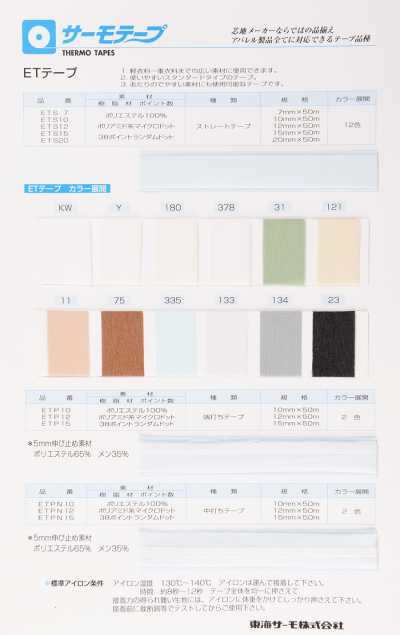
Tapes for the roll line are selected according to the tape's cutting direction and stretch, such as straight type, bias type, and half-bias type. It is important to match the fabric grain and curve, as well as the desired lapel roll.
When strong stabilization is needed for straight sections, a low-stretch type is used. When the tape needs to blend into curves or a raised roll, a bias-direction tape with moderate stretch is chosen. There are adhesive types with adhesive resin on one side and non-adhesive types that are sewn in place.
- Straight type: effectively limits stretch and is suited to straight areas.
- Half-bias type: offers a good balance between stability and conformity.
- Bias type: blends well with curves and raised lines.
- Adhesive type: can also serve as a temporary fix during pressing.
- Non-adhesive type: used when considering sewing specifications or the effect on the material.
How to Choose and Adhesive Precautions
Select the tape width based on the required reinforcement range around the roll line, how it sits on the seam allowance, and the thickness of the outer fabric. If the width is too wide, it may become stiff; if too narrow, stability may be insufficient. First, check the lapel roll with a sample including both the outer fabric and interlining.
For adhesive types, choose one that matches the outer fabric's heat resistance and bonding conditions. If it is pulled while being applied during pressing, shrinkage or waviness may appear after cooling. The basic rule is to follow the shape of the roll line and apply the tape without stretching it more than necessary.
During sewing, check that the edge of the tape does not show through on the right side and that the stitching does not fix the lapel fold unnaturally. With brushed fabrics, lightweight fabrics, and highly stretchable outer fabrics, attention is also needed for fading, bleed-through, and bubbling.
Differences from Similar Terms
Roll line is a term that describes both the position where the lapel folds back and the reinforcement specification used at that position. Stay tape refers broadly to tape used for a wide range of applications, including shoulder seams, pocket openings, and front edges. Roll line tape is selected specifically for the area that creates the lapel roll.
Straight tape, half-bias tape, and bias tape are names that mainly indicate the tape's stretch behavior and cutting direction. Roll line is a term for the use location and purpose, and in practice these types are used according to the desired shape.
Frequently Asked Questions
Is stay tape always necessary for the roll line?
Not always, but it can be effective depending on the outer fabric's tendency to stretch, the lapel shape, and the interlining and tailoring specifications. Especially when you want to stabilize the shape from the front edge to the lapel, decide by comparing the roll and waviness with and without tape in a sample.
Should a straight or bias tape be used for the roll line?
If priority is given to straight-line stability, a straight type is suitable. If conformity to curves and a natural roll are needed, a bias-type tape is an option. However, because the finish changes depending on the fabric grain, thickness, and combination with interlining, testing before sewing is necessary.
Will applying roll line tape make the lapel stiff?
If the tape's anti-stretch performance is too strong or the width is too wide, it may feel stiff. To avoid making the tape noticeably stiffer than the outer fabric, avoid options that are stronger than necessary for the required stability, and check the finish including the pressing conditions.