Full Rotary Hook
A full rotary hook is a mechanism in a lockstitch sewing machine in which the hook rotates continuously in one direction around the bobbin case that holds the lower thread, interlocking the upper and lower threads to form the stitch.
Contents6 sections
Definition and mechanism
A full rotary hook is a type of hook mechanism in a lockstitch sewing machine. The hook point catches the upper thread loop carried by the needle and crosses it with the lower thread fed from the bobbin case to form a lockstitch seam. The name comes from the hook’s continuous rotation.
In general, industrial lockstitch sewing machines often use a vertical full rotary hook that rotates on a vertical axis. However, the hook type alone does not determine the overall performance or applications of the sewing machine; the combination with the feed mechanism, needle, thread, presser foot, and other parts is important.
Position in the sewing process
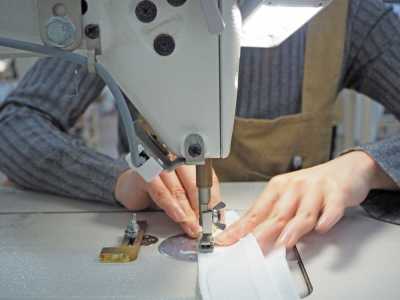
A full rotary hook is an internal mechanism of a lockstitch sewing machine used in sewing processes such as seaming cut parts together and assembling body panels, sleeves, pockets, and other components. It is not a component ordered directly during the selection of fabric or accessories, but rather a piece of equipment required to stably achieve the sewing specifications.
For production requests, specify the seam type, thread to be used, needle size, stitch count, seam allowance, and sewing location in the specification sheet. The sewing factory selects the machine equipment, including the hook, and adjustment conditions based on fabric thickness, layering, stretch, and the sewing sequence.
Approach and practical points
When making samples, it is important to carry out test sewing on a hook type and sewing machine equal to or close to those used in mass production. In particular, differences in thread tension, needle, presser foot, and feed conditions affect seam appearance and strength with thick fabrics at steps, slippery lightweight fabrics, stretchy fabrics, and coated fabrics.
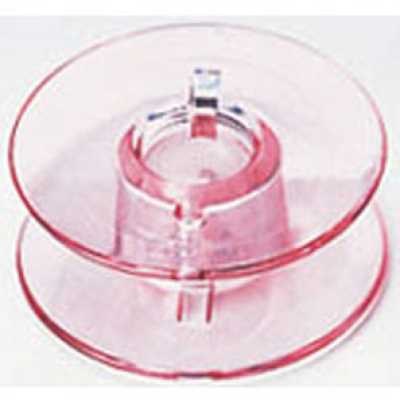
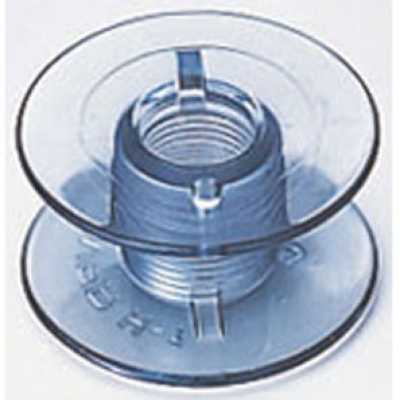
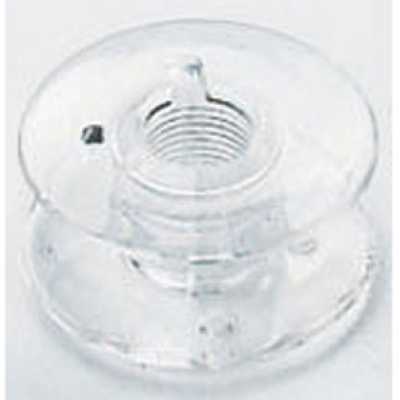
On machines that use a full rotary hook, the bobbin case, bobbin shape and thickness, and amount of lower thread wound must be compatible with the model. If accessories are arranged without checking the actual item, problems such as inability to install them or unstable thread tension may occur.
- Share fabric samples and the sewing specification sheet with the sewing factory early.
- Before mass production, check the top and bottom seams, seam puckering, skipped stitches, and thread breakage.
- For intersections and step-up areas where thickness changes, test sew under the actual layered condition.
- Confirm that the bobbin, bobbin case, needle, and sewing thread are compatible with the machine model being used.
Ordering and quality notes
When arranging sewing machine parts such as bobbin cases, do not judge only by "for full rotary hook"; check the manufacturer, model, hook direction, and the actual bobbin case currently in use on the target machine. Even parts listed in catalogs as for full rotary hooks may differ in dimensions and shape depending on the model.
In quality control, check for a condition where the seam is too tight and causes the fabric to pucker, where the lower thread appears on the surface, and where the upper thread appears on the reverse side. These are caused not only by the hook, but also by multiple factors such as upper and lower thread tension, compatibility between the needle and thread, the condition of the hook point, and feed conditions.
Differences from similar terms
A semi-rotary hook is a system in which the hook rotates in a back-and-forth motion, and its movement differs from that of a full rotary hook. Since the bobbin case and compatible parts may differ between the two, do not assume they are interchangeable.
Horizontal hook is often a term used to refer to the hook structure seen in household sewing machines where the bobbin is set horizontally. By contrast, a full rotary hook indicates the hook’s rotation system. In distribution, parts for horizontal hooks may also be labeled as for full rotary hooks, so confirm compatibility by the machine model as well as the term.
Frequently asked questions
Can a bobbin case for a full rotary hook be shared with one for a semi-rotary hook?
As a rule, it cannot necessarily be shared. If the hook system differs, the outer diameter, thickness, position of the tension spring, and fastening method of the bobbin case may differ. When ordering, match the sewing machine model with the parts currently in use and confirm using a compatibility chart or the actual item.
Do a horizontal hook and a full rotary hook mean the same thing?
No, they do not mean the same thing. Horizontal hook mainly refers to the bobbin arrangement or hook structure, while full rotary hook refers to the system in which the hook rotates continuously. Since both terms may be listed together in parts descriptions, determine suitability by the machine model and part shape.
If skipped stitches occur in a lockstitch, should the full rotary hook be replaced?
Skipped stitches can be caused by wear on the hook point or incorrect timing, but a bent needle, mismatch between needle size and thread, improper threading, and fabric conditions can also be causes. First check the needle and thread, thread tension, and sewing conditions; if the problem is not resolved, have the hook and timing inspected by maintenance personnel.