


Shackle
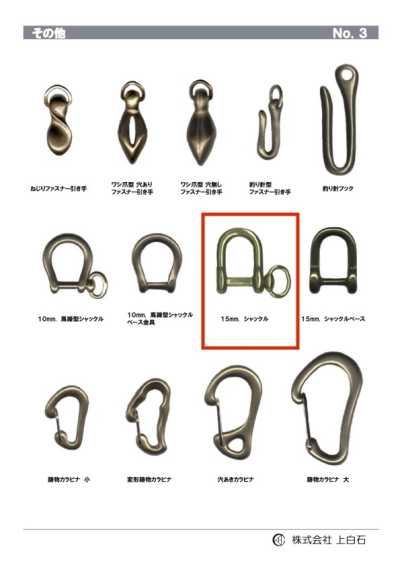
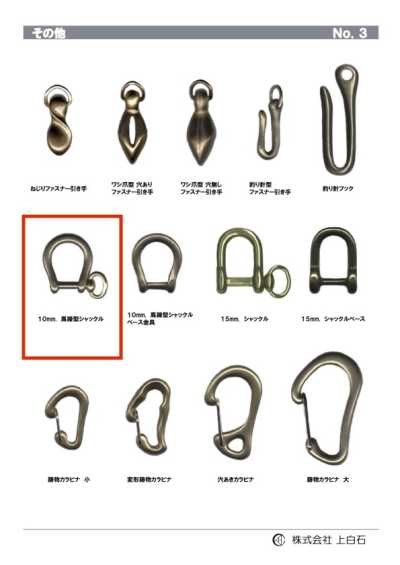
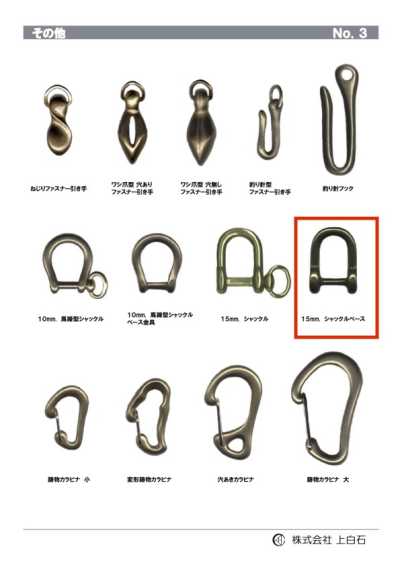
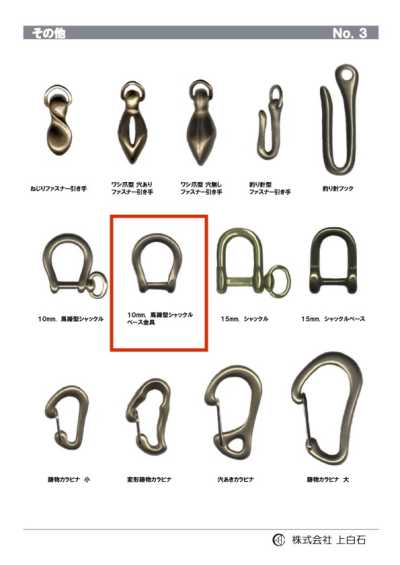
A shackle is a fitting made up of a horseshoe-shaped body and a removable pin, used to connect tape, cord, chain, and similar items.
Contents6 sections
Definition and Overview
A shackle is a connecting metal fitting that closes an opening by passing a pin or screw-type shaft through a U-shaped or horseshoe-shaped body with holes at both ends. It is used for bag and belt strap connections, as a fastener or decorative part for accessories, and similar purposes.
In apparel materials, it is used not only for its practical connecting function, but also to create a substantial metal look and a vintage-style design. There are also swivel shackles with a rotating part that helps prevent cord twisting.
Materials and Structure
Materials are often metals such as brass and zinc alloy, and the surface may be finished with plating or coating. Brass-based types may be used for their age-related color changes as part of the design, but discoloration may occur depending on the usage environment.
The basic structure consists of the body and a pin, and tape or parts are passed through by removing the pin or loosening the screw. Depending on the application, it is necessary to check whether the pin is designed not to be lost and whether it is unlikely to loosen during use.
How to Express Size
Shackle sizes are often shown according to the tape width they can accommodate, such as 10 mm or 15 mm. However, what that number refers to, whether the inner dimension, body width, or compatible tape width, varies by product.
When placing an order, confirm not only the inner dimension of the section where the tape passes through, but also the outer dimension including the pin, thickness, and range of movement. If the tape end is folded back and sewn, check with a prototype whether the layered thickness can pass through without difficulty.
- Finished width and thickness of the tape to be passed through
- Body inner dimension, outer dimension, and wire diameter
- Pin diameter, attachment and removal method, and ease of loosening
- If there is a swivel part, its movement direction and strength
Main Applications and Selection
It is used for bag handles and shoulder straps, belt connection points, key holders, and accessory parts. When used on garments, it is also used around pockets, as decoration around the waist, and for connecting removable attached parts.
When selecting one, check not only the appearance but also the expected load and suitability for repeated use. For bag straps that support luggage, strength design is needed for the entire structure, including not only the metal fitting itself but also the tape, stitching, and other connected fittings.
Usage Notes and Differences from Similar Fittings
Metal types may rust, discolor, or lose plating due to moisture, sweat, friction, or detergent. Since there is also a risk of color transfer to light-colored fabric and of hard fittings damaging the fabric, consider the contact position, washing method, and storage environment.
D rings, circular rings, and rectangle rings are fixed ring-shaped fittings mainly used for passing tape or cord through. A snap hook is a hook with a spring-loaded opening that quickly attaches and detaches to the other side, and its attachment method and appearance differ from a shackle, which is connected by removing a pin.
For products that go through a needle detector process, manage them on the assumption that a metal shackle may react to the detector. Even nonmagnetic materials may be handled differently depending on the detector conditions, so confirm whether needle detector compatibility is available from both the material specifications and the factory inspection standards.
Frequently Asked Questions
Where should I measure a shackle size?
First, check the inner dimension of the opening where the tape or cord will pass through, and determine whether it matches the finished width and thickness of the tape being used. Also confirm the outer dimension of the body, wire diameter, pin diameter, and the thickness when the tape end is folded back. The basis of the stated dimensions varies by product.
Can shackles be used for bag handles and shoulder straps?
Yes, but the required performance differs depending on whether it is for decoration or for a load-bearing connection. Consider the expected weight of the contents, pulling direction, and repeated use, and confirm strength not only for the fitting itself but also for the tape, stitching, and connection points.
Can metal shackles be detected by a needle detector?
Metal shackles may react to a needle detector. Needle detector compatible means suitable for detection and control in the needle detection process, and it cannot be judged from the material alone. It is important to confirm in advance the specifications of the fitting used and the conditions of the needle detector used in the sewing factory.





