Shot Fabric
Shot fabric is a woven expression created by using yarns of different colors for the warp and weft, so the hue appears to change depending on the viewing angle and how the light hits it.
Contents6 sections
Definition and Overview
Shot fabric does not refer to a specific weave structure or fiber name, but to the visual effect created by crossing warp and weft yarns of different colors. The yarn colors seen on the surface blend together, creating a deep and complex tone.
It can be expressed with any weave structure or material, including plain weave. As a fabric specification name, it may also be called chambray, but shot fabric is mainly a term that focuses on how the color appears.
Appearance and Hand Characteristics
Because the dominant yarn color changes depending on whether the textile is viewed from the front or at an angle, it gives the impression of color shifting, regardless of how strong the luster is. The closer the yarn colors are, the more subtle the effect; the more contrasting they are, the clearer the change.
The shot fabric effect itself does not determine functions such as absorbency, stretch, or warmth retention. Body, sheerness, drape, and hand feel vary depending on the fiber used, yarn thickness, density, weave structure, and finishing process.
- With lustrous filament yarn, the color change tends to stand out more clearly.
- In fine-count, high-density textiles, the appearance tends to be delicate and have more depth.
- With natural fibers or spun yarn, it may finish with a calm shot effect with less luster.
Main Applications and Seasons
It is used for shirts, blouses, dresses, skirts, jackets, and coats, as well as items such as dresses and stage costumes where the color expression is used in the design. It may also be used as lining or decorative textile.
In lightweight lawn, organza, taffeta, and similar materials, it is easy to create a light look for spring and summer, while in dense broadcloth, twill, ripstop, and similar materials, it can also be applied to shirts and outerwear for any season.
Selection and Handling Precautions
When selecting, do not judge from a swatch alone; tilt the textile in multiple directions and check the color tone under both natural light and lighting close to the actual use environment. It is important to confirm whether the difference in appearance caused by the type of lighting and viewing angle matches the design intent.
Shrinkage, color fading, wrinkling, and heat resistance are determined not by the shot effect itself but by the fiber composition and dyeing and finishing conditions. Before mass production, perform tests in line with the care label and confirm shrinkage rate, washing fastness, and rubbing fastness.
During cutting and sewing, if the warp and weft directions or face and back sides are mixed from part to part, the appearance of the color may differ. Align the grainline, and decide in advance whether to cut the left and right body pieces, collar, and facing in the same direction or according to the intended placement.
Differences from Similar Terms
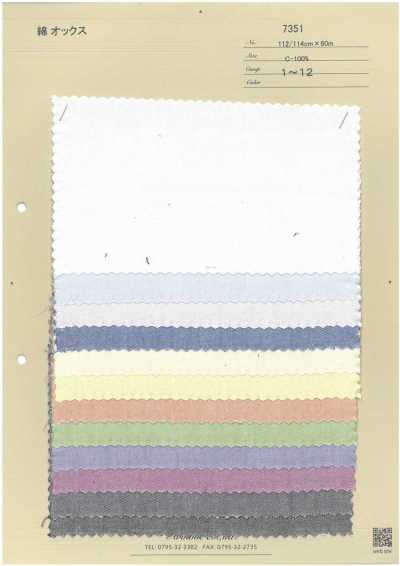
Chambray generally refers to a textile woven with warp and weft yarns of different colors, or to that appearance. Shot fabric is used as a term for the resulting color change by angle, but in practice the two are sometimes treated as synonymous.
Solid and patterned fabrics colored by piece dyeing or printing are different from the shot effect created by differences in warp and weft yarn color. In addition, the reflective look created by glitter yarn, foil, or luster finishing may also appear shot-like, but the color expression mechanism is different.
Frequently Asked Questions
Are shot fabric and chambray the same?
In many cases, they are used in a similar sense to describe the blending of color caused by warp and weft yarns of different colors. However, chambray may be used as a name for the textile or weave, while shot fabric may be distinguished as the appearance in which the tone changes depending on the viewing angle. In a specification sheet, it is safer to list both the yarn colors and the desired appearance.
Does shot fabric shrink when washed?
Being shot fabric itself is not the cause of shrinkage. The shrinkage rate varies depending on the fiber composition, weave density, and processing conditions, such as cotton, linen, silk, or polyester. For products intended for home washing, check the washing test results and care label for the textile used, and if necessary also consider pre-washing before cutting.
What should I be careful about when sewing shot fabric?
Because the color differs between the warp and weft directions, differences in cutting direction or face and back can appear as color differences between parts. Manage the face and back sides and one direction during spreading, and align the directions of the left and right body pieces, collar, pockets, and so on. Select the sewing thread after checking how it looks when the textile is tilted.