Sliver
Sliver refers to a semi-finished product in which fibers are aligned into a bundle during worsted or woolen processing, or to a fabric made by securing that fiber bundle to a knitted base to create a pile surface.
Contents6 sections
Definition and Overview
Sliver originally refers to a semi-finished fiber mass in the spinning process, where fibers are aligned almost parallel in carding and gathered into a thick bundle. It is usually drawn out and twisted in subsequent steps to become yarn.
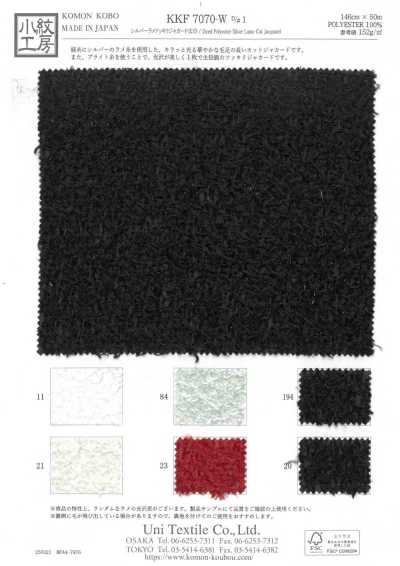
In apparel fabrics, sliver can also refer to a material in which sliver-like fibers are entangled or secured to a knitted base fabric to create a long pile on the surface. In this usage, it is often treated as a fabric name.
Texture and Function
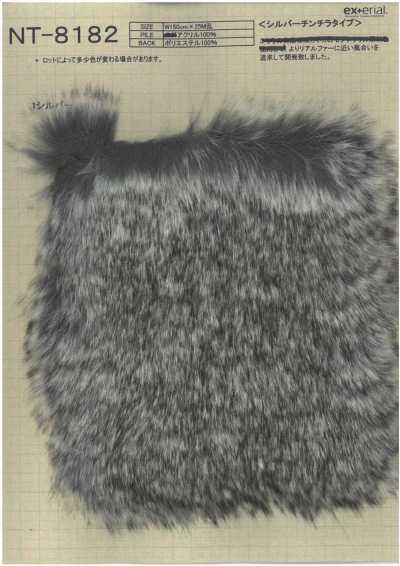
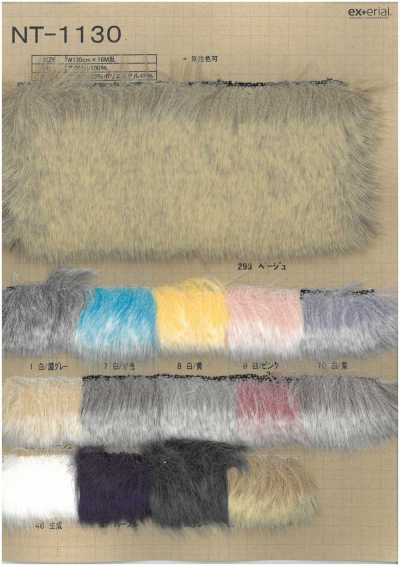
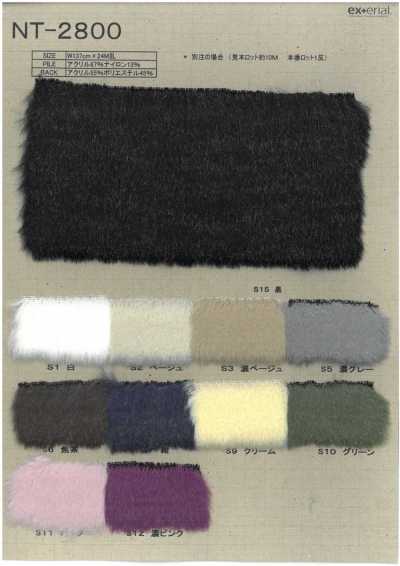
As a fabric, sliver is a material whose fiber bundle holds a lot of air, so it tends to be bulky, lightweight, and have a soft appearance. The pile creates a three-dimensional surface effect, allowing a wool-like or fur-like look.
Warmth, nap, drape, and durability vary depending on pile length, fiber type, and how the fibers are fixed to the base fabric. In specifications where the fibers are easily exposed on the surface, friction can cause nap distortion, shedding, and pilling.
- Easy to achieve a lightweight, bulky feel.
- Characterized by a soft, warm appearance from the pile.
- Surface nap changes how color and sheen appear.
- Fiber shedding from cut edges may be more likely than with ordinary woven fabrics.
Main Uses and Season
Sliver fabric is used for coats, jackets, blousons, vests, cardigans, and more, taking advantage of its warmth and volume. It is also suitable for costumes that feature the pile effect or for partial accents that add a winter feel.
In many cases, it is suitable for fall and winter projects. However, because thickness and warmth vary greatly depending on fiber blend ratio, fabric weight, and knit density, the application should be decided after confirming the actual texture and performance.
Selection and Handling Notes
When selecting it, check pile length and density, the degree of shedding, base fabric stretch, thickness, and weight. Because the appearance changes depending on the cutting direction in fabrics with nap, it is important to align the grain direction and nap direction of all pieces.
Shrinkage from washing or dry cleaning, changes in nap, and pilling depend on the fiber type and processing conditions. Before mass production, perform tests according to the care instructions and confirm shrinkage rate, appearance changes, and lint transfer to other materials.
During sewing, reduce fiber shedding at cutting and prevent the pile from being caught in the seam allowance. Because thickness can create steps, adjust the needle, thread, presser foot pressure, and seam finishing through trial stitching to prevent the seam from sinking into the pile and to avoid puckering.
Differences from Similar Terms
Fleece often refers to a material made by raising a knitted or woven fabric to create short surface fuzz, and its method of forming the pile differs from that of sliver fabric. Sliver may feature a longer, more dimensional pile derived from a fiber bundle.
Boa fleece and faux fur are materials with similar appearance and uses. However, boa fleece broadly refers to a voluminous surface created by loops or fuzz, while faux fur is a material intended to resemble animal fur. Sliver is a term that focuses on the fiber bundle or the method used to create it.
Nonwoven fabric is a sheet material made by bonding fibers by methods other than weaving or knitting. Since some sliver fabrics have a knitted base, they are not the same as nonwoven fabric.
Frequently Asked Questions
Does sliver fabric shrink when washed?
Whether it shrinks, and by how much, depends on the fiber type such as wool, the structure of the base fabric, the finishing process, and the washing conditions. Some materials are not suitable for home washing, so in addition to the care label, it is necessary to confirm dimensional change and nap change under the planned care conditions before mass production.
What is the difference between sliver and boa fleece?
Boa fleece is a common name used for materials that create volume with fuzz or loops. Sliver, on the other hand, originally refers to a bundle of fibers before it becomes yarn, and in fabrics it refers to a construction or material that uses that fiber bundle to create pile. Because they can look similar, it is important to confirm the composition and structure.
What should be noted when sewing sliver fabric?
If the pile is caught in the seam allowance, the seam becomes thicker and the surface nap is disturbed. After cutting, arrange the seam allowance pile and check the needle and thread tension with trial stitching. For materials with nap, it is also important to cut all pieces in the same direction.