Yellowing
Yellowing is a phenomenon in which fibers, yarn, textiles, and accessories change in appearance and take on a yellowish tint from white or light colors due to storage, light, heat, gases in the air, or contact with chemicals.
Contents6 sections
Definition and Overview
Yellowing is a quality change in which a yellowish tint that was not noticeable at the time of manufacture appears over time or due to storage conditions. In white, off-white, and light-colored items, color differences are easier to see, and it also affects color matching for products, sewing thread, and tape.
The cause is not limited to one factor; it may involve changes in the fiber itself, the effects of dyes or finishing agents, and components migrating from packaging materials or surrounding materials. Even with the same product number, the appearance may differ depending on storage conditions and lot.
Relationship to Material and Yarn Structure
The likelihood of yellowing changes depending on the combination of material, dyeing and finishing, auxiliary materials used together, and the usage environment. In general, polyester is considered relatively resistant to yellowing, while products made mainly from nylon may require consideration of the possibility of yellowing.
Yellowing is not directly determined by the yarn count, nominal count, or number of twists. Structures such as single yarn and ply yarn, or spun yarn and filament yarn, may also affect appearance through material, processing, and surface area, but the structure alone cannot determine it.
Difference from Count and Nominal Count
Count and nominal count are indicators used to show yarn thickness, whereas yellowing is a quality item related to changes in color tone over time. Therefore, it cannot be uniformly judged that a yarn is less likely or more likely to yellow simply because the count is finer or thicker.
When selecting sewing thread, in addition to seam strength and sewing suitability based on count, confirm the color difference from the outer fabric, changes in color tone after storage, and the processes to be assumed such as washing and ironing. With light-colored outer fabrics, note that only the sewing thread may yellow and become noticeable.
Selection and Sewing Precautions
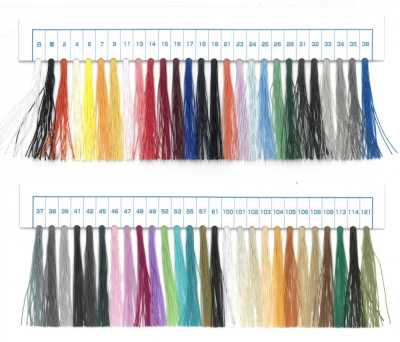
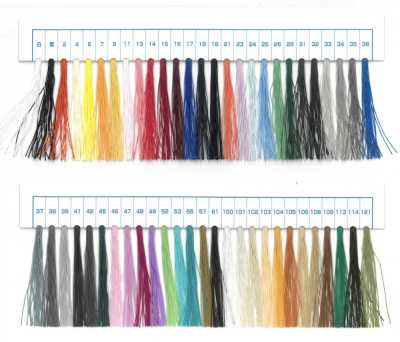
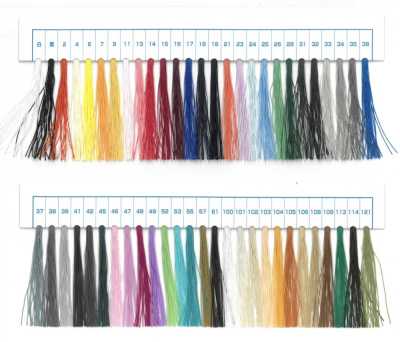
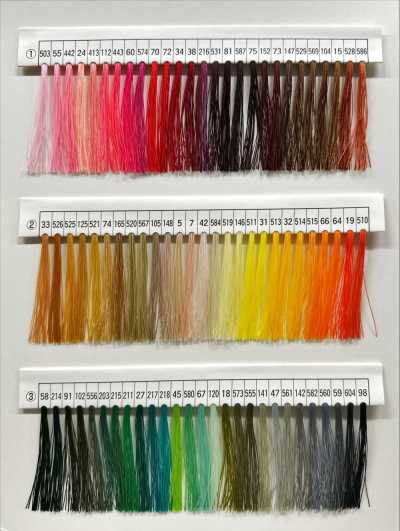
For white or light-colored products, products intended for long-term inventory, and products that require precise color matching, it is important to confirm in advance by combining the outer fabric, interlining, sewing thread, tape, and packaging materials. Do not decide based only on the color in a swatch book; check against the actual fabric to be used before sewing.
Phenolic yellowing is yellowing that may occur when packaging materials containing certain antioxidants, rubber items, adhesives, and similar materials are combined with the effects of nitrogen oxides. During storage, check the combination of materials, sealed condition, high temperature and humidity, exhaust gas, and other environmental factors, and perform preliminary testing if necessary.
- At delivery and before sewing, check the colors of the outer fabric and sewing thread under the same light source.
- Store materials intended for long-term storage in a place less affected by direct sunlight, high temperature and humidity, and exhaust gas.
- When changing packaging materials, rubber, adhesives, interlining, or similar materials, check the risk of discoloration caused by the combination.
- Do not confuse yellowing with color fading or color bleeding; record the affected area and the materials in contact to identify the cause.
Difference from Similar Terms
Time-related yellowing refers to yellowing that occurs over time. Gas yellowing is a term that focuses on the effect of gases in the air. Phenolic yellowing refers to yellowing involving materials containing phenolic antioxidants, and is treated as one form of yellowing.
Color fastness is a concept used to evaluate resistance to color change or staining of other materials due to washing, friction, light, and similar factors. It may be checked in relation to yellowing, but yellowing itself does not mean the same thing as yarn thickness, twist, or ordinary color fastness.
Frequently Asked Questions
How do you choose sewing thread that is less likely to yellow?
In addition to matching the color tone of the outer fabric, choose by checking the thread material, dyeing and finishing, storage conditions, and the interlining or packaging materials it will contact. For white and light colors, sewing it onto the actual outer fabric and checking how it looks before and after storage makes it easier to understand the risk of color difference.
How can phenolic yellowing be prevented?
The basic approach is to check products in combination with packaging materials, rubber, adhesives, and similar items that may be causes. Avoid high temperature and humidity and the influence of exhaust gas, and perform testing when changing materials. In particular, white and light-colored items require management that assumes changes during storage.
Are yellowing and color fading the same?
No, they are not the same. Yellowing is a phenomenon in which a yellowish tint increases due to changes in the material or finishing. Color fading is a phenomenon in which dyes and similar substances come off and the color becomes lighter, while color bleeding is a phenomenon in which the detached color transfers to another area. Check each occurrence separately.