Warp Double Weave / Weft Double Weave
Warp double weave and weft double weave are woven structures that use two sets of warp yarns or weft yarns to separate the structure and yarns on the face side and back side, creating thickness and different surface appearances on each side.
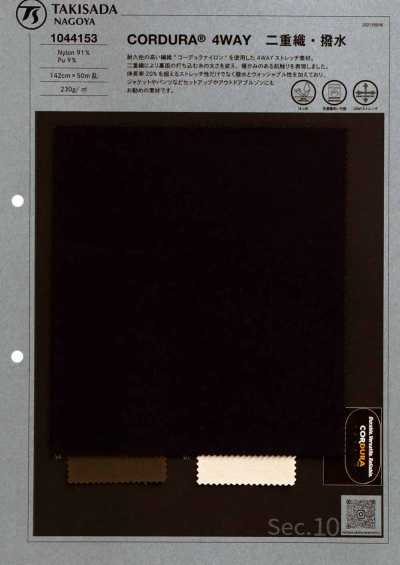
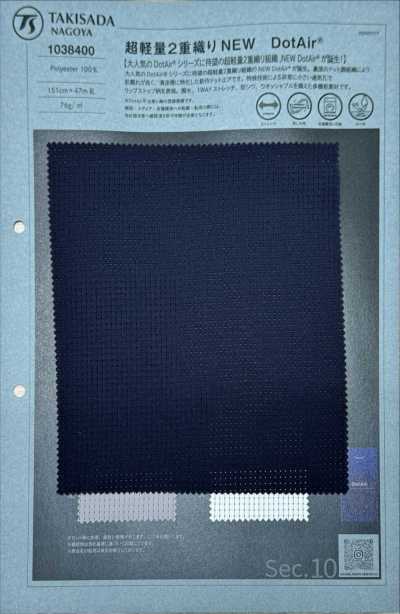
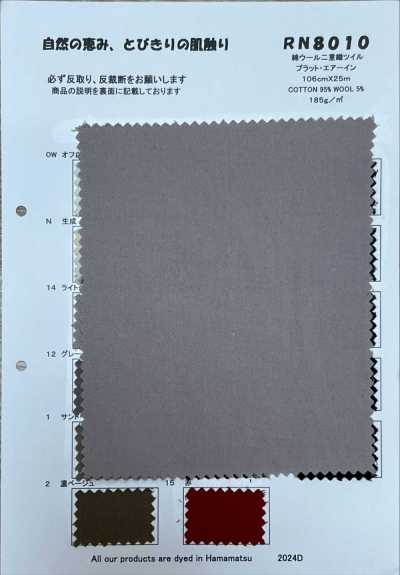
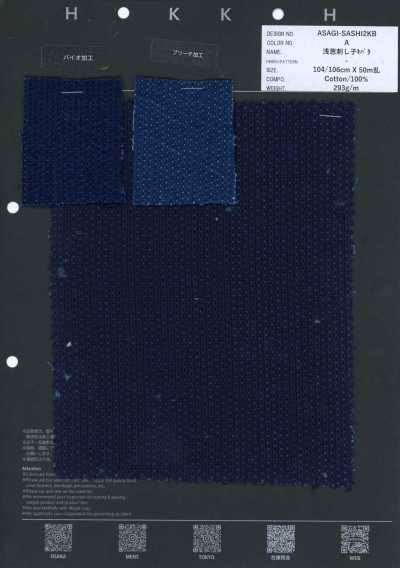
Contents6 sections
Definition and Overview
Warp double weave uses two sets of warp yarns and one set of weft yarns, while weft double weave mainly uses one set of warp yarns and two sets of weft yarns. One yarn group appears mostly on the face side and the other on the back side, and they are interlocked where necessary to form a single fabric.
Different counts, colors, fibers, and weaves can be arranged on the face and back sides, allowing the surface appearance and back-side properties to be designed according to the intended use. Warp double weave and weft double weave refer to woven structures, not material names.
Features
Because two sets of yarns are used, these structures generally tend to create more thickness, fullness, and a firmer hand than a comparable single-layer weave. Combining a densely brushed finish or a double-sided finish can enhance volume and surface richness.
Since color, luster, and weave texture can be varied between the face and back, the fabric gains depth of expression. However, both sides are not necessarily intended for use as the face side. The face/back designation should be confirmed with the fabric swatch and development specifications.
- Warp double weave is a structure that makes it easier to vary vertical color and appearance by selecting the face and back warp yarns.
- Weft double weave is a structure that makes it easier to vary horizontal color and appearance by selecting the face and back weft yarns.
- Thickness, warmth, and drape vary greatly depending on the material, density, finish, and weave design.
Main Applications
It is used for jackets, coats, blousons, skirts, pants, dresses, and more, taking advantage of its moderate thickness and structured feel. Those made with wool, cashmere, or similar fibers and given a brushed or fulled finish may be selected as autumn and winter outerwear fabrics.
Designs that change color or texture between the face and back are suitable for garments with turned-over details such as collars, cuffs, hoods, and facings, where the back side is also visible. Since it can be designed from lightweight to heavy fabrics, the intended use should be judged together with fabric weight and finish.
How to Choose and Handling Precautions
When selecting a fabric, check the face/back designation, thickness, fabric weight, firmness, drape, and how easily the edges fray. If different materials or yarns are used on the face and back, attention is also needed for dye affinity, color transfer due to friction, and appearance after washing.
For items containing natural fibers or brushed goods, washing or steam may change shrinkage, nap, width, and hand. Before full production, carry out a water soak or washing test and reflect the shrinkage rate in the pattern.
In sewing, adjust the needle, thread, presser foot pressure, and seam finishing according to the thickness. Stepped areas are more prone to seam misalignment and puckering, so test sewing should be used to check seam sinking, feeding, and press marks from ironing.
Differences from Similar Terms
Double weave often refers to a structure in which two woven fabrics are bonded together as one, and it may also include designs with a space between the two layers. In contrast, warp double weave and weft double weave focus on using two sets of either warp or weft yarns to form the face and back structures.
Double face is a term for a fabric whose both face and back can be used as decorative surfaces. Warp double weave and weft double weave can be finished to look like double face fabric, but the weave structure and the product appearance are not identical terms.
Frequently Asked Questions
Are warp double weave and weft double weave the same as double weave?
They do not have the same meaning. Warp double weave and weft double weave refer to structures that use two sets of warp or weft yarns to create face and back structures. Double weave often refers to a structure that bonds two woven fabrics together, so it is important to confirm the actual weave diagram and fabric cross-section.
Can warp double weave and weft double weave be machine washed at home?
It cannot be determined from the structure alone. Washability varies depending on the fibers used, the type of yarn, and the finish such as brushing or resin treatment. Follow the care label, and during the development stage, test for shrinkage after washing, color difference between the face and back, and changes in hand.