Baked Coating
Baked coating is a surface finish in which paint is applied mainly to metal buttons and similar items, then heated to harden and bond the coating film.
Contents6 sections
Definition and Overview
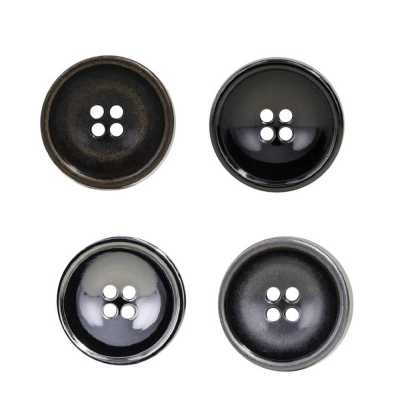
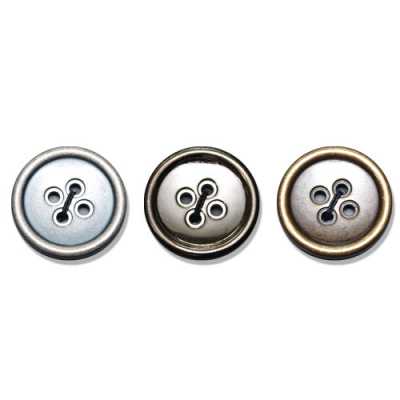
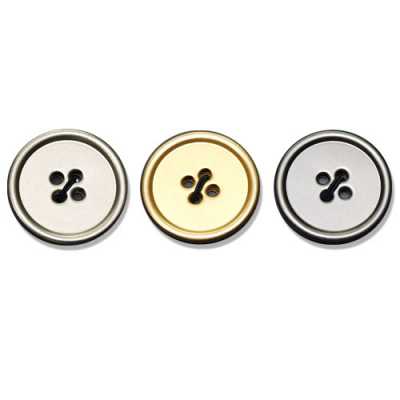
Baked coating is a finish in which paint is applied and then heated to harden the coating film. It is used to add color and gloss to the surface of metal buttons and to cover the base material. Appearance and durability vary depending on the type of paint, surface preparation, and heating conditions.
While plating is a process that forms a metal film on a metal surface, baked coating is a process that forms a coating film with paint. Enamel, meanwhile, is a decorative technique that fires a glassy glaze, and its materials and expression differ from ordinary baked coating.
Materials and Button Structure
Baked coating is mainly used as a finish for metal buttons. In addition to metal, the button body may also be made from molded materials compatible with coating, but because coating adhesion and heat resistance differ by material, it is necessary to confirm suitability for the finish.
Shapes such as two-hole, four-hole, cat-eye, shank, tunnel shank, and ring shank are determined by the structure of the button body, not by the coating method. The inside of the holes and the base of the shank are prone to friction and impact, so the condition of the coating film should be checked.
- For sew-through buttons, check the area around the holes where friction with sewing thread may occur.
- For shank buttons, attach them so that excessive force is not applied to the base of the shank.
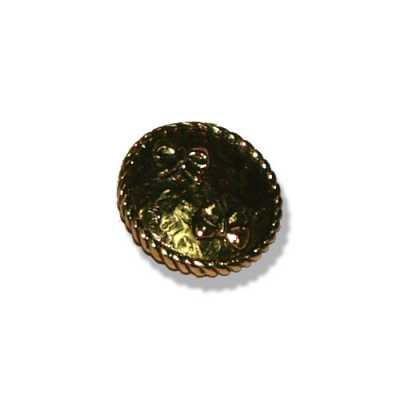
- Edges and carved patterns may cause differences in how the paint pools and how the base material shows through.
How Sizes Are Expressed
Button sizes are generally expressed by diameter in mm or lignes. Lignes are a sizing unit used for buttons, and in specifications, standardizing whether to use lignes or mm notation helps prevent mistakes in ordering and sewing.
Baked coating is a surface finish, not a size category. Even for the same size, thickness, shank height, hole diameter, and whether there is an edge all affect how the button fits into the buttonhole and how it looks, so confirmation with the actual item is required.
Main Applications
Baked-coated buttons are used for designs that require matching colors and for garments that call for a muted metal sheen. For jackets, coats, blousons, uniforms, pants, dresses, and similar items, selection is made while considering harmony with the outer fabric color and other trims.
Even with the same color name, the finish of the paint, base color, textured designs, and lighting can change the appearance. In mass production, the color tone and gloss are checked by placing the buttons alongside fabric swatches and other trims, and sample approval is carried out when necessary.
Attachment and Handling Precautions
When attaching buttons, do not press the coated surface hard with a rigid tool or overtighten the sewing thread. Sew-through buttons should have appropriate ease between the button and the fabric, and shank buttons should be attached with a thread shank so the button does not sit too tightly against the fabric.
Suitability for washing, dry cleaning, and ironing varies depending on the paint, base material, and adhesive or assembly specifications. High temperatures, strong friction, bleach, and solvents may cause cracking, chipping, discoloration, changes in gloss, or peeling of the coating film, so these must be tested and confirmed as a product.
When ironing, the basic rule is not to apply high heat or pressure directly to the button. If necessary, use a pressing cloth and work around the button. Care labels should be set based on the performance of the entire product, including not only the fabric but also the buttons used.
Frequently Asked Questions
What is the difference between baked coating and plating?
Baked coating is a finish that forms a coating film on the surface by heating and curing paint. Plating is a process that forms a metal film on the surface. Because color, gloss, the appearance of scratches, and aging changes differ, the choice should take into account the intended use and design as well as conditions of use such as friction and washing.
Can baked-coated buttons be washed?
Whether they can be washed cannot be determined from the finish name baked coating alone. The effects differ depending on the paint, base metal, structure, detergent, and washing method. Before mass production, perform washing tests and dry-cleaning tests according to the product conditions and decide the care label accordingly.
Can an iron be applied to baked-coated buttons?
Direct ironing on buttons may cause changes in gloss, discoloration, or damage to the coating film due to high heat and pressure. In principle, avoid the buttons when ironing. If unavoidable, use a pressing cloth and check the effect in advance on a hidden area or a sample.