Ground Fabric
Ground fabric refers to the fabric that serves as the base for decoration such as embroidery or flocking, or the backing fabric that supports a surface material.
Contents6 sections
Definition and Overview
Ground fabric is the fabric that serves as the base for decoration such as lace or embroidery. It refers not to the decorative pattern itself, but to the ground portion that supports it. Depending on the application, the backing fabric that supports a surface layer such as synthetic leather is also called ground fabric.
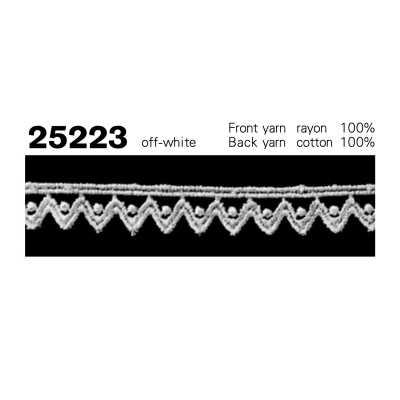
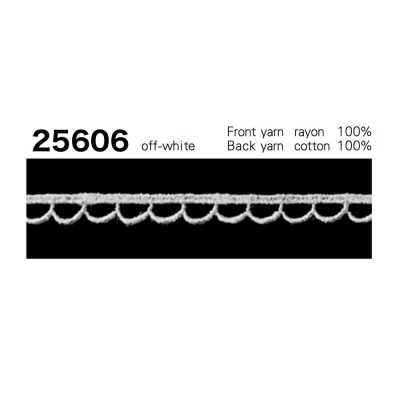
In the lace field, there is a method in which embroidery is applied to fabric and then the ground fabric is removed by chemical treatment, leaving only the embroidered portion. In this case, the ground fabric is a process base that does not remain in the final product. On the other hand, in many embroidered laces, the ground fabric itself forms the lace’s sheerness and strength.
Construction and Materials
Ground fabrics include woven fabrics, knitted fabrics, and nonwovens. In lace, mesh-like, sheer tulle, stable woven fabrics, and elastic knits are selected according to the purpose. It is important that the fabric can retain its shape during processing, relative to the density of the embroidery and the size of the pattern.
Materials vary widely, including cotton, polyester, nylon, and rayon. The suitable material and structure differ depending on whether washability and strength are emphasized, or a soft hand and a natural appearance are prioritized. The type of ground fabric affects not only the finished appearance but also ease of handling during sewing.
Appearance and Applications
In lace where the ground fabric remains, fineness of the openings, transparency, sheen, and color all affect the impression of the pattern. Even with the same embroidered design, a thin, transparent ground fabric looks light and delicate, while a dense ground fabric gives the design a more clearly defined appearance. With stretch ground fabrics, the pattern stretches together with the fabric when worn.
Main applications include blouses, dresses, lingerie, innerwear, and decorative sections of costumes. When used partially, it is applied to collars, cuffs, yokes, and hems. In chemical lace where the ground fabric does not remain, it may also be used as a motif-style decoration for fashion accessories and costume design.
Selection and Handling Precautions
When selecting, check the stretch direction of the ground fabric, the weight of the embroidery or pattern, sheerness, and skin feel. Stretch ground fabrics are comfortable against the body, but if they are stretched during cutting or sewing, dimensions and the appearance of the pattern can change easily, so the grain and stretch direction should be aligned when handling them.
Ground fabrics with large meshes or delicate structures may fray at the cut edges or tear near the seams. If necessary, consider seam finishing, a pressing cloth, or interfacing. For washing, the basic rule is to follow the product’s care label, matching the weakest condition among the embroidery thread, decoration, and ground fabric.
- Before cutting, check the stretch direction and pattern direction of the ground fabric.
- Use a sample to check seam shrinkage, seam rippling, and fraying at the edges.
- To avoid thread breakage from snagging, take care with friction during storage and washing.
Differences from Similar Terms
Ground fabric is sometimes used with nearly the same meaning as backing fabric. However, backing fabric may also be used in the sense of the background part relative to a pattern or decoration. Base cloth is also an English-derived term for ground fabric, but the scope it refers to varies depending on the application and product field.
Tulle is the name of a material or structure referring to a net-like thin knit or woven fabric. Tulle can be used as the ground fabric for embroidered lace, but not all ground fabrics are tulle. Also, lace is the name for the entire fabric with decorative openwork patterns, while ground fabric refers to one of its components or the process base.
Frequently Asked Questions
What is lace that dissolves the ground fabric?
It is lace in which embroidery is applied to a fabric ground and then the ground fabric is removed by subsequent chemical treatment, leaving the embroidered portion behind. Because the backing fabric does not remain in the finished product, it creates an openwork pattern that looks as if only the motif continues continuously. Its structure and appearance differ from embroidered lace in which the ground fabric remains.
What should be considered when sewing stretch ground fabrics?
If you sew while pulling the ground fabric, it may lead to seam rippling, dimensional inconsistency, and distortion of the pattern. In cutting, align the stretch direction, and perform test stitching before sewing. If necessary, consider stretch control and appropriate sewing methods.