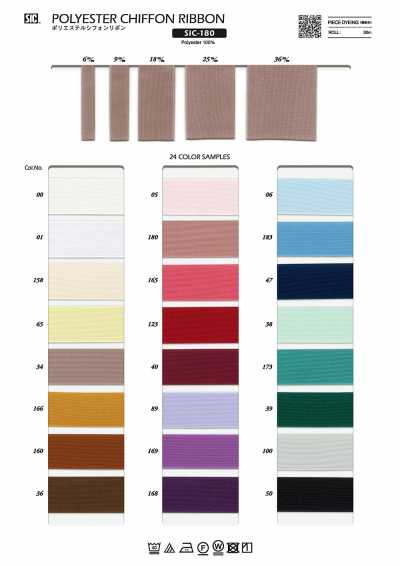
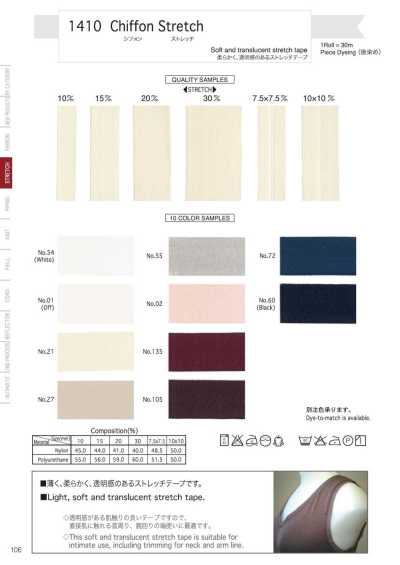
Chiffon Ribbon
A chiffon ribbon is a narrow ribbon made from a thin, sheer chiffon-like fabric, used for decoration and knots by taking advantage of its light drape.
Contents6 sections
Definition and Overview
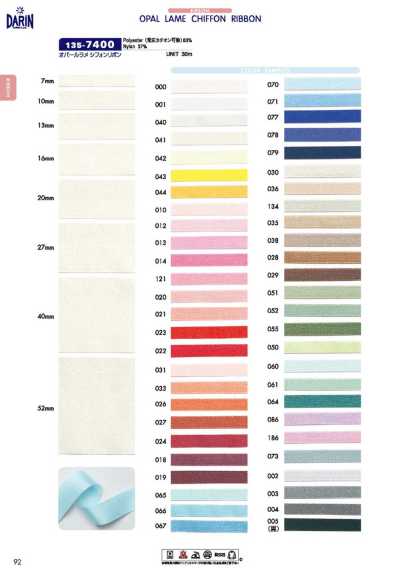
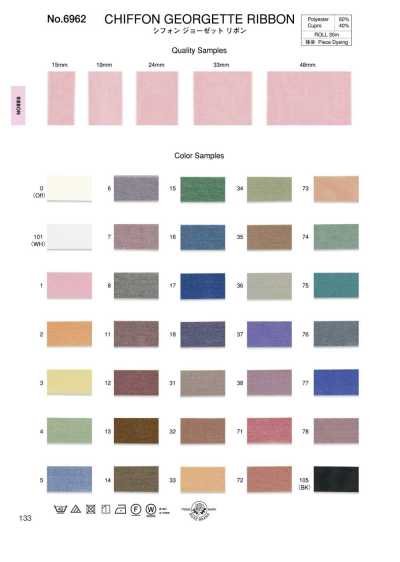
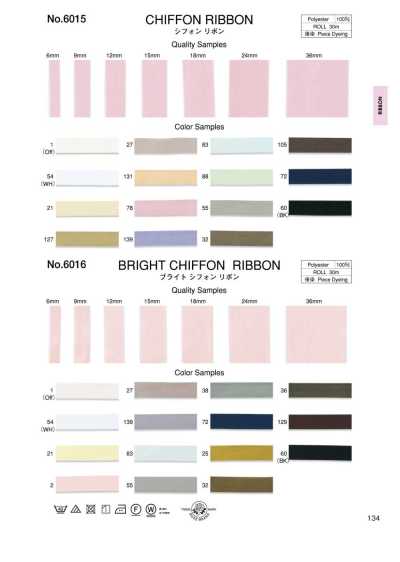
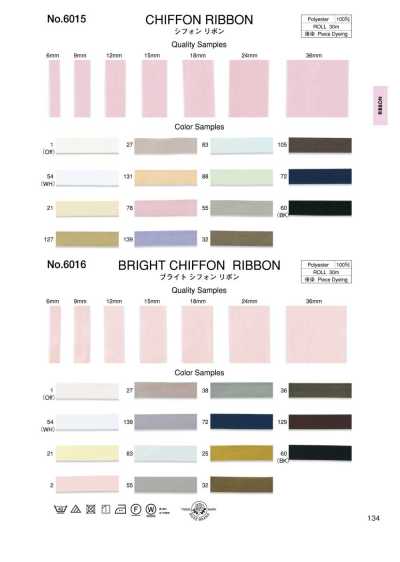
Chiffon ribbon is a ribbon characterized by a light, airy appearance, made from a thin, soft fabric. It has a sheer look and a subtle sheen, and when tied it creates volume without looking heavy, so it is used for feminine decoration.
“Chiffon” originally refers to a name derived from the feel and weave of the fabric. Chiffon ribbon, on the other hand, is the name for a narrow-width material, and the material, density, and edge finish vary by product. It may also be called chiffon tape.
Materials and Structure
General chiffon is a thin plain weave made using fine yarn, and is a fabric with a delicate texture created by highly twisted yarn. Chiffon ribbon also uses woven material that takes advantage of this thinness, softness, and sheerness.
Polyester is commonly used as the material, and it tends to offer lightness and ease of handling. Some are made with silk, and because gloss, dyeability, heat resistance, and washing behavior vary depending on the material, it is necessary to check the blend ratio.
The two ends of the ribbon are either heat-treated to prevent fraying or have woven selvedges. In products with very thin edges, cutting or retying may cause yarn to pull out or the edges to become damaged.
How Width Is Expressed and Main Applications
Width is generally shown in millimeters. Even with the same material name, narrow widths are suited to delicate ties and tag attachment, while wide widths are suited to large ribbon bows and dress decoration. In addition to the required finished width, the length consumed by knots and overlaps should also be considered.
In apparel, it is used for decoration around the collar, cuffs, and waist of blouses and dresses, as well as for corsages, hair accessories, and wrapping. Taking advantage of its sheer nature, it can also create tonal variation and a soft raised effect through gathers and layered use.
- Narrow widths are used for ties, tag attachment, and accessory decoration.
- Medium to wide widths are used for collars, waists, gathered decoration, and bouquets.
- When a reduction in sheerness is desired, use layered ribbons of the same or different color.
Selection and Handling Precautions
When selecting, in addition to width, color, sheerness, softness, and edge finish, check how slippery it is when tied using an actual sample. Since a smooth surface may come undone easily, reflect the stitching points and tying method in the specifications.
Because it is a thin material, yarn breakage and fraying can occur easily with snagging, strong friction, or strong pulling. In sewing, consider using a fine needle and fine sewing thread, and test conditions in advance so that needle holes and seam puckering are not noticeable.
The degree of shrinkage, color fading, and deformation due to heat varies depending on the material and processing. In particular, polyester products may deform under high iron temperatures, so follow the washing instructions for each product and check an inconspicuous area first.
Differences from Similar Terms
Organza ribbon has sheerness similar to chiffon ribbon, but it is generally stiffer and holds its shape more easily. If you want to clearly show dimensional loops or outlines, organza ribbon may be chosen.
Satin ribbon is characterized by a smooth gloss on the surface, is less sheer than chiffon ribbon, and has a denser impression. Velvet ribbon has a deep texture due to its pile, and its thickness and intended use differ greatly from the thin, light chiffon ribbon.
Frequently Asked Questions
Does chiffon ribbon stretch?
As a woven fabric, chiffon ribbon does not have elastic stretch like an elastic band. However, thin woven ribbons with low density may deform when pulled or subjected to force in a diagonal direction. When sewing it in place, do not pull it strongly, and baste it as needed to shape it.
Do the edges of chiffon ribbon fray?
This depends on the edge finish. Heat-treated edges are less likely to fray, while cut edges left unfinished may allow yarn to pull out. When cutting for use, check whether edge finishing is possible and choose a treatment suited to the specifications, such as sewing in the edge or folding it under.
Can chiffon ribbon be washed?
Whether washing is possible depends on the material, dyeing, and processing, so it cannot be judged from the ribbon alone. When used in a product, it is important to conduct wash tests in combination with the main fabric and confirm that there is no shrinkage, color transfer, fraying, or loss of shape.