Drawcord
A drawcord is a cord-like trim threaded through openings in garments or bags and pulled to adjust the opening, waist, and other dimensions.
Contents6 sections
Definition and Overview
A drawcord is a cord threaded through the opening of a hood, hem, waist, bag opening, or similar area and pulled to tighten it. In Japanese apparel, round cords are sometimes broadly called spindle, but the English term drawcord refers to the tightening function.
Unlike a cord that is simply tied as decoration, it has the function of sliding through a channel to adjust fit and opening size. It is often used together with cord stoppers and cord ends.
Materials and Structure
Materials include cotton, polyester, and nylon. Cotton types are often chosen for a natural feel, while synthetic types may be selected for applications that require lightness, strength, and quick drying. Depending on the material, dyeability, friction feel, and dimensional change after washing also differ.
Structures include braided cords made by twisting yarns together, knitted cords made by knitting, and woven cords made by weaving into a narrow width. Braided cords are easy to make with a round cross section or hollow structure, while knitted cords tend to offer greater flexibility. Woven cords may have a flat shape and are suitable for openings where twisting is less likely.
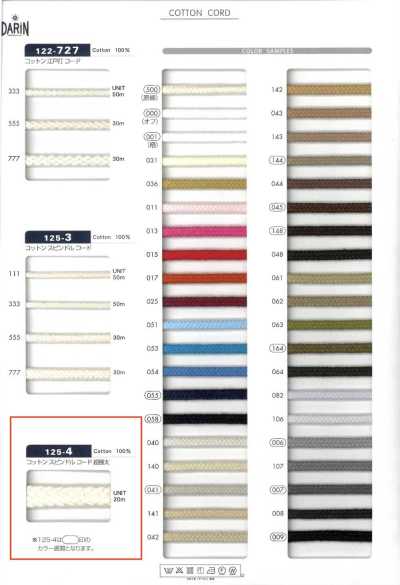
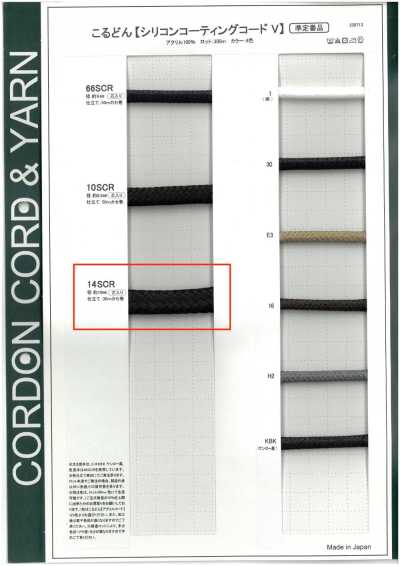
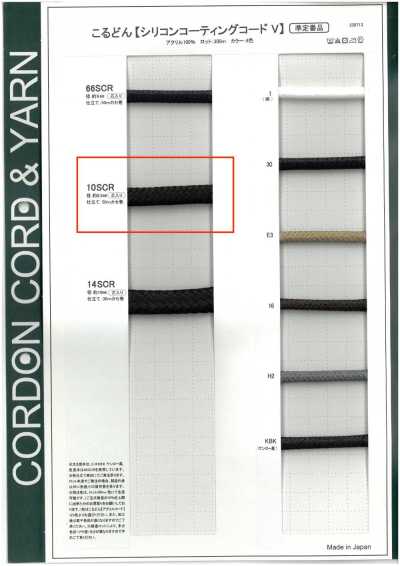
- Round cord: round in cross section; used for hoods and bag openings.
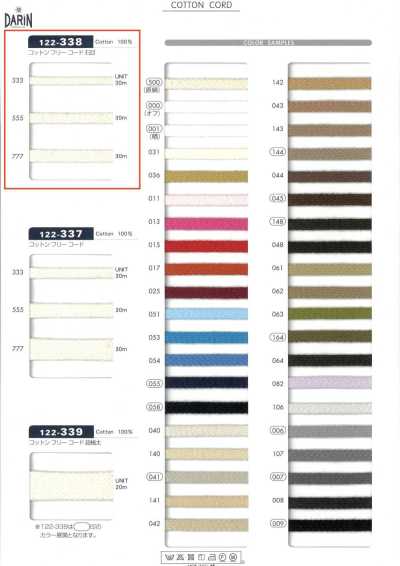
- Flat cord: a flat cord with width; used for waists and casual clothing.
- Cored cord: a cord with a core material inserted to give it shape and firmness.
- Hollow cord: a cord with a hollow interior structure, which makes it easier to achieve lightness and softness.
Checking Thickness and Specifications
Round drawcords are generally specified by diameter in millimeters. Flat types are specified by width in millimeters, and thickness is also checked when necessary. Even when the stated dimension is the same, the feel and ease of threading vary depending on the structure, density, and whether or not there is a core.
When selecting, check compatibility with the inner diameter of eyelets, loops, cord stoppers, and cord ends. If the cord is too thick for the opening, operability may decrease; if it is too thin, knots may slip through or tightening force may be insufficient.
Main Applications and How to Choose
Main applications include parka hoods, hems of blousons and coats, waistbands of pants and skirts, and openings of bags and pouches. Depending on the product application, consider strength, slipperiness, ease of tying, skin feel, and appearance as a whole.
For sports and outdoor applications, also check ease of handling when wet, abrasion resistance, and operability with stoppers. For products for children, it is important to review cord length and snagging safety in light of the laws, industry standards, and product specifications of the sales region.
Handling and Differences from Similar Terms
During washing and drying, stretching, shrinkage, fuzzing, and fraying at the ends may occur depending on the material and structure. Before mass production, confirm length change, color transfer, stopper passage, and durability of end treatment under the same washing conditions as the product. For synthetic fibers that melt with heat, attention is also needed for ironing and heat-processing conditions.
Round cord is a classification based on cross-sectional shape, while flat cord is a classification based on flat shape. In contrast, drawcord is mainly a name based on application and usage, and both round cord and flat cord may be used as drawcords. Piping is a secondary material inserted into seams to create a defined outline, and its purpose differs from that of a drawcord used for adjustment.
Frequently Asked Questions
Are drawcord and round cord the same?
Not necessarily. Round cord refers to a cord shape with a round cross section, while drawcord is a name often used for cords used to tighten clothing or bags. Using round cord as a drawcord is common, but flat cord may also be used as a drawcord.
How do you choose the thickness of a drawcord?
Choose based on the inner diameter of the eyelets or loops to be threaded, the inner diameter of the cord stopper to be combined, and the opening specifications. Also check slipperiness when pulled, knot size, and required strength. Before mass production, combine the actual trims and confirm threading work and the condition after washing.
How can you prevent a drawcord from fraying during washing?
At the cut end, methods include folding the end back and sewing it in, attaching a cord end, or applying heat treatment appropriate to the material. However, whether heat treatment can be used depends on the fiber material and processing conditions. Also consider a specification that secures the cord at the edge of the opening so it does not come out during washing.
- Browse Spindle products
- Products with material "Cotton"
- Products with material "Polyester"
- Products with material "Nylon"
- Products for style "For Outerwear/blousons/coats"
- Products for style "For Pants"
- Products for style "For Sports"
- Products for style "Outdoor"
- Products for style "For Bags"
- Products for style "For Kids"
- Browse Ribbon, Tape, Cord products