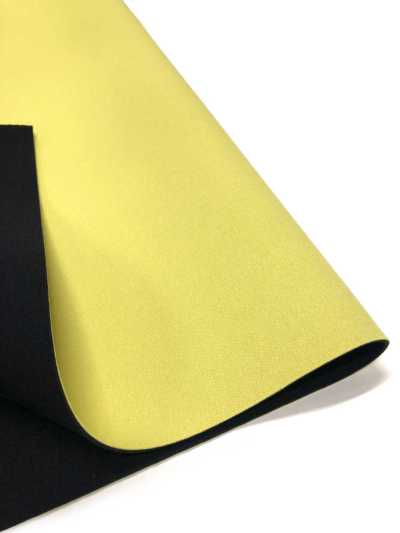
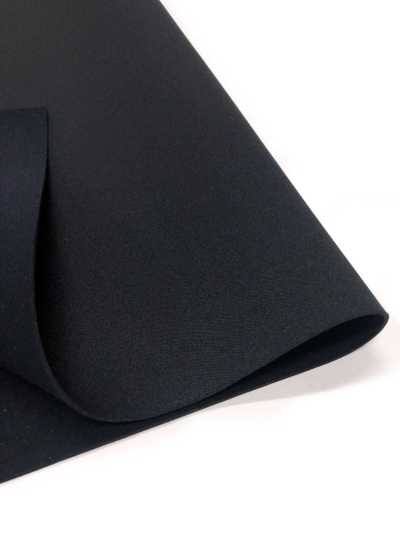
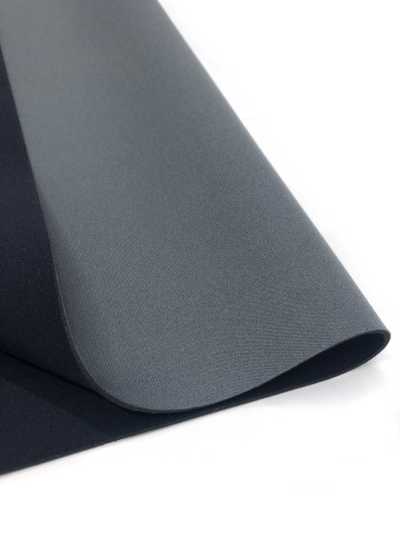
Chloroprene Rubber
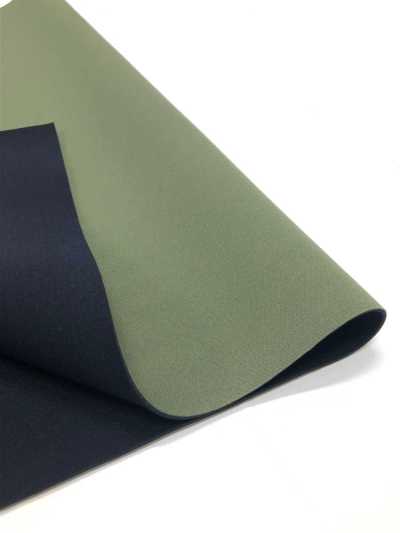
Chloroprene rubber is a synthetic rubber with elasticity, water resistance, and weather resistance, and it is often used as a material made by bonding foam to outer and inner fabrics such as knit.
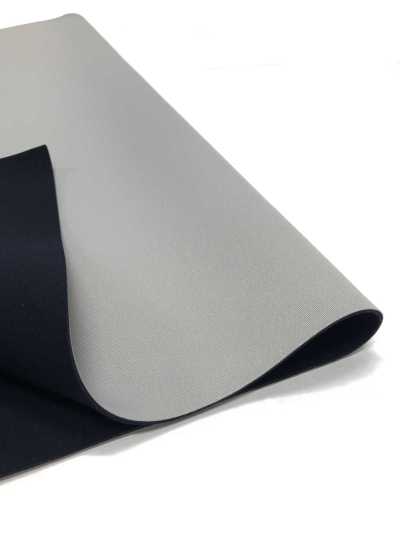


Contents6 sections
Definition and Overview
Chloroprene Rubber is a type of synthetic rubber. In the apparel field, it is generally handled as a composite material made by bonding foam rubber sheets as the core material with knit textile or similar materials on both sides or on one side.
In some cases, the name Chloroprene Rubber is used for the material itself, while the term also refers to the laminated material as a whole, including the textile attached to the surface. When ordering, confirm the thickness of the elastic band layer, the front and back textiles, and the bonding specifications.
Texture and Function
It has substantial loft and resilience, and is characterized by good conformity to body movement. In structures that contain air in the foamed layer, warmth retention can be expected, and it is used as an insulating layer in applications exposed to water.
The appearance and hand feel of the surface vary greatly depending on the knit, jersey, woven fabric, and other textiles used for bonding. While it can create a crisp, raised silhouette, it is not well suited to delicate drape like that of lightweight textiles.
Water resistance and weather resistance are material properties, but they do not necessarily make the seams, cut edges, or bonded areas waterproof. The functions required for a product should be confirmed as part of the product specifications, not from the material alone.
Main Applications
Taking advantage of its flexibility, stretch, and warmth retention, it is used in apparel for marine sports and protective gear. By choosing the surface material and thickness, it is also used for sports apparel, bags, support items, and similar products.
Because it has thickness and retains heat, it is often suitable for autumn and winter or activities near water. However, there are also thin specifications and constructions with added breathability, so seasonality should be judged together with the thickness of the elastic band layer, the front and back textiles, and the product design.
- Apparel for marine sports
- Sports and outdoor apparel
- Protective accessories and support items
- Bags that make use of a raised feel
Selection and Handling Notes
When selecting, confirm the thickness, stretch direction, front and back textiles, fabric weight, and adhesion strength for the intended use. If the specifications are divided between areas where ease of movement is prioritized and areas where warmth retention or protection is required, evaluate stretch recovery with the actual pattern.
High temperatures, direct sunlight, and solvents may cause deterioration of the elastic band layer and bonded areas. For washing, follow the product care label first. After washing, rinse well, reshape, and dry in a well-ventilated shaded place. Direct use of an iron should generally be avoided.
When cutting, check for dimensional changes due to compression and misalignment between the front and back. During sewing, note that needle holes may remain in the material and feeding may become unstable due to thickness. Adjust the needle, sewing thread, seam, and presser foot pressure through test sewing.
Differences from Similar Terms
Neoprene is a name often used to refer to Chloroprene Rubber. However, in trade, it may also refer to the entire material made by bonding foam rubber with front and back textiles, so it is important to confirm the material composition.
Polyurethane is often used as a fiber or resin that adds stretch, and its chemical type and general material composition differ from Chloroprene Rubber. Compare not only stretch but also thickness, warmth retention, and water resistance.
Frequently Asked Questions
Are Chloroprene Rubber and Neoprene the same?
Neoprene is widely used as a name for Chloroprene Rubber. However, in textile trading it may also refer to the entire laminated material made by bonding foamed chloroprene rubber with knit fabric or similar materials on both sides. Please confirm not only the blend ratio but also the thickness and bonding specifications.
Can Chloroprene Rubber material be washed at home?
Whether it can be washed depends on the front and back textiles, the adhesive, and the product specifications. Be sure to follow the washing instructions. In general, avoid high-temperature drying, strong friction, bleach, solvents, and direct use of an iron, and dry it in the shade after washing.
What should be noted when sewing Chloroprene Rubber?
Because needle holes remain in the material, resewing tends to be noticeable, and for products that require waterproofing, seam finishing must be considered separately. To prevent feeding problems, seam shrinkage, and puckering caused by thickness and stretch, perform test sewing with the actual material before mass production.