Crepon
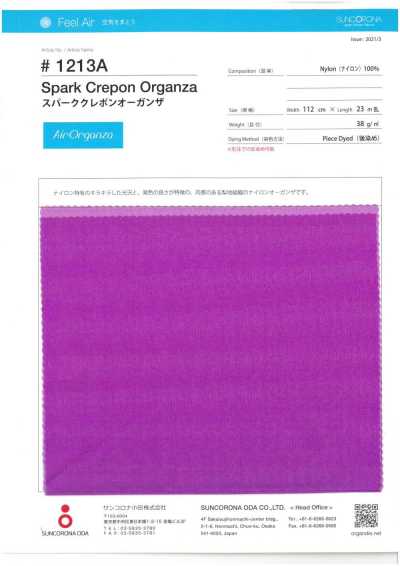
Crepon is a woven fabric in the crepe family, made using strongly twisted yarn and featuring fine crinkles and irregular shrinkage on the surface.


Contents6 sections
Definition and Overview
Crepon is a name derived from French meaning a crinkled or wavy surface, and generally refers to a textured woven fabric in the crepe family. There are methods that use strongly twisted yarn and methods that create texture through weaving and finishing, so the materials and production methods are not uniform.
Handfeel and Appearance
The surface has fine, irregular unevenness, and its characteristic appeal is a crisp, dry touch and a texture that does not cling to the skin easily. Depending on the type of yarn, twist strength, density, and finishing, it ranges from thin and lightweight to fabrics with a flowing drape.
Because the uneven surface does not reflect light evenly, it tends to have a deep look with subdued sheen. However, softness, sheerness, breathability, and stretch vary depending on the material composition and specification, so it cannot be judged by the name alone.
Main Uses
Taking advantage of its cool feel and surface texture, it is used for blouses, dresses, skirts, shirts, tunics, and similar items. Thin specifications that feel dry against the skin are used for spring and summer clothing, while specifications with drape and moderate thickness are also used for dresses and formalwear.
Even within crepon, those made mainly from natural fibers may emphasize a natural appearance, while those made with synthetic fibers may be designed with ease of handling and shape stability in mind. In planning, the finished silhouette and required functions are checked before selection.
Selection and Handling Notes
When selecting, confirm the size and direction of the texture, sheerness, fabric weight, and drape, as well as whether the texture changes after washing. Since shrinkage and changes in handfeel may occur with water washing, fabric washing tests and confirmation of dimensional change before mass production are important.
When cutting, check differences in appearance caused by the texture and any misalignment of the grain, and if there is a one-way direction, align the orientation of all parts. For thin fabrics or loose weaves, verify needle, thread, and sewing settings in advance to prevent seam puckering and puckering of the seams.
Pressing too firmly with an iron may damage the texture. Whether washing, ironing, and dry cleaning are possible depends on the blend ratio and finishing, so always follow the care conditions for each fabric.
Differences from Similar Terms
Crepe is used as a general term for woven fabrics characterized by texture created by strongly twisted yarn, and crepon is a related name. In distribution, it may be treated as having a meaning close to crepe, but the range of application of the name varies by usage.
Chirimen is a term often used to refer mainly to silk fabrics with texture created by differences in twist between warp and weft yarns. Yoryu is characterized by vertical wrinkled ridges, and its surface appearance differs from crepon, which expresses irregular or grainy texture.
Frequently Asked Questions
Are crepon and crepe the same fabric?
Crepe is used as a broad general term for woven fabrics with texture, while crepon is treated as a related name. However, the way the term is used in distribution is not consistent. It is important to confirm the material, weave structure, way the texture is created, and finishing conditions in the specifications or in the actual fabric.
Can crepon be washed at home?
Whether home washing is possible depends not on the name crepon, but on the type of fiber, dyeing, finishing, and the use of trims or accessories. Since washing may cause shrinkage or changes in texture, follow the product care label, and at the planning stage confirm appearance and dimensions through washing tests.
What should I watch for when sewing crepon?
Thin crepon may develop seam puckering or puckering due to the uneven surface and the looseness of the fabric. Choose a fine needle and thread suitable for the fabric, and adjust the sewing settings. It is also important to check the grain and surface direction before and after cutting.