Darning Needle
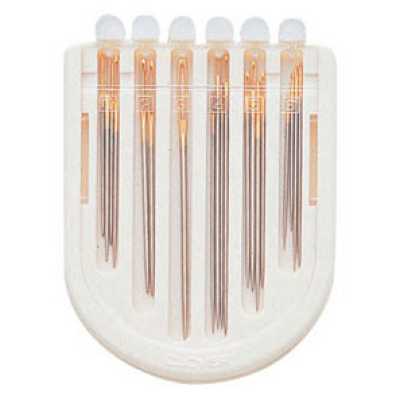
A darning needle is a hand sewing needle used for darning to mend holes and worn-thin areas in clothing and knitwear, with a relatively long shaft and a large eye that makes it easy to thread.

Contents6 sections
Definition and Overview
A darning needle is a hand sewing needle used for darning to repair frayed areas and holes. It generally has a larger eye, making it easier to thread with mending thread or wool yarn, and is suitable for work that runs threads vertically and horizontally through damaged areas to mend them like fabric.
The name is also written as darning needle or darning needle. Depending on the product, it may be sold under the name cotton darning needle, referring to a needle suitable for mending work using relatively fine mending thread such as cotton thread.
How to Use
Neaten the weak threads remaining around the hole, and run threads across an area slightly wider than the repaired section. Next, weave the thread horizontally while alternating over and under the crossed threads to create a woven repair surface. During the work, it is important not to pull the fabric too tightly.
On knitwear and thin fabrics, keep in mind the amount of thread so that only the repaired area does not become hard or shrink. Choosing mending thread with material, thickness, color, and sheen close to the fabric will make it less noticeable.
- Repairing small holes and worn areas in woven fabric
- Reinforcing and mending thin areas in knitwear
- Finishing off thicker hand-sewing thread or wool yarn
Types and How to Choose
When selecting one, match the needle thickness, length, and eye size to the mending thread and fabric. A thin needle is suitable for thin fabric and fine thread, but thicker thread will be harder to thread. A thick needle makes it easier to thread wool yarn, but depending on the fabric, the eye may be noticeable, so caution is needed.
A longer needle makes it easier to carry thread across the work, and a larger eye reduces the burden of threading. However, if the eye is too large, thick knots or friction may occur, so use the smallest size that allows the thread to pass through without difficulty.
Differences from Similar Needles
A darning needle is often used for finishing off wool yarn and joining knitted pieces, and its tip is generally rounded. A darning needle is mainly used for picking up fabric and running mending thread vertically and horizontally, and the tip shape and thickness vary by product.
Sewing needles such as American needles are thin needles for sewing fabric together. Because a darning needle emphasizes an eye and length that make mending thread easy to handle, its use and selection differ from ordinary sewing needles.
Care and Safety Precautions
After use, wipe off lint and moisture, then store the needle after checking for wear, bending, and rust at the tip and eye. If the tip is rough or bent, it may damage the fabric or thread, so do not keep using it forcefully; replace it instead.
Always store needles in a needle case or pin cushion, and do not leave them stuck in a worktable or clothing. Checking the number of needles before and after work and managing them so that broken needles or dropped needles are not overlooked is important both in sewing workplaces and for home repairs.
Frequently Asked Questions
Are a darning needle and a looping needle the same?
Both may have a larger eye that makes thread easy to pass through, but their main uses differ. A looping needle is often used for finishing off knitted thread and joining pieces, while a darning needle is used for repair work that runs mending thread vertically and horizontally over holes and worn areas. Check the tip shape for each product.
What thickness should I choose for a darning needle?
Choose a thickness that lets the mending thread pass through the eye without difficulty and does not leave excessive needle holes in the fabric. A thinner needle is suitable for thin fabric and fine thread, while a thicker one is better for wool yarn and thick knitwear. First test it on a scrap piece and check whether the needle damages the fabric or whether the repaired area becomes too hard.