American Needle
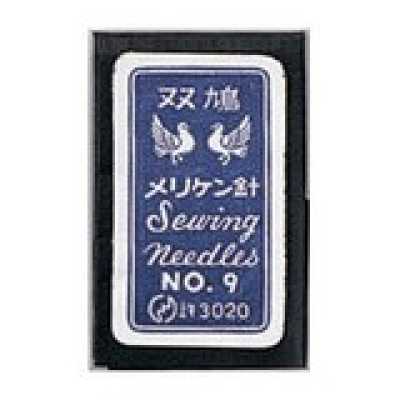
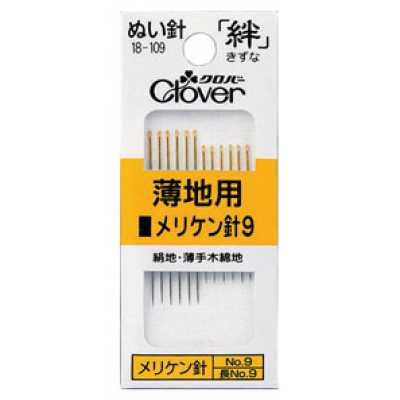
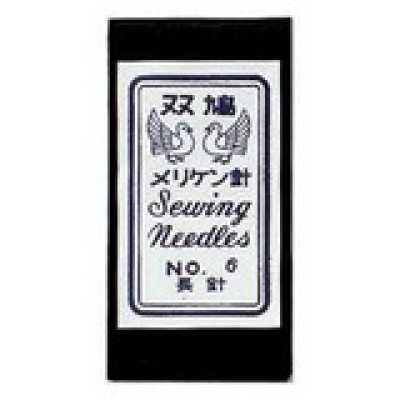
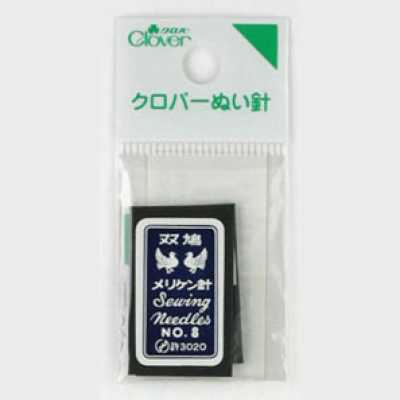
An American needle is a general-purpose Western-style hand sewing needle used for sewing fabric together by hand, with a sharp tip and an eye for threading sewing thread.
Contents6 sections
Definition and Overview
An American needle is a basic hand sewing needle used for garment repairs, sewing on buttons, basting, and blind hemming. It generally has a sharp normal point and an eye at the back end for threading sewing thread through the needle.
The name is used as a term for a Western-style needle, and it may be distinguished from Japanese needles. However, in retail settings it may also refer broadly to hand sewing needles with a wide range of applications, so check the shape and applications before choosing one.
How to Use
If the needle is too thick for the fabric and thread being sewn, the needle hole may stand out or the textile may be damaged. A needle that is too thin bends easily and is harder to pass through heavy fabrics, so match it to the thickness and weave density of the fabric.
Choose a thread thickness that passes through the eye without difficulty, and check the needle tip for bending, rust, and damage to the eye before sewing. Using a thimble when pushing the needle helps reduce strain on your fingertips and the risk of injury.
- For repairs and hand sewing of medium-weight fabric, choose a standard length and thickness that is easy to handle.
- For fine stitching and lightweight fabric, a thinner, shorter needle is suitable.
- For heavy fabric and layered sections, choose a thicker needle with breakage resistance in mind.
- For knit fabric, consider a ballpoint needle that is less likely to cut the knit yarn.
Types and How to Choose
American needles come in different sizes, thicknesses, and lengths. In general, size markings alone do not let you determine the specifications uniformly, so it is important to check the thickness, length, and suitable textile indicated for each product.
Even among American needles, longer types tend to make it easier to work larger stitches, while shorter types tend to be easier to handle for fine stitching. The size of the eye affects the thread thickness that can be used and overall workability.
- For lightweight fabric, choose a thin needle with a smooth tip.
- For medium-weight fabric, check the balance between ease of threading and strength.
- For heavy fabric, prioritize thickness and strength, and do not force the needle to bend.
- For quilting and applique, specialized needles suitable for the process are also an option.
Care and Safety Notes
After use, wipe off sweat and dirt from the needle with a dry cloth, and store it in a needle case or pincushion in a dry place. Replace needles that are rusty, bent, have a blunted tip, or have a rough eye, because they can damage the textile and thread.
It is dangerous to hold a needle in your mouth or to stick it carelessly into clothing or a worktable. Even when interrupting work, return the needle to a pincushion or similar holder, and after sewing, count the needles to prevent them from being left in the product or on the floor.
Differences from Similar Terms
Sewing needle is the general term for needles used for hand sewing, and American needle is one representative type. A darning needle is for mending work and generally has a larger eye; its shape and suitable tasks differ from those of an American needle.
A machine needle is used by attaching it to a sewing machine, and its structure and applications differ from those of an American needle used by hand. Also, a ballpoint needle has a rounded tip for knit fabric, and is used differently from a general American needle with a sharp tip.
Frequently Asked Questions
What kinds of fabric can American needles be used for?
They are widely used for hand sewing woven fabrics from lightweight to somewhat heavy. However, if the needle is too thick for the thickness, density, and sewing thread of the fabric, the needle hole is more likely to remain visible. For knit fabric, one option is to choose a ballpoint needle that is less likely to cut the knit yarn.
How do you choose the size of an American needle?
Do not decide thickness or length by size alone; check the markings for each product. As a basic rule, use a thinner needle for thinner fabrics and a stronger needle for thicker fabrics, and also confirm that the thread being used passes through the eye without difficulty.
Can a bent American needle be straightened and reused?
If a bent needle is bent back into shape, it may break more easily due to metal fatigue, so it should generally be replaced. Needles with a dull tip or rust should also not be used, because they can damage the textile and increase resistance during work.