Disc Snap
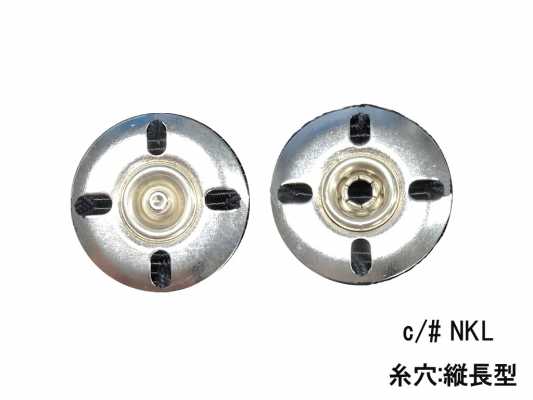
A disc snap is a type of snap button characterized by a thin, disc-shaped appearance and used to fasten clothing openings by interlocking raised and recessed parts.
Contents6 sections
Definition and Overview
A disc snap is a snap button with a flat, disc-like design. It is characterized by being opened and closed by pressing the mating parts together, making it easy to achieve a thin finish with reduced surface protrusion. It is used for openings such as front openings, pocket openings, and facings.
Like standard press fasteners and spring hooks, it is included among hook-type closures that fasten by pressing. However, disc snap often refers to a shape that emphasizes thinness and a lightweight feel, and the name and specific structure vary by product.
Materials and Structure
In many cases, a raised side and a recessed side are used as a pair for fastening. Depending on the product type, the structure combines a visible disc part on the front side, a receiving part, and fastening parts. If the combination of components is incorrect, they may not engage properly or may come loose easily.
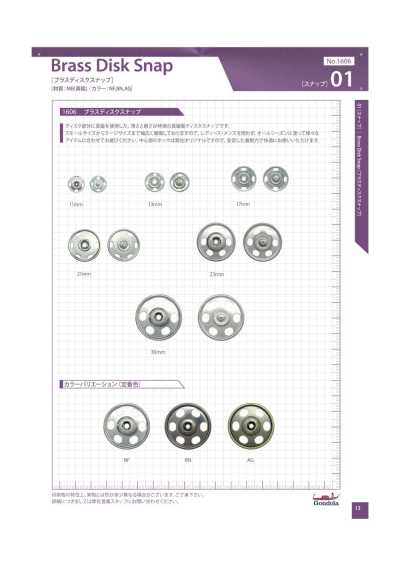
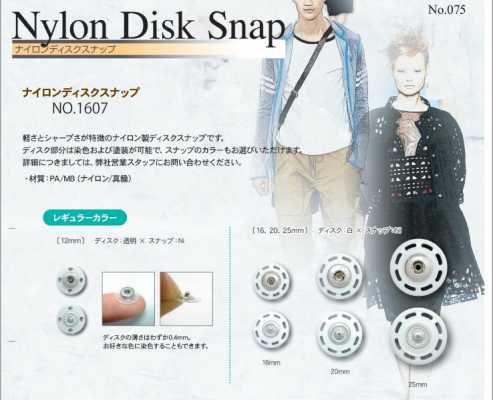
The disc part may be made from metal such as brass, or from resin such as nylon. Metal types tend to give a more refined texture, while resin types tend to be lighter, but actual strength, thickness, and appearance should be checked according to the component combination and specifications.
- For metal types, check for rust or discoloration due to humidity, sweat, and washing conditions.
- For resin types, check suitability for heat, chemicals, and repeated opening and closing.
- Also check the material and finish of the parts that contact the outer fabric and the skin side.
How Size Is Expressed
The size of a disc snap is generally expressed in millimeters by the diameter of the disc part or the head that is visible from the outside. Even with the same stated diameter, the part thickness, fastening firmness, and fabric thickness that can be handled are not always the same.
In orders and specification sheets, it is important to include not only the diameter, but also the material, color or plating, component combination, installation method, and compatible fabric thickness. For prototypes, check the actual fabric, interfacing, and areas where seam allowances overlap.
Installation and Main Applications
The installation method follows the product specifications, and methods such as crimping with a dedicated setting tool and a hand press or foot press machine are used. Since the compatible setting tool differs by component, do not use tools for other snap buttons just because they look similar.
It is used for closures in shirts and blouses, lightweight garments, innerwear, and kids' clothing where a thin finish is desired. It is also used in outerwear, but in areas subject to high tensile loads, select it after checking the opening strength and resistance of the fabric to tearing.
- Before setting, check the specifications to confirm whether a hole should be made at the installation position or whether the parts should penetrate the fabric.
- Perform a trial setting and check for front-to-back tilt, insufficient crimping, or deformation of parts.
- Check not only opening and closing tests, but also resistance to coming loose when pulled sideways and any damage to the fabric.
Points to Note When Selecting
On thin or highly stretchable fabrics, force may concentrate at the setting area, causing tears or waviness. If the fabric is thin, consider using reinforcing fabric or interfacing, and if the fabric is thick, check whether the leg length of the part and the compatible fabric thickness are appropriate.
Even if the hook itself has high retention force, practical strength cannot be secured if the fabric cannot withstand it. Consider the frequency of use, opening and closing direction, and pulling during wear, and evaluate durability in the finished product state. In production and inspection processes that use metal detectors, identify whether the parts are metal or resin, and decide in advance how needle detector compatibility will be handled.
Frequently Asked Questions
What is the difference between a disc snap and a press fastener?
Both are hook-type closures that open and close by pressing, but disc snap is a name often used for products characterized by a disc-like, thin design and structure. Press fastener is used as a broader term. Since component configuration, installation tools, and strength differ by product type, do not assume compatibility based on the name alone.
Can a disc snap be attached to thin fabric?
Installation may be possible, but on thin fabrics the setting area may tear or the surface may show fading or distortion. Do not judge based only on the outer fabric; trial setting on the actual specification, including interfacing and reinforcing fabric, is necessary, and the fabric condition and retention force after opening and closing should be checked.
Do metal disc snaps affect needle detection?
Products containing metal such as brass may generally react to a metal detector. If there is a needle detector process, confirm the material of the parts used, the detector settings, and the control method when detection occurs before production. Even resin products may contain metal in internal parts, so specification confirmation is necessary.