Shoulder Snap
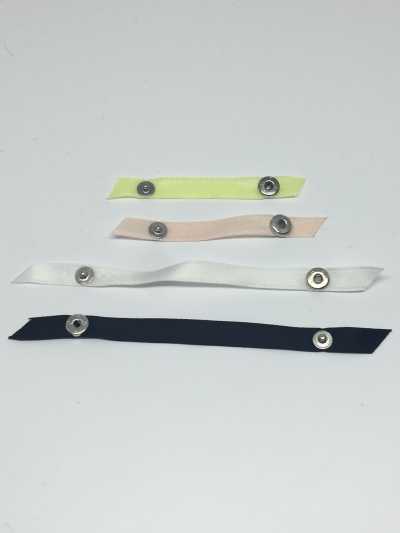
A Shoulder Snap is a small fastening attached to the inside of the shoulder area of a garment to keep bra straps or camisole straps from showing or slipping out of place.
Contents6 sections
Definition and Overview
A shoulder snap is a subsidiary material used mainly on the inside near the shoulder seam of sleeveless dresses, dresses, blouses, and similar garments. It uses a fastener attached to the garment side to hold inner bra straps in place and prevent them from moving outward off the shoulder during wear.
It has the same mechanism as a general snap fastener, but its main purpose is not to close a front opening or pocket; it is to keep shoulder straps in position. A key feature is that it is attached in a discreet location that is not easily visible from the outside.
Materials and Structure
In many cases, it consists of two parts, a convex side and a concave side for opening and closing, combined with a sewing tape or a narrow fabric section. One end of the tape is sewn into the shoulder seam or facing side, and the opposite side is opened and closed to secure the shoulder strap.
In specifications that use metal snaps, the appearance and corrosion resistance vary depending on the type of surface treatment. Depending on the garment design, fabric color, and washing conditions, confirm the color, material, and durability of the metal and tape parts.
- Convex side / concave side: the opening and closing parts that snap together for attachment and removal.
- Tape part: the narrow section used to sew to the garment.
- Holding part: the part that passes the shoulder strap through and keeps it in position when closed.
Size Indication and Attachment Method
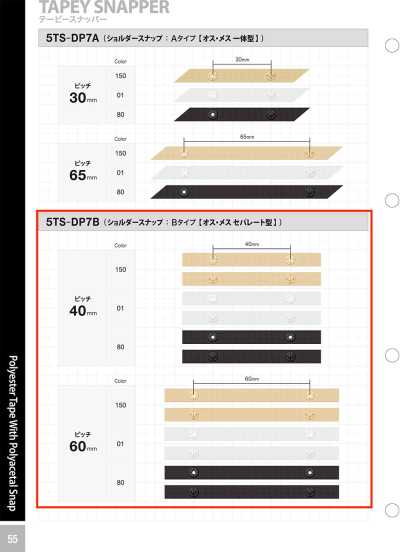
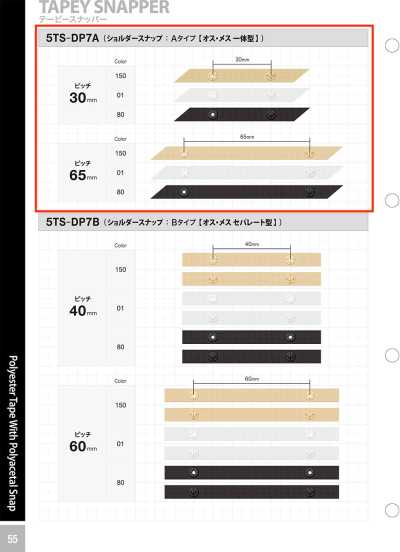
Size may be shown by the outer diameter of the snap body, the tape width, the overall length, and so on. However, because the display method varies by supplier, it is important to confirm not only the numbers but also the width through which the shoulder strap can pass and the sewing position using an actual sample or specification drawing.
For attachment, place it temporarily on the inside slightly toward the body from the shoulder point so that the shoulder strap settles naturally when the garment is worn. The tape end may be sewn into the seam allowance or facing, or sewn on, and you should consider a specification that does not show stitches through the outer fabric.
- Select a holding part that allows the shoulder strap to pass through without difficulty for its width and thickness.
- Use a sewing method that does not concentrate stress on the tape end when pulled.
- Match the position and orientation on both sides, and check the holding condition with a wearing sample.
Main Applications and Selection Notes
Main applications are products intended for combinations where shoulder straps are visible, such as women's wear, costumes, formal wear, and innerwear. While it can improve appearance by securing the strap, it is not suitable for strongly pulling up the strap or supporting the weight of the garment itself.
On thin or highly stretchable fabrics, the stiffness and weight of the snap or tape may cause pressure marks, waviness, or sheerness. If necessary, reinforce the attachment area with interfacing, and confirm compatibility with fabric thickness, stretch, and stitch visibility using samples.
For products exposed to sweat, washing, moisture, or chemicals, check for rusting or discoloration of the metal parts, peeling of plating, and any effect on the surrounding fabric. For applications requiring consideration of metal allergies, also confirm the materials used and the surface treatment specifications.
Differences from Similar Terms
Sew-on snap fasteners is a general term for snaps sewn onto garments to directly open and close openings or pockets. A shoulder snap differs in that it uses the snap mechanism while referring to a tape-attached or strap-holding specification for retaining shoulder straps.
Plastic snaps are a classification based on the material and structure of resin snaps. A shoulder snap, on the other hand, is a term based on application. Therefore, whether it is metal or resin, and whether needle detector compatibility is required, should be judged as part of the individual product specification.
When metal parts are used, consider the needle detection process after product completion. In addition to selecting needle detector compatible products, specify the factory's needle detection standards, quantity used, and management methods for preventing contamination or detachment in the production specification sheet.
Frequently Asked Questions
Where should a shoulder snap be attached?
Generally, it is attached on the inside near the shoulder seam, at a position where the inner strap naturally passes when worn. If it is too close to either the neck side or sleeve side, the strap may show or be pulled and reduce comfort, so a wearing check using the actual inner garment is necessary.
Can a shoulder snap be attached to thin fabric?
Yes, but the thickness of the snap and the stiffness of the tape may create pressure on the outer side or cause the fabric to sag. Decide the mass-production specification only after checking compatibility with the fabric, such as using thin interfacing at the attachment area or selecting a lightweight specification.
Is needle detection required for shoulder snaps?
When metal parts are used, they may be subject to needle detection depending on the product quality control standards and the customer's requirements. Detectability with a needle detector depends on the material, size, and detection conditions of the part, so confirm the material specifications and the factory's needle detection standards before use.