Double-sided Eyelet
A double-sided eyelet is an eyelet used to sandwich the front and back of a hole made in fabric or similar material with metal parts, so that a neat edge is visible on both sides.
Contents6 sections
Definition and Overview
A double-sided eyelet is an apparel accessory that reinforces the edge of a hole while giving a neat appearance on both the front and back. It is used for holes that thread through cords, cords, belts, and the like, and also helps prevent fraying and tearing around the hole.
Unlike one-sided specifications, where the edge of the eyelet is visible on only one side, a double-sided eyelet shows a finished surface on both sides. It is suitable for garments, bags, reversible designs, and other items where a neat appearance is desired, especially when the reverse side is visible.
Materials and Component Structure
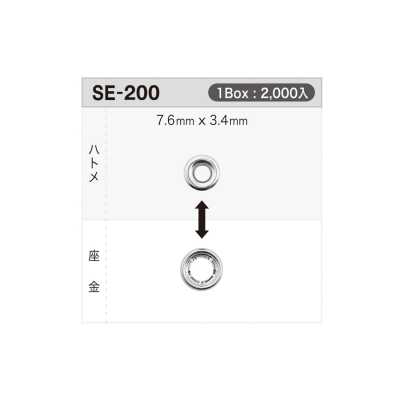
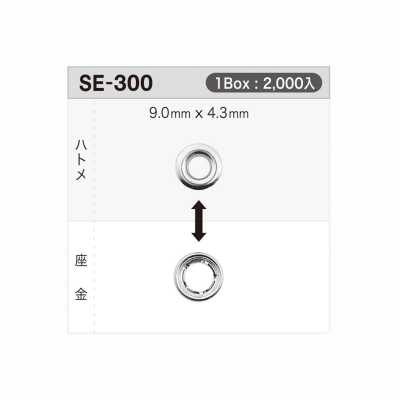
In general, it is used as a combination of the eyelet body, which has a tubular shank, and a washer that receives the shank on the back side. By spreading the shank during setting and clinching it, the fabric is held between the parts and fixed in place. As a rule, the specified combination of parts is used.
Materials include metals such as brass and iron, and the surface may be finished with plating or painting. Depending on the material and surface treatment, appearance, corrosion resistance, needle detector handling, and nickel considerations may differ.
- Eyelet body: The part made up of the visible front edge and the shank that passes through the fabric.
- Washer: The part that receives the shank from the back side and helps with retention and finishing during setting.
- Plating: A thin coating applied to the metal surface, which affects color tone and corrosion resistance.
How Size Is Shown
In many cases, size is indicated mainly by the inner diameter through which a cord or the like passes. However, the outer diameter, shank length, and compatible fabric thickness must be checked separately. Even with the same inner diameter, the part shape and washer size may differ.
In specifications, the inner diameter, as well as finish color, component structure, installation position, and the thickness of the cord to be used, are clearly stated. The hole diameter for the fabric is also determined by considering the eyelet shank diameter and the condition after setting.
Installation Method and Compatibility with Fabric
Make a pilot hole in the fabric, insert the eyelet body from the front side, place the washer on the back side, and clinch it with a dedicated setting tool. For small quantities, a hand press or hand setting may be used; for mass production, a foot-operated or air-powered press may be used.
Select a setting tool that matches the eyelet diameter and shape. If the pressing force is insufficient, wobbling or loosening may occur; if it is too strong, it may deform the parts, damage the fabric, or cause tearing around the hole. Therefore, trial setting should be done with the same material before mass production.
Lightweight fabrics, highly stretchable fabrics, and coarse knits may allow the hole to widen under the load of the eyelet. Reinforce the attachment area with fusible interlining, pressing cloth, or reinforcement tape, and select parts with a shank length suited to the fabric thickness.
Applications and Precautions
Double-sided eyelets are used for hood and waist drawstring openings, bag cord holes, belt holes, decorative holes, and similar applications. For pull-load applications, strength must be ensured not only by the eyelet itself but also by the surrounding structure, including the fabric, reinforcement materials, and stitching.
For applications exposed to moisture, sweat, washing, or seawater, check the possibility of metal rust, plating discoloration, verdigris, and similar issues according to the usage environment. For products that require nickel consideration, confirm the scope of the nickel-free specification and the test conditions with the supplier.
Metal eyelets may react to a needle detector. For products that require needle detector compatibility, it is important to share with the sewing factory, before mass production, whether the parts to be used are detectable, the detector conditions, and the method for contamination control.
Frequently Asked Questions
What is the difference between a double-sided eyelet and a one-sided eyelet?
A double-sided eyelet is finished by sandwiching the fabric between the body and washer so that the metal edge is visible on both the front and back. A one-sided eyelet may refer to a specification that mainly focuses on the appearance of one side, and it should be selected by checking the appearance of the reverse side, the component structure, and the compatible setting tool.
Can a double-sided eyelet be attached to thin fabric?
It can be attached, but caution is needed because thin fabric alone is more likely to tear or pucker around the hole. Reinforce the attachment area with fusible interlining, pressing cloth, or similar materials, and select parts with a shank length suited to the fabric thickness. Be sure to test-set it with the actual fabric, interlining, and sewn specification layered together.
Can an eyelet size be chosen based only on the inner diameter?
The inner diameter is the basic dimension used to judge compatibility with the cord to be threaded, but that alone is not enough. The outer diameter affects appearance and the reinforcement area, and the shank length affects compatibility with fabric thickness. The body and washer combination, pilot hole diameter, and dedicated setting tool must also be checked.