


Feather Yarn
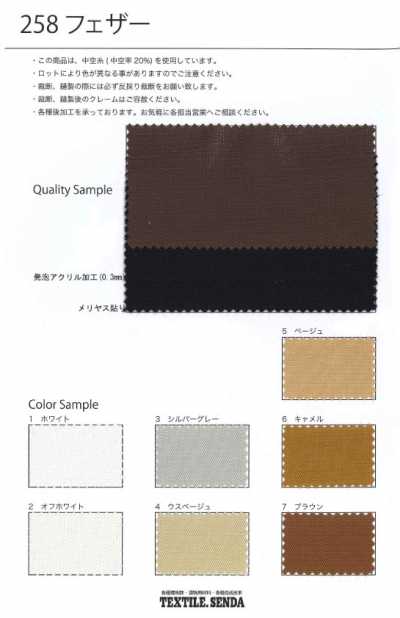
Feather Yarn is a novelty yarn that expresses a raised, three-dimensional look by projecting feather- or arrowhead-like decorative sections from the yarn core.
Contents6 sections
Definition and Overview
Feather Yarn is a novelty yarn with decorative feather-like, tassel-like, or arrowhead-like elements attached to the body of the yarn. It can add a raised accent not only when made into knit or woven fabric, but also when used in tape-like or cord-like form and sewn on.
The name is based on appearance, and the material, thickness, shape of the decorative sections, and production method are not uniform. In addition to those made with synthetic fibers such as polyester, there are also types that combine different fibers.
Feel and Visual Characteristics
The main features are pile, fullness, and shadowing that are difficult to achieve with smooth yarn. Depending on the length and density of the decorative sections, the appearance can vary greatly, from delicate feather-like effects to bold three-dimensional decoration.
Because the decorative sections catch the light, the expression changes depending on the viewing angle and movement. On the other hand, snagging, lint shedding, and distortion from friction may occur more easily than with ordinary yarn.
Main Applications
It is used for knitting into sweaters and cut-and-sew items, partial decoration on shirts and blouses, and accent placement around collars, cuffs, and hems. Rather than using it over the entire fabric, incorporating it as a panel or line makes it easier to control the decorative effect.
Outside apparel, it is also used for interior applications such as cushions, curtains, and decorative accessories. It is not a material intended for warmth retention, but is suited mainly to applications that make use of visual dimension and design appeal.
- Accent for autumn and winter knitwear and accessories
- Partial use on spring and summer shirts and blouses
- Decoration for costumes and stage use
- Decoration for interior fabric and miscellaneous goods
How to Choose and Handling Notes
When selecting it, check the material of the base yarn and decorative sections, thickness, spacing of the decoration, and pile length. The look of the finished product is also affected by the structure and sewing spacing, so it is important to confirm the volume and feel against the skin with a prototype that is close to the actual specification.
Shrinkage from washing, lint shedding, and tangling or deformation of the decorative sections vary depending on the blended fibers and production method. In some cases, it is necessary to follow the washing instructions and avoid strong friction and use of a tumble dryer. Conduct washing tests before mass production to confirm appearance changes.
When cutting, the decorative sections cross the cutting line, so cut while keeping the pile out of the way. In sewing, arrange it so the pile is not caught in the seam, and for areas where the seam becomes thick, consider the needle, thread, presser foot pressure, and seam finishing in advance.
Differences from Similar Terms
Novelty yarn is a general term for yarn with a varied appearance, and Feather Yarn is treated as one type of it. Bouclé is characterized by looped surface texture, while Feather Yarn is characterized by feather-like protruding decoration.
Chenille yarn is a fluffy, cylindrical yarn with short fibers trapped in the core yarn. Feather Yarn can include decorative elements that project in one direction, and may create a more defined three-dimensional expression. Fringe, on the other hand, is decoration attached to the edge of fabric or tape, and is distinguished from Feather Yarn, which refers to the yarn itself.
FAQ
Can Feather Yarn be washed at home?
Whether home washing is possible depends on the fibers used, how the decorative sections are secured, and the knit or sewing specification. To prevent tangling, deformation, or shedding of the pile, check the product's washing instructions. When planning, it is important to conduct washing tests based on actual use and confirm appearance changes.
What should be noted when sewing Feather Yarn?
If the decorative sections are caught in the seam, the appearance becomes uneven and the seam becomes thicker. Before and after cutting, keep the pile out of the way, and after sewing, use an awl or similar tool to bring any sewn-in decoration back to the face side. Please check the needle, thread, presser foot pressure, and stitch count with a test sew.





