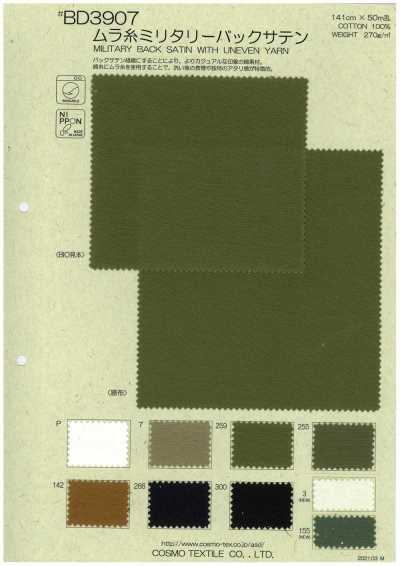
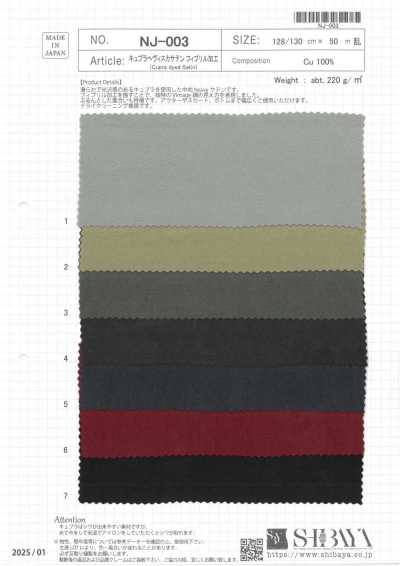
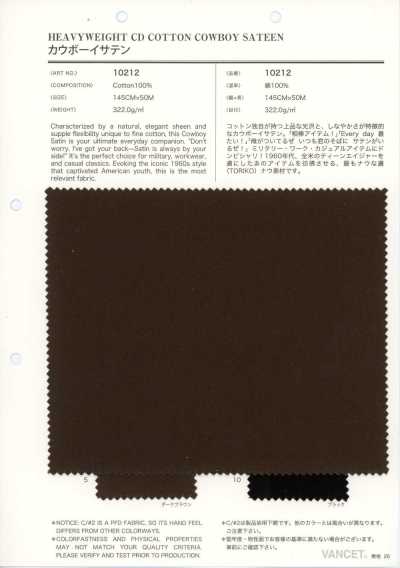
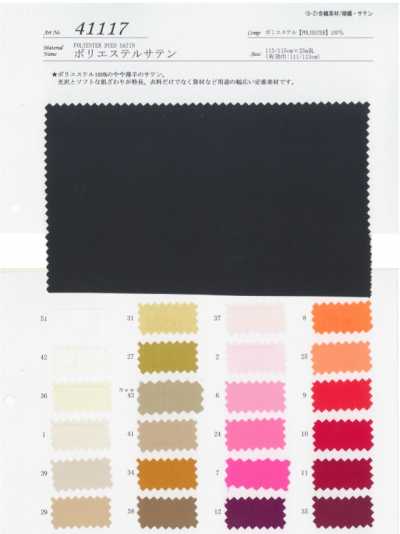
5-harness Satin And 8-harness Satin
5-harness satin and 8-harness satin are types of satin weave that use a complete weave repeat of five and eight yarns, respectively, and produce a smooth luster through long floating yarns.


Contents6 sections
Definition and Overview
Five-harness satin and eight-harness satin are names used to classify satin weave by the size of the complete weave repeat. A complete weave repeat refers to the smallest repeating unit in which the interlacing pattern of warp and weft yarns cycles once. Five-harness satin is built on a unit of five yarns, and eight-harness satin on a unit of eight yarns.
Satin weave is a fabric structure in which warp or weft yarns float long on the surface, dispersing the interlacing points. As a result, surface intersections are less noticeable, creating a smooth, continuous surface and luster. It is a weave structure, not a material name, and its properties vary greatly depending on the yarn and finishing.
Features
In general, eight-harness satin tends to have longer floating yarns than five-harness satin, making the surface smoother and more likely to produce a deep luster. On the other hand, the longer the floating yarns, the more easily they are affected by friction and snagging, so the balance with durability must be checked.
Compared with eight-harness satin, five-harness satin has more interlacing points and gives a relatively tighter appearance while still retaining luster. However, actual thickness, firmness, drape, and sheerness depend on the fiber type, yarn thickness, density, and finishing, so they cannot be judged by the weave structure alone.
- The surface has luster and tends to have good slipperiness.
- Long floating yarns mean care is needed to avoid abrasion and snags.
- The appearance of the face and back differs depending on whether it is warp satin or weft satin.
Main Applications
Its luster and smooth surface make it suitable for formalwear, dresses, skirts, blouses, and stage costumes. Thin fabrics made with fine filament yarns may be used for linings or items that take advantage of drape, while heavier yarns or high-density versions may be used for jackets and similar items.
Five-harness satin or eight-harness satin made with worsted yarns and finished with treatments such as fulling, brushing, or shearing to control fuzz may be handled as fabric for formal garments. In such cases, the finishing process, in addition to the weave structure, defines the appearance and applications.
How to Choose and Handling Notes
When selecting fabric, check not only whether it is five-harness or eight-harness, but also whether the surface is warp satin or weft satin, as well as the blend ratio, density, fabric weight, thickness, and drape. Before sewing, also check differences in luster by cutting direction, and aligning the grain direction between parts makes it easier to keep the color tone and reflective appearance consistent.
Satin weave has a slippery surface, so it may shift during sewing, and needle holes or presser marks may become noticeable. Choose a fine needle and thread suitable for the fabric, and check seam puckering with a test stitch. Finish seam allowances appropriately, taking fraying into account.
Shrinkage, color fading, and changes in luster depend on the fiber and finishing. It may not be washable, so it is important to carry out washing tests and steam tests before mass production, and to follow the fabric care label for the final product. In storage, avoid friction, pressure, and snagging.
Differences from Similar Terms
Satin weave is one of the basic weave structures, along with plain weave and twill weave. Plain weave has many interlacing points and tends to be strong with an even surface, while twill weave shows diagonal ridges. In contrast, satin weave disperses the interlacing points, making it a structure that easily creates a lustrous surface with less noticeable ribs.
Satin is a name often used to refer to satin weave, or fabric made with satin weave. However, the product name satin alone does not identify whether it is five-harness or eight-harness, or whether it is warp satin or weft satin. Five-harness satin and eight-harness satin are names that focus on the number of repeats in the weave, not the appearance of satin.
Frequently Asked Questions
Which has more luster, five-harness satin or eight-harness satin?
In general, eight-harness satin tends to have longer floating yarns than five-harness satin and can more easily show a smoother, deeper luster. However, luster is also greatly affected by the fiber type, yarn shape, density, and finishing such as dyeing and calendering, so it is important to compare actual samples.
Do five-harness satin and eight-harness satin shrink when washed?
The degree of shrinkage is not determined by the fact that it is satin weave; it depends on the material, such as cotton, wool, silk, or polyester, the condition of the yarn, finishing, and the washing method. Before mass production, check the fabric specifications and care label, and perform water setting or washing tests using the intended care method.
What should I be careful about when sewing satin weave?
Because the surface is slippery, watch for shifting during cutting, seam puckering during sewing, and presser marks. Use a fine needle and thread suitable for the fabric, and check the seam, pressing temperature, and seam allowance finishing with a test stitch. To avoid damaging the long floating yarns, also manage contact with pins and hook and loop fasteners.