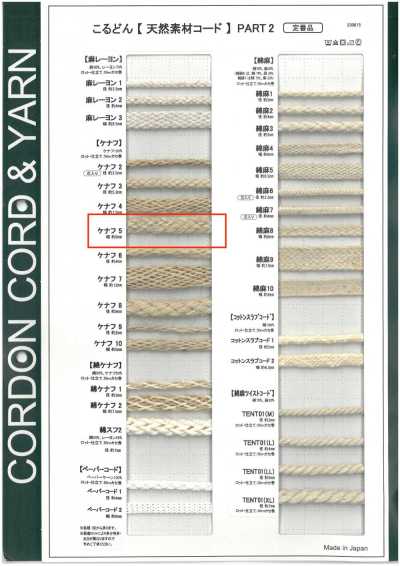
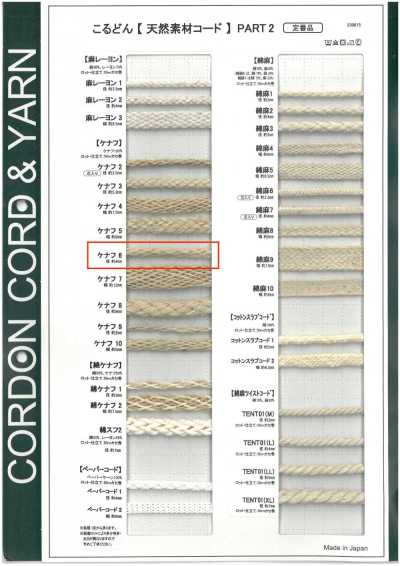
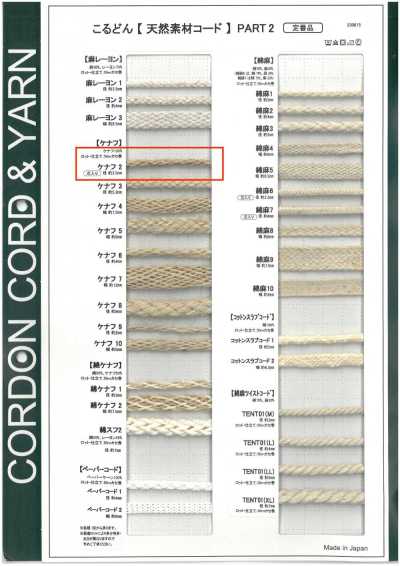
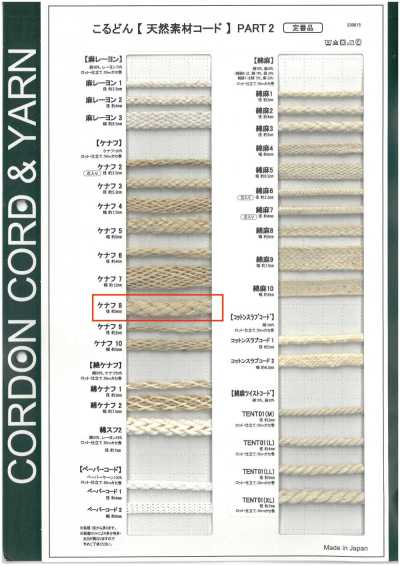
Kenaf
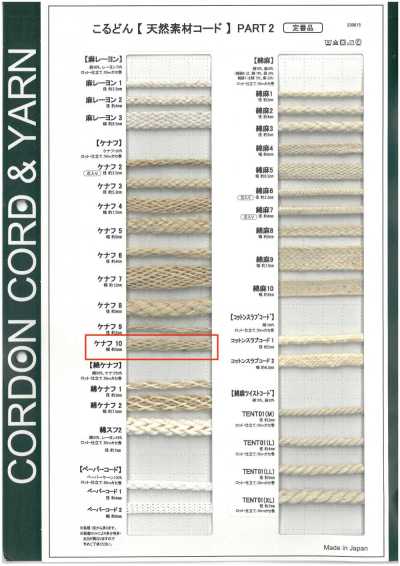
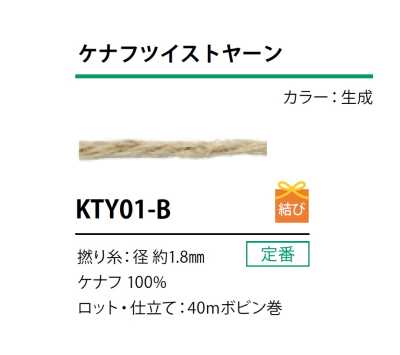
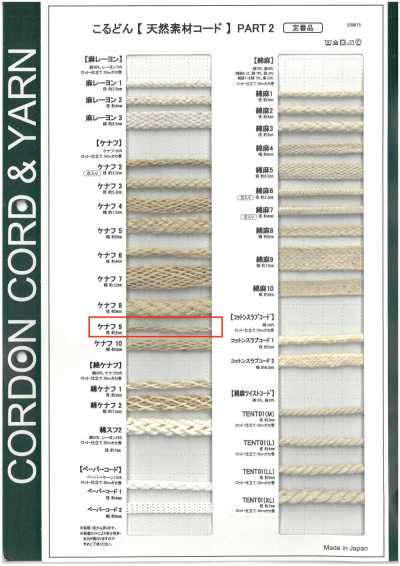
Kenaf is a natural material made from bast fiber harvested from an annual plant in the mallow family, used for cord, miscellaneous goods, and blended materials for apparel, taking advantage of its rustic appearance and firmness.

Contents6 sections
Definition and Overview
Kenaf is a bast fiber obtained from the bast layer on the outside of a plant stem. Bast fiber refers to relatively long plant fibers taken from the part near the stem epidermis. It is used not only for apparel fabric, but also for cord, rope, paper, industrial materials, and more.
The feel and appearance vary greatly depending on the fiber thickness and length, and the degree of refining. For this reason, kenaf is a material name, not a name for a weave structure such as plain weave or twill, or a name indicating fabric thickness.
Texture and Functional Characteristics
Kenaf fiber has a rustic, slightly rugged look typical of natural fibers, and it tends to create firm body and resilience. When its off-white tone and fiber irregularities are utilized, it suits natural designs with a handcrafted feel.
Because it can feel stiff or fuzzy on its own, it is sometimes blended with cotton to adjust the texture. Product softness, strength, water absorbency, and dyeability vary depending on the blend ratio, yarn construction, weave or knit structure, and finishing process.
- Suitable for three-dimensional expressions that make use of its body.
- Fiber knots and color variations may appear as a natural look.
- For applications that require a smooth feel with fine yarn, it is important to check the blend and processing.
Main Applications and Seasonality
Kenaf is used for cord, string, materials for bags and small goods, and interior miscellaneous goods that take advantage of its firm texture. In apparel, it may be incorporated as a blended fabric with cotton or other fibers for casual shirts, bottoms, dresses, and auxiliary materials for outerwear.
Because it readily gives a light appearance and dry texture, it pairs well with natural-style products for spring and summer. On the other hand, depending on the fabric weight, structure, and blended materials, it can also be used year-round or for thicker miscellaneous goods, so seasonality cannot be determined from the material name alone.
Selection and Handling Notes
When selecting fabric or cord, check not only the kenaf blend ratio but also the thickness, density, fabric weight, surface fuzz, and stiffness with an actual sample. When used in apparel, choose the blended material and structure according to whether the part touches the skin or needs to retain its shape.
Products containing natural plant fibers may shrink, wrinkle, or change texture when washed. Before mass production, carry out wetting and wash tests to confirm shrinkage and color transfer, and decide the product care tag based on the test results of the fabric used.
With stiff yarns or fuzzy materials, skipped stitches, thread breakage, and uneven stitching may occur depending on compatibility with the needle and sewing thread. Perform test stitching to adjust needle size, thread count, thread tension, and stitch density, and finish cut edges appropriately according to how easily they fray.
Differences from Similar Materials
Kenaf is a plant-derived fiber like linen, ramie, and hemp, but the source plant is different. These are sometimes collectively called linen, but in labeling and procurement, the fiber type, blend ratio, and treatment under care tag rules must be checked separately.
Jute is also a type of bast fiber and is used for bags, string, and interior materials. It may have applications similar to kenaf, but its fiber characteristics, color tone, hand feel, and suitability for spinning and processing are not identical, so samples should be compared when treating it as an alternative material.
Frequently Asked Questions
Is kenaf the same material as linen?
Kenaf is a plant fiber taken from the bast layer of the stem, and in a broad sense it may be treated as a type of linen. However, linen comes from flax, ramie from ramie, and hemp from hemp. Because the source plants and fiber properties differ, do not replace them as the same material; check the blend indication and the actual texture.
Can kenaf-blend fabric be machine washed at home?
Whether home washing is possible depends on more than the kenaf blend ratio. It varies with the blended fiber, weave or knit structure, dyeing, resin finishing, and more. Because washing may cause shrinkage, wrinkling, or surface changes, check the fabric maker's care instructions and confirm dimensional changes through wash testing and wetting at the planning stage.
Is kenaf difficult to sew?
With kenaf-blend materials that use thick, stiff, or fuzzy yarns, uneven stitching, thread breakage, and fraying at the edges may occur. However, sewability depends on the fabric structure. It is important to carry out test stitching before mass production and determine the needle and sewing thread size, thread tension, stitch density, and edge finishing method.