Marker Efficiency
Marker efficiency is an indicator that shows the fabric utilization rate when each pattern piece is laid out within the fabric width during cutting, and it is related to estimating a product’s fabric consumption and material cost.
Contents6 sections
Definition and Overview
Marker efficiency is the proportion of the area of the laid-out pattern pieces to the fabric area used as the marker. Generally, the higher the efficiency, the less fabric waste there is, making it easier to reduce the fabric consumption per garment.
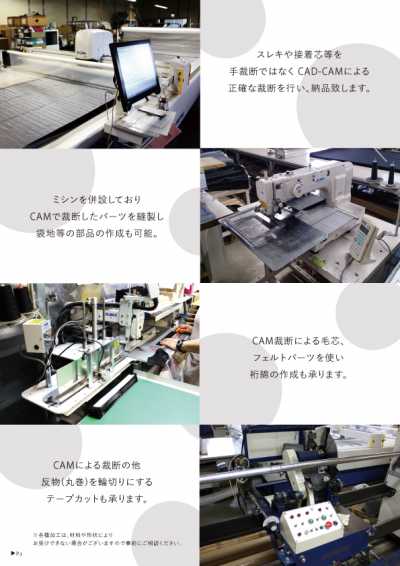
A marker is a drawing that arranges size-specific and pattern-specific parts within the fabric width before cutting. It is created manually or with computer software for pattern layout, and serves as the basis for material planning in the cutting process.
Position in Product Manufacturing
Marker efficiency is checked in the process that moves from pattern making, grading, and marking to spreading and cutting. It is used to examine fabric order quantities and production cost in order to improve accuracy from the estimated fabric consumption at the planning stage to the confirmed fabric consumption for mass production.
Efficiency varies depending on fabric width, size composition, number of cut pieces, and part shape. Even for the same design, if the size mix for production or the fabric width differs, the marker length and required fabric amount will also change.
Process and Practical Points
In pattern layout, cutting conditions such as grain line, required distance from the selvage, nap direction, and pattern direction are determined first. If these are ignored, efficiency may appear higher, but the appearance and dimensional stability after sewing may be compromised.
By combining multiple sizes into one marker according to the order quantities for each size, it may be possible to reduce empty spaces. On the other hand, since sorting and management after cutting become more complex, the combination must be decided in consultation with the cutting factory to ensure it can be operated in practice.
- Confirm fabric width using the effective width. If the selvage or edge portions cannot be used, take that into account.
- For fabrics that require one-way cutting, align the direction of all parts and place them accordingly.
- For patterned fabrics such as checks and stripes, specify the pattern matching conditions when laying out the marker.
- For stretch fabrics, match the grain line and stretch direction with the pattern instructions.
Ordering and Quality Considerations
When ordering fabric, consider not only the fabric consumption on the marker, but also cutting loss, defective sections excluded during inspection, and changes due to shrinkage or processing. The required allowance varies depending on the fabric and factory management conditions, so confirmation before ordering is necessary.
If the gap between parts is made too small in the pursuit of efficiency alone, cutting accuracy and workability may be affected. In addition, failure to specify pattern direction, nap, or grain line can lead to appearance defects such as left-right differences or pattern misalignment, so both the specification sheet and the marker must be checked.
Differences from Similar Terms
Fabric consumption is the length of fabric required to make one garment or one set. Marker efficiency is a ratio that shows how effectively the fabric area is used, and it is not fabric consumption itself. Improving efficiency can lead to reduced fabric consumption, but they are not the same thing.
Marking is the work of arranging pattern pieces within the fabric width to create a marker. Marker efficiency is the indicator used to evaluate the layout result obtained through that work. Spreading refers to laying fabric in layers, and cutting refers to cutting the layered fabric into individual parts.
Frequently Asked Questions
If marker efficiency is high, can fabric order quantities always be reduced?
Improving marker efficiency is likely to reduce fabric consumption, but order quantities are not determined by that alone. Required quantities are calculated under mass-production conditions, taking into account the effective fabric width, end loss per roll, defects excluded during inspection, pattern matching, shrinkage rate, and allowances at the time of cutting.
Why does marker efficiency tend to be lower for patterned fabrics?
For checks and stripes, the pattern must be aligned at the stitching points. In some cases, the pattern direction must also be unified. Because it becomes harder to freely rotate or flip the parts when placing them, empty spaces are more likely to occur than with solid fabrics.
What marker conditions should be confirmed at the planning stage?
Confirm the effective fabric width, grain line, whether the parts must all be used in one direction, pattern matching, nap, size composition, and number of cut pieces. If these are not finalized and an estimate is made, the gap from the mass-production fabric consumption and cost may become large.