Narrow Lace
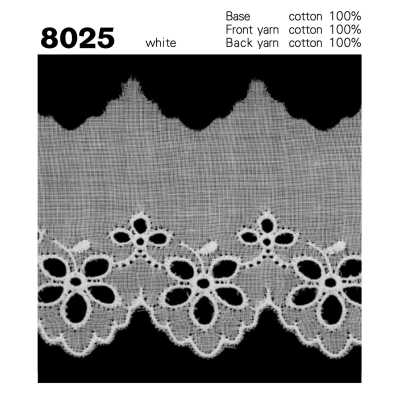
Narrow lace is a relatively narrow lace-like trim used to decorate the edges of garments and fashion accessories. Its openwork pattern, wavy edge, and floral motifs add delicate decoration to seams and panel lines.
Contents6 sections
Definition and Overview
Narrow lace is lace supplied in a long, tape-like form. It is used by layering and sewing it onto the edge of fabric, or by inserting it into seam lines or pocket openings. Those with one straight side and a decorative edge on the other side are especially easy to use as edging.
The name indicates a narrow width and does not refer to a term limited to a specific weave or material. Even within narrow lace, the pattern, structure, stretch, and edge shape differ from product to product.
Construction and Materials
Narrow lace includes torsion lace, which is made by twisting yarns together to create a pattern, raschel lace, which is made on a warp knitting machine, and embroidery lace, which is made by embroidering a base fabric. Depending on the manufacturing method, the delicacy of the pattern, thickness, edge stability, and stretch behavior vary.
Materials include cotton, and depending on the application, synthetic fibers or elastic yarn may also be combined. Items made with metallic yarn can add sheen, but the stiffness of the yarn and how easily it may snag should be checked in advance.
Visual Features and Main Applications
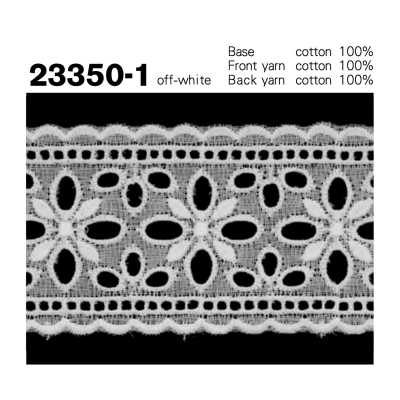
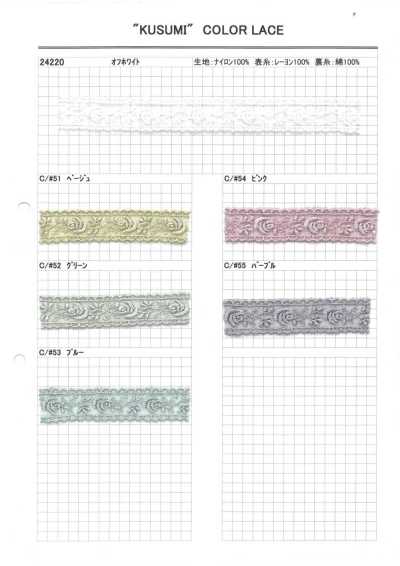
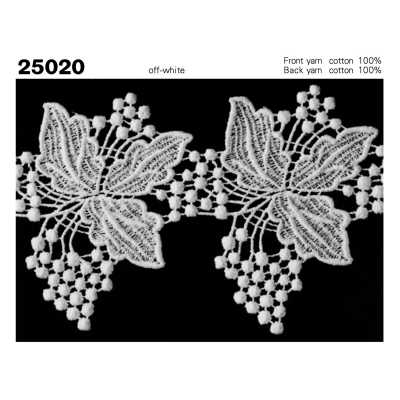
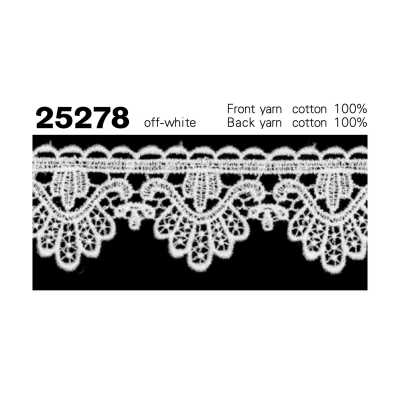
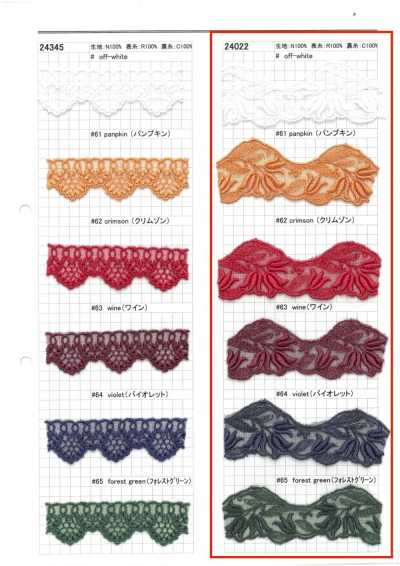
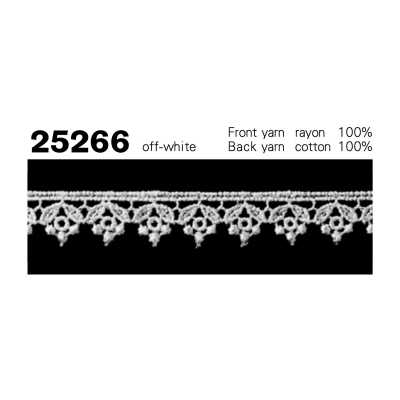
Its features include lightness from the openwork areas, as well as floral patterns, geometric patterns, picot-like edges, and scalloped edges. Because it can decorate with a thin line, it adds variation to seams and edges without being overly assertive.
It is used as edging for collars, cuffs, and hems on blouses and dresses, as well as for lingerie, nightwear, kids' clothing, aprons, pouches, and similar items. In styles where it is gathered for use, the amount of decoration increases compared with attaching it in a straight line.
- Edging for necklines, cuffs, and hems
- Decoration for plackets, seam lines, and pocket openings
- Trimming for lingerie and nightwear
- Accents for kids' clothing and fashion accessories
How to Choose and Handling Notes
When selecting it, check not only the width but also the pattern direction, one-edge shape, ground structure density, thickness, material, and stretch. When attaching stretch lace to the edge of woven fabric, pulling it during sewing can easily cause waviness, so if necessary, consider anti-stretch measures and presser-foot conditions.
The openwork areas and decorative yarns may snag during washing or wear, which can lead to fraying. For products whose cut edges fray easily, processing suited to the specification is necessary, such as sewing with enough overlap into the seam allowance or finishing the edge. Washing instructions should be checked according to the care label of the entire product to which the lace is attached, not the lace alone.
Differences from Similar Terms
While lace refers broadly to fabrics and trims with openwork patterns, narrow lace is a term focused on its shape as a long, narrow trim. When a wide lace fabric is cut and used, it is usually distinguished from narrow lace.
Stretch lace refers to lace with stretch, and may overlap with narrow lace. A scallop is the shape of an edge made up of wave-like or semicircular curves and is not a classification name for narrow lace itself.
Frequently Asked Questions
How is narrow lace sewn on?
In addition to sewing it on by overlapping the edge, there is also a method of inserting it into the joining section of the body panel and similar parts. It is important to set the stitching position so as not to flatten the openwork pattern or scallops, and to check feed, waviness, and thread tension with a test stitch before sewing.
How can fraying of narrow lace be prevented?
The basic method is to place the cut edge of the lace inside the seam allowance and secure it. If the edge is exposed, choose a product that is less likely to fray, or confirm in a sample whether edge finishing is possible. Heat treatment should not be done casually, as it may alter the material depending on the fiber.
What should be noted when attaching stretch narrow lace to woven fabric?
If the lace is sewn while stretched, the finished garment may pucker as if the body panel has shrunk. Feed the lace and fabric in their natural state, and use anti-stretch tape or temporary basting if necessary. Check the stretch rate and recovery on the actual material.
- Search products for "narrow lace"
- Products with material "Cotton"
- Products for style "For Lingerie"
- Products for style "For Shirts/blouses"
- Products for style "For Skirts And Dresses"
- Products for style "For Nightwear"
- Products for style "For Kids"
- Products for style "For Costumes/dresses"
- Browse Lace products