Non-slip Finish
A non-slip finish is a functional finish applied with resin or silicone to the surface of fabric, tape, elastic band, and similar materials to reduce shifting inside clothing and prevent items from slipping off.
Contents6 sections
Definition and Overview
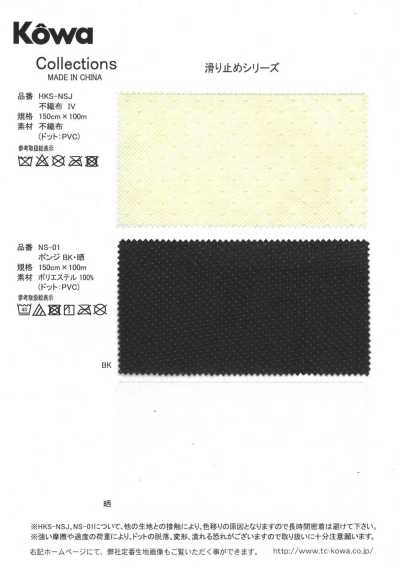
Non-slip finish is a process that increases friction on the surface of a material to reduce shifting between fabrics, between clothing and the body, and between clothing and worn items. It may use dot prints made with acrylic resin or silicone printing or coating.
The finish may be applied to the entire fabric, or only to necessary areas such as the back side or hem. Because it uses surface friction, the degree of non-slip performance and the feel vary depending on the material, pattern, and finished area.
Features and Appearance
Dot-type finishes may show fine unevenness or gloss on the finished area. When a soft resin is used, the result is relatively supple, but the more finish is applied, the more it may affect firmness, stiffness, and the feel against the skin.
Non-slip performance changes depending on the surface condition of the other material, humidity, load, and contact area. Therefore, it is important to check not only whether a finish is present, but also the required performance for the actual fabric combination and application.
Main Applications
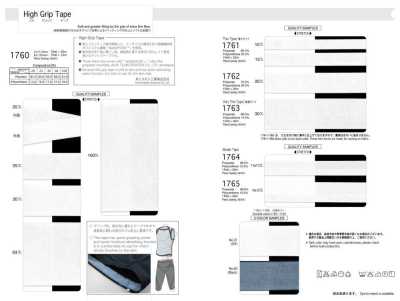
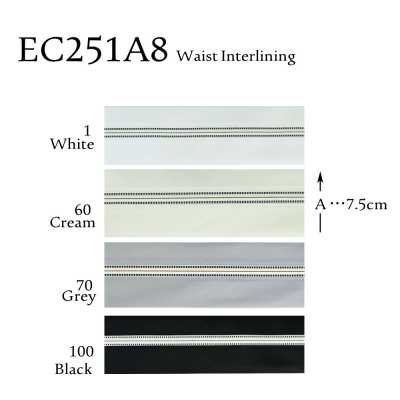
On the inside of a pants waist, it is used to help keep shirt hems from coming out. It is also applied to linings to reduce shifting with the outer fabric, or used at the hems of skirts, pants, and innerwear to prevent riding up during wear.
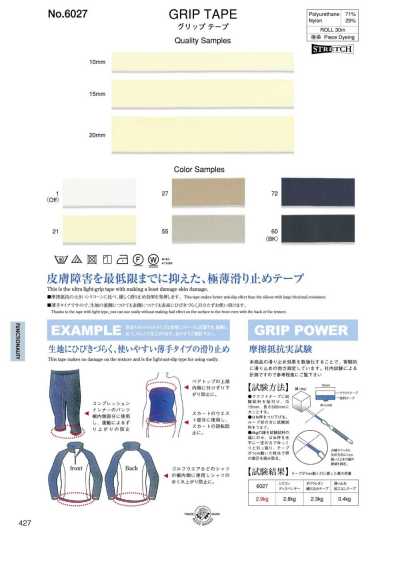
It is also used for items where shifting during movement easily affects comfort, such as sportswear, uniforms, innerwear, and socks. It is not a season-specific finish, but for uses where sweating is likely, balance with skin feel and breathability should be considered.
- Shirt retention on the inside of the waist
- Reduction of shifting between lining and outer fabric
- Prevention of riding up at hems and openings
- Prevention of shifting in sports applications
Selection and Handling Precautions
When selecting it, check the type of finish, dot size and density, finished area, and the combination with the other material. When used on the skin side, evaluate not only non-slip performance but also stickiness, stiffness, and skin irritation through prototyping.
Because the finish may wear, peel, or crack due to washing and friction, confirm the intended washing method and wash durability. Some finishes are heat-sensitive, so use a pressing cloth for ironing and confirm the specifications so that high heat is not applied directly to the finished area.
In sewing, if the finished area catches on the presser foot or feed dog, feeding unevenness may occur. Check the needle, thread, presser foot, and feed settings in advance, and perform trial sewing on areas that cross over thicker or stiffer finished sections.
Differences from Similar Terms
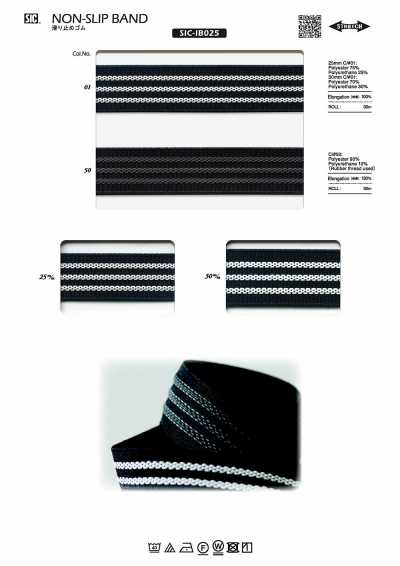
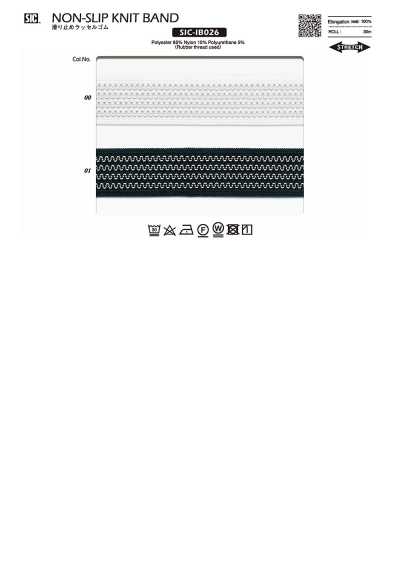
Non-slip finish refers to a process that adds functionality after the fact to the surface of fabric or similar materials. Non-slip elastic is an accessory material used by giving the elastic itself non-slip functionality and sewing it onto hems or openings.
The slip property of lining is a characteristic that reduces friction with the outer fabric to make putting on and moving smoother, and its purpose is the opposite of a non-slip finish. Also, fabric slippage is the phenomenon where yarn in the woven fabric pulls out from near the seam, and it is a different quality term from a finish that increases friction.
Frequently Asked Questions
Does fabric with a non-slip finish lose its effect after washing?
The persistence of the effect varies depending on the type of finish, washing method, and degree of friction. Repeated washing and friction may wear or peel the finished surface. Before mass production, check the appearance and non-slip performance under actual washing conditions, and set a handling method suitable for the labeling.
How should non-slip finish and non-slip elastic be used differently?
When you want to reduce shifting between fabrics over a wide area, or when you want to add functionality to a lining, a non-slip finish is suitable. Non-slip elastic is used in areas that require elasticity and holding power, such as hems, openings, and straps. Choose based on the required stretch, sewing method, and feel against the skin.
Is the finished area difficult to sew?
Depending on the unevenness or tackiness of the finished surface, friction with the presser foot or feed dog may increase, causing feeding unevenness or needle marks. Consider seam allowance design that avoids the finished area, and before sewing, check the needle size, thread tension, presser foot, and feed settings on the actual fabric.