Overhang And Shoulder Line
Overhang and shoulder line are indications of the flat size of a shoulder pad. Overhang is the dimension in the direction that extends toward the shoulder tip, and shoulder line is the dimension running from the neck side toward the sleeve side.
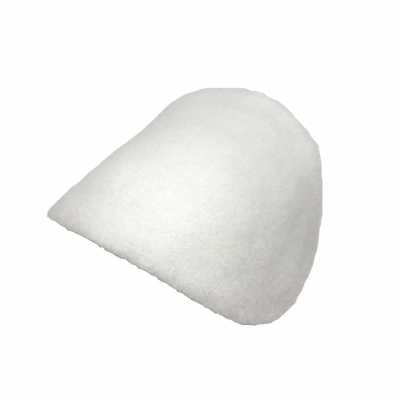
Contents6 sections
Definition and Overview
Overhang and shoulder line are dimensional indications used to understand the shape of a shoulder pad and the corresponding shoulder area. In general, overhang indicates the pad’s lateral projection, and shoulder line indicates the length running from the neck side to the shoulder tip and sleeve side.
However, the order in which dimensions are listed and the measuring direction may vary by product. It is important to check not only the displayed values, but also whether a diagram is provided, the left-right orientation, and whether the measurement is taken flat.
Applicable Area and Function
Shoulder pads are placed near the shoulder line of the body section, between the shell and lining or on the inside of the body section. They compensate for shoulder slope, shape the outline from the sleeve cap to the shoulder tip, and support structured silhouettes in jackets and similar garments.
A pad with a larger overhang tends to increase the projection toward the shoulder tip, while a pad with a longer shoulder line provides support over a wider range along the shoulder line. It must match the garment’s shoulder width, sleeve attachment position, and the wearer’s shoulder slope.
Materials and Types
Shoulder pads may be made of resilient foam, nonwoven fabric, batting-like materials, or combinations of these. Depending on the material, thickness, and thinness at the edges, the supporting force, how naturally it conforms, and how much it shows through the shell will vary.
In terms of shape, there are types for set-in sleeves, raglan sleeves, and covered constructions. Even when the overhang and shoulder line are the same, differences in curve, thickness position, and sleeve-side shape will change the finished shoulder appearance.
- Set in pads are used to match the shoulder line and sleeve cap of set-in sleeves.
- Raglan shoulder pads have a shape that corresponds to the raglan line running diagonally from the neckline to the underarm.
- Covered shoulder pads are wrapped in fabric on the surface and are used to reduce show-through on lightweight fabrics.
Main Applications
Overhang and shoulder line indications are mainly used when selecting shoulder pads for jackets, suits, coats, uniforms, formal wear, and similar garments. Dimensions are considered not only by garment type, but also by shoulder width and the intended shoulder tip position in the design.
For thin blouses and cut-and-sew garments, thickness and step marks at the edges are more likely to show on the surface, so a smaller, thinner specification may be chosen. For heavy outerwear, the holding power is also checked in relation to the shell thickness and tailoring.
Selection and Sewing Notes
Select by comparing the pattern shoulder line length, actual shoulder width, sleeve cap height, and shell thickness. If the overhang is too large, the shoulder tip may project unnaturally; if it is too short, the shoulder tip may not be sufficiently supported.
Before sewing it in, temporarily secure both sides and check the fit while worn. Do not confuse the neck side and sleeve side of the pad; confirm the thicker side and the direction of the curve, and lightly fix it in a position that does not pull the shoulder line or sleeve attachment line.
- The dimensions are flat measurements and do not match the three-dimensional appearance when worn.
- The shoulder line length should be judged not only by the garment’s actual measurements, but also by how the neckline side and sleeve side will settle.
- Check the left-right height, projection, and how well the sleeve cap conforms on a dress form or while worn.
Frequently Asked Questions
Do overhang and shoulder line indicate the garment’s shoulder width?
No. Overhang and shoulder line are basically dimensions used to indicate the size of the shoulder pad itself. They do not have the same direct meaning as the garment’s shoulder width or the pattern’s shoulder line length. The apparent shoulder width when worn will change depending on the pad shape, attachment position, and thickness.
Is the order in which overhang and shoulder line are listed fixed?
You need to pay attention to the listing order. In some cases overhang is shown first, and in others shoulder line is shown first. Do not judge only by the numbers; check the product description, dimension diagram, and the measuring direction when laid flat. If unclear, verify the shape with an actual sample.
Is a larger overhang always better for a shoulder pad?
Not necessarily. A larger overhang makes it easier to create projection at the shoulder tip, but if it is excessive for the garment’s shoulder width or design, the silhouette will look unnatural. Select it together with the shoulder line length, thickness, shoulder slope, and the properties of the shell fabric.