Concave Shoulder Pad
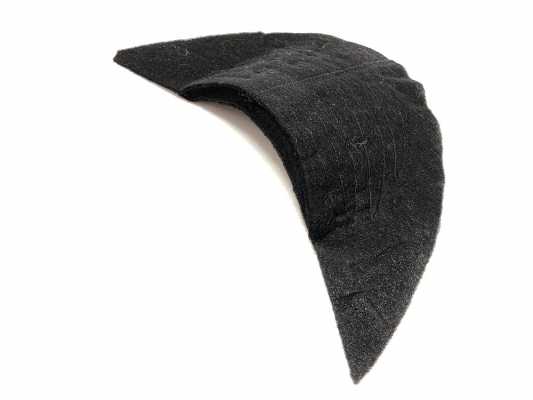
A concave shoulder pad is a molded shoulder pad used to give the shoulder point a rounded, moderately firm shape and to refine the shoulder line in cape-like or shoulder-covering designs.
Contents6 sections
Definition and Overview
The concave shoulder pad is a type of shoulder pad inserted inside the shoulder area to support the silhouette. The term may be used differently depending on the distributor or manufacturer, but it is used to refine the rounded shoulder point and create a gentle shoulder line.
“Pad” is sometimes written as “pad” in product names as well. Since thickness, shape, or whether it is left-right specific cannot be determined from the product name alone, it is important to check the actual shape and specifications.
Placement and Function
It is mainly placed near the shoulder seam of the body section, between the outer fabric and lining, or on the facing side. By supporting the area from the shoulder point to around the sleeve attachment line, it makes shoulder collapse and unevenness caused by seam allowances less noticeable and shapes the upper body outline.
In designs with capes or roomy sleeves, the construction of the shoulder greatly affects the appearance. The pad is not used simply to make the shoulder point stand out strongly; it also serves to add volume that naturally connects the shoulder to the sleeve according to the weight of the fabric and the design.
Materials and Types
Shoulder pads include types with a fibrous core wrapped in nonwoven fabric or knit fabric, as well as those made with molded foam material. Concave shoulder pads also vary in finish and sewing ease depending on thickness, firmness, resilience, and surface material.
Thin, soft types make it easier to create a natural shoulder line, while thicker, more resilient types tend to produce a more raised contour. Whether the pad is shaped specifically for the left and right sides or can be used on either side, and whether there is a difference in thickness between the front and back, are also points to check when selecting one.
- Core thickness and recovery
- Difference in shape and thickness between the shoulder-point side and neck side
- Whether there is a left-right distinction
- Surface slipperiness and ease of stitching
Main Applications
These are used for garments where the shoulder area should be clearly defined, such as jackets, coats, formalwear, and stage costumes. In cape-style sleeves or designs with ease or covering fabric at the shoulder, they are considered as support for stabilizing the shoulder line after sewing.
However, even for the same application, if the fabric is thin or the design emphasizes drape, the pad thickness may show through the surface. It is decided after checking the shoulder slope and sleeve drape when worn through a toile or prototype.
Selection, Handling, and Sewing Considerations
When selecting one, check the fabric thickness, shoulder width, sleeve design, and desired silhouette together. If it is too large for the shoulder width, the shoulder point may appear overly pronounced; if it is too small, support around the sleeve attachment area may be insufficient.
When stitching it in place, align the center of the pad with the shoulder seam and baste it temporarily to check the left-right height and the front and back appearance. If it is sewn into the outer fabric, the stitches may show on the surface, so it is generally fixed to the seam allowance, lining, or inner pressing cloth.
Some materials can deform under the heat or steam of an iron, so direct pressing should be avoided and heat resistance should be checked with offcuts or samples. For washable garments, conduct a washing test including the pad and confirm that there is no loss of shape or shifting.
Frequently Asked Questions
What is the difference between a concave shoulder pad and a standard shoulder pad?
A concave shoulder pad is treated as a type of shoulder pad and is chosen for use in refining the raised look from the shoulder point to around the sleeve attachment and the connection of the shoulder line. However, because the shape and thickness indicated by the name differ in the market, the difference from a standard shoulder pad must be checked in the actual specifications.
Where is a concave shoulder pad attached?
In general, it is positioned inside the garment aligned with the shoulder seam of the body section. The positions on the shoulder-point side and neck side, as well as the front-back orientation, are checked with basting, and it is fixed where the shoulder line looks natural when worn. In lined garments, it is often placed between the outer fabric and lining.
Can it be used on thin fabrics?
It can be used, but its thickness or edges may show through the surface. For thin fabrics or materials with good drape, it is important to choose a thin, soft type and check in a prototype whether the pad edge creates a step, whether the stitching thread shows, and whether the shoulder point appears too pronounced when worn.