Air Press
An air press is a stationary machine that uses upper and lower dies driven by compressed air to attach press fasteners, hooks, eyelets, cap and close posts, and similar items to fabric.
Contents6 sections
Definition and Overview
An Air Press is a press machine that uses compressed air supplied from a compressor to press together upper and lower dies. It makes it easier to keep the pressing force stable than hand pressing, and is used in processes that repeatedly attach the same type of hardware.
An Air Press is not the name of the hook or eyelet itself, but a machine for attaching them. Its main differences from a hand press operated by a lever and a foot-operated press machine are the power source and operation method.
Compatible Parts and Structure
The hardware to be attached is generally assembled from a front head, a back part, and, as needed, a washer or button seal. An Air Press holds the parts with upper and lower dies matched to the shape of the hardware, and fixes them by pressing the post or tube flat.
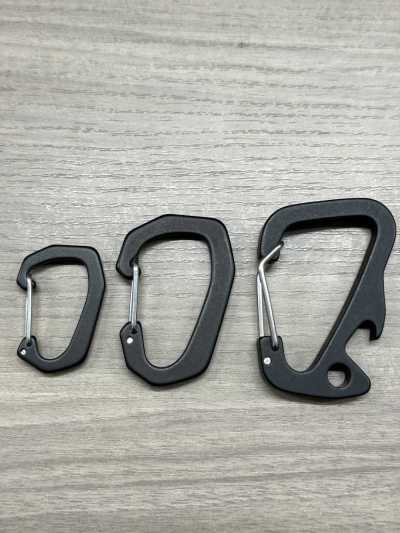
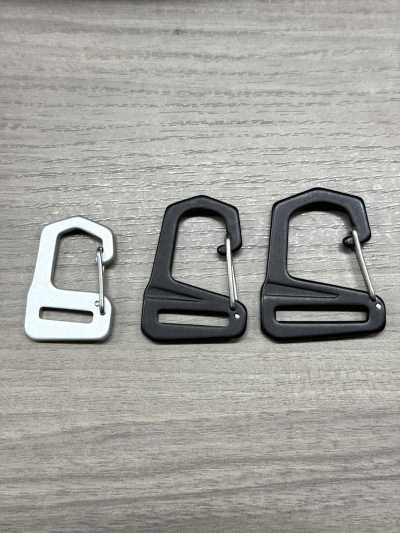
Press fasteners, spring hooks, jumper hooks, cap snap buttons, eyelets, and cap and close posts differ in their component structure and fastening method. Even if they look similar, using hardware of a different type or dies of a different size can cause poor setting or damage.
- Upper and lower dies matched to the type of hardware
- A compressor and piping that supply compressed air
- A setting base that supports the fabric and parts
- A punch or jig for pre-punching holes, if needed
Size Indication and How to Attach
When selecting an Air Press, check not only the machine dimensions but also the dies that match the type and size of hardware to be used. Hardware size is often indicated by the head diameter, post length, inner diameter of the eyelet, and similar measurements, and the naming and display method differ depending on the type of part.
When attaching, install the matching dies correctly on the upper and lower sides, and set the front and back parts and the fabric in the specified order. After a trial setting to check center shift, post deformation, and the fastening or pull-out condition, determine the air pressure and operating conditions for mass production.
Applications and Selection Notes
An Air Press is used to process metal or resin setting hardware used for outerwear, denim products, uniforms, bags, and more. In mass production, it helps improve work repeatability, but the optimal air pressure and dies vary depending on the hardware, fabric, and whether interfacing is used.
For thin or highly stretchable fabrics, be careful of enlarged holes, wrinkling, and tearing caused by setting. For thick fabrics, if the post length of the hardware is too short, it will not fasten securely, and if it is too long for the thickness, deformation or looseness can occur, so confirm the compatible fabric thickness.
For metal hardware, consider the possibility of rust, discoloration, and verdigris caused by humidity, sweat, and washing conditions according to the material and plating specification. For products that require nickel consideration, confirm a nickel-free specification, and for products that require needle detection, check in advance whether the hardware used is compatible with needle detectors.
Work Safety and Quality Control
Replace dies, adjust position, and clear jams only after stopping the compressed air and releasing the residual pressure. It is important not to put fingers into moving parts, to prevent parts from scattering, and to standardize operating conditions for each worker.
In quality control, check the front and back parts, setting position, appearance, fastening force, and pull-out strength. If the fabric or hardware lot changes, the same settings may not work without problems, so perform trial setting again.
Frequently Asked Questions
How should an Air Press and a hand press be used differently?
An Air Press operates with compressed air and makes it easier to keep the pressing force consistent in repeated work, so it is suitable for attachment processes above a certain volume. A hand press is relatively easy to install and prepare, and is used for prototypes and small-volume work. Both require dies that match the hardware.
Can press fasteners be attached with only an Air Press?
No, they cannot be attached with the Air Press body alone. Upper and lower dies that match the type of press fastener used, the head diameter, post length, and component structure are required. The thickness and firmness of the fabric also affect the fastening condition, so trial setting should be done with the same material before mass production.
Can an Air Press be used for products that pass through a metal detector?
Yes, but an Air Press is a machine, and whether needle detection is possible mainly depends on the material and specification of the hardware attached to the product. If needle detector compatibility is required, confirm the specifications of the hooks and eyelets to be used, the conditions of the inspection machine, and the method of contamination control together.